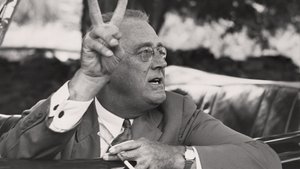

April 19, 1933: A Day in Stock Market History

On April 19, 1933, in the midst of the worst economic crisis in American history, President Franklin D. Roosevelt took a bold and controversial step that would forever alter the course of U.S. monetary policy. By formally abandoning the gold standard for domestic transactions, Roosevelt freed the dollar from its rigid ties to gold, giving the federal government the flexibility to combat deflation and stimulate a collapsing economy. This decisive action marked the beginning of a new era - one in which monetary tools could be used more dynamically to stabilize markets, foster growth, and respond to crisis.
Background of the Gold Standard in the U.S.
Before the 1930s, the United States operated under the gold standard, meaning that each dollar was backed by a specific amount of gold. This system was intended to provide monetary stability and control inflation, as the money supply was tied to the nation's gold reserves. However, during times of economic stress, the gold standard could severely limit the government's ability to respond.
The Great Depression, triggered by the catastrophic stock market crash of October 1929, quickly evolved into a global economic disaster of unprecedented scale. In the United States, the crash shattered investor confidence and caused a massive withdrawal of capital from the financial system. Consumer demand plummeted, industrial production nosedived, and businesses began to fail en masse. As prices fell across virtually all sectors - a phenomenon known as deflation - profits evaporated, wages declined, and unemployment soared to nearly 25% by 1933. Simultaneously, a wave of panic gripped the banking sector. Without deposit insurance and facing a severe cash crunch, thousands of banks collapsed under the pressure of mass withdrawals and nonperforming loans.
Tied to the constraints of the gold standard, the U.S. government and the Federal Reserve found themselves unable to respond effectively. The gold standard required that every dollar in circulation be backed by a fixed quantity of gold, limiting the government's ability to expand the money supply or lower interest rates to stimulate demand. Fearing a run on gold reserves, policymakers hesitated to act decisively, and the monetary base actually contracted when it was most needed. As a result, the economy spiraled further downward, with falling prices exacerbating the real burden of debt and further weakening already struggling businesses and households. The rigidity of the gold standard turned what could have been a severe recession into a prolonged and devastating depression.
Roosevelt's Inauguration and Emergency Actions
Franklin D. Roosevelt was inaugurated as President on March 4, 1933, during the depth of the crisis. One of his first acts was declaring a "bank holiday" to halt the mass withdrawals that were draining banks of their gold reserves. He quickly sought to restore confidence in the banking system and the broader economy.
On April 5, 1933, Roosevelt issued Executive Order 6102, requiring Americans to surrender most of their gold holdings to the Federal Reserve in exchange for paper currency. The goal was to prevent hoarding and to centralize gold holdings to support monetary expansion.
On April 19, 1933, President Franklin D. Roosevelt made a historic decision that fundamentally transformed the U.S. financial system: he officially suspended the gold standard for domestic transactions. Up until that point, the U.S. dollar was directly tied to gold, and individuals could, in theory, exchange paper currency for a fixed quantity of the precious metal. This convertibility was seen as a cornerstone of monetary stability, anchoring trust in the value of the currency. However, during the depths of the Great Depression, this rigid system became a straitjacket, preventing the government from increasing the money supply to fight deflation and economic collapse.
By suspending gold convertibility, Roosevelt effectively freed the U.S. economy from the constraints of finite gold reserves, allowing for a more flexible and responsive monetary policy. It meant that dollars would now derive their value not from gold, but from the full faith and credit of the U.S. government. While this decision was initially framed as a temporary emergency measure, it soon became permanent and marked a paradigm shift in economic governance. No longer bound by gold holdings, the U.S. could now pursue more expansive fiscal and monetary strategies to stabilize the economy and promote recovery.
This move was not just a technical change; it was a bold political and economic statement. It signaled a new role for the federal government - not just as a guardian of sound money, but as an active steward of national economic health. April 19, 1933, thus stands as a watershed moment in American monetary history: the day the U.S. dollar was unshackled from gold and set on a course toward becoming a modern fiat currency backed by government authority rather than precious metal.
Economic Rationale Behind the Decision
By removing the gold constraint, the Roosevelt administration gained the flexibility to expand the money supply, combat deflation, and stimulate demand. It allowed the Federal Reserve and the Treasury to implement policies aimed at economic recovery without the fear of depleting gold reserves.
In January 1934, under the Gold Reserve Act, the U.S. officially devalued the dollar by raising the price of gold from $20.67 to $35 per ounce. This effectively increased the money supply and was intended to spur inflation, raise prices, and help debtors—including farmers and homeowners—recover from the crisis. The decision to abandon the gold standard was controversial. Critics warned of inflation and monetary instability. However, many economists and policymakers saw it as a necessary step. Internationally, the move influenced other countries to follow suit, leading to the eventual breakdown of the global gold standard system.
Abandoning the gold standard fundamentally changed the role of the federal government in managing the economy. It gave the Federal Reserve more influence over interest rates and inflation and laid the foundation for the modern fiat currency system, where money derives value from government backing rather than a physical commodity. Today, Roosevelt's decision is considered a critical turning point in U.S. economic history. It represented a bold break from orthodox economic thinking of the time and is credited with helping to pull the nation out of the Great Depression. The move paved the way for future monetary innovations and has become a classic case study in the importance of flexible monetary policy during economic crises.

Dr. Viktor Kalm is a Senior Investment Analyst at Alpha Spread. He has over seven years of experience in corporate finance, specializing in financial modeling, business valuation, and strategic planning services. Previously, as a hedge fund manager, he focused on private equity management, consistently delivering positive returns to his clients.
Dr. Viktor Kalm is a Senior Investment Analyst at Alpha Spread. He has over seven years of experience in corporate finance, specializing in financial modeling, business valuation, and strategic planning services. Previously, as a hedge fund manager, he focused on private equity management, consistently delivering positive returns to his clients.
 GSPC
GSPC
 GSPC
GSPC
 GSPC
GSPC
 GSPC
GSPC
 GSPC
GSPC