

Budweiser Brewing Company APAC Ltd
F:4BB1



Decide at what price you'd be comfortable buying and we'll help you stay ready.

|
Budweiser Brewing Company APAC Ltd
F:4BB1
|
HK |
Budweiser Brewing Company APAC Ltd
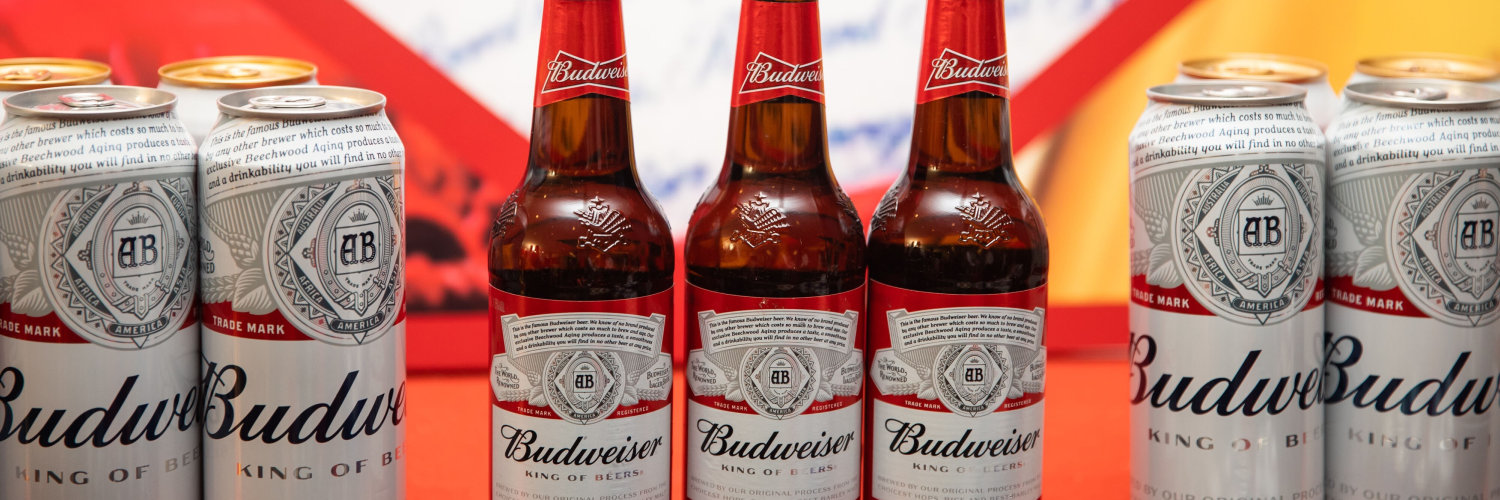
Budweiser Brewing Company APAC Ltd is a beer company that brews, markets, and sells beer across the Asia-Pacific region. Its portfolio includes Budweiser and other mainstream and premium beer brands, sold through grocery stores, convenience stores, bars, restaurants, and other drink channels. The company focuses on branded beer rather than spirits or wine, so its business is built around making and moving packaged beer to consumers through retail and hospitality customers. The company makes money by selling its beer to distributors, retailers, and food-and-drink venues. In practice, it earns most of its revenue when those customers buy cases, bottles, cans, and draft beer for resale to end drinkers. A key part of the model is brand strength: the company relies on well-known labels, marketing, and local brewing and distribution to win shelf space and tap handles. What makes its role different is that it sits between the global beer brand owner and the local markets where people actually buy and drink beer. It has to manage brewing, packaging, regulation, and distribution in each country while tailoring products to local tastes. That makes it a consumer brand business, a manufacturing business, and a route-to-market business all at once.

Budweiser Brewing Company APAC Ltd is a beer company that brews, markets, and sells beer across the Asia-Pacific region. Its portfolio includes Budweiser and other mainstream and premium beer brands, sold through grocery stores, convenience stores, bars, restaurants, and other drink channels. The company focuses on branded beer rather than spirits or wine, so its business is built around making and moving packaged beer to consumers through retail and hospitality customers.
The company makes money by selling its beer to distributors, retailers, and food-and-drink venues. In practice, it earns most of its revenue when those customers buy cases, bottles, cans, and draft beer for resale to end drinkers. A key part of the model is brand strength: the company relies on well-known labels, marketing, and local brewing and distribution to win shelf space and tap handles.
What makes its role different is that it sits between the global beer brand owner and the local markets where people actually buy and drink beer. It has to manage brewing, packaging, regulation, and distribution in each country while tailoring products to local tastes. That makes it a consumer brand business, a manufacturing business, and a route-to-market business all at once.
Revenue & Volume Decline: Budweiser APAC saw Q1 2025 revenue fall 7.5% and volumes drop 6.1%, with ongoing challenges in China partly offset by better performance elsewhere.
China Weakness: China volumes fell 9.2% and revenue dropped 12.7%, impacted by soft consumer confidence, tough on-premise channel conditions, and inventory management actions.
Harbin Success: Harbin Icy GD Zero Sugar volumes surged about 70%, showing strong growth and supporting the Core++ strategy in China.
South Korea Strength: APAC East, especially South Korea, delivered double-digit volume and revenue growth, with EBITDA up 24.4% and margin expansion by 337 bps.
Cost Efficiency: Cost of sales per hectoliter decreased by 1.5%, helped by commodity tailwinds and ongoing cost management.
No Major Pricing Moves: No significant price increases planned for China core brands in the near term, as focus remains on volume and market share.
