
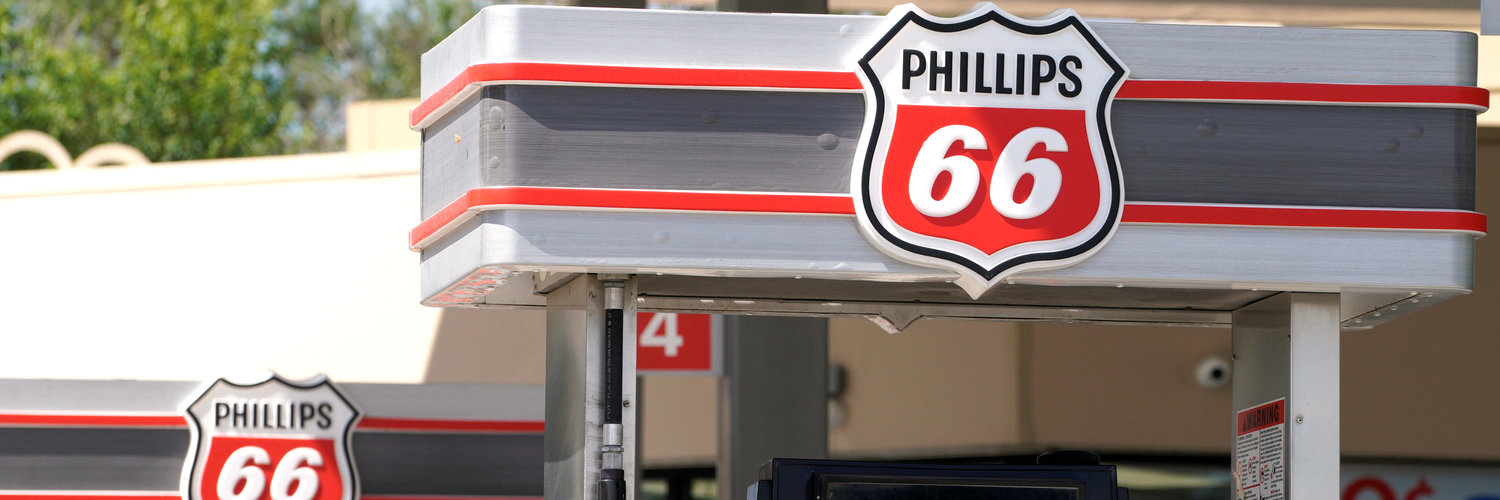

Phillips 66
F:R66



Decide at what price you'd be comfortable buying and we'll help you stay ready.

|
Johnson & Johnson
NYSE:JNJ
|
US |

|
Berkshire Hathaway Inc
NYSE:BRK.A
|
US |

|
Bank of America Corp
NYSE:BAC
|
US |

|
Mastercard Inc
NYSE:MA
|
US |

|
UnitedHealth Group Inc
NYSE:UNH
|
US |

|
Exxon Mobil Corp
NYSE:XOM
|
US |

|
Pfizer Inc
NYSE:PFE
|
US |

|
Nike Inc
NYSE:NKE
|
US |

|
Visa Inc
NYSE:V
|
US |

|
Alibaba Group Holding Ltd
NYSE:BABA
|
CN |

|
JPMorgan Chase & Co
NYSE:JPM
|
US |

|
Coca-Cola Co
NYSE:KO
|
US |

|
Verizon Communications Inc
NYSE:VZ
|
US |

|
Chevron Corp
NYSE:CVX
|
US |

|
Walt Disney Co
NYSE:DIS
|
US |

|
PayPal Holdings Inc
NASDAQ:PYPL
|
US |

We don't have any information about R66's insider trading.
Phillips 66
Glance View
Phillips 66 turns crude oil and other feedstocks into the fuels and materials people use every day. Its refineries make gasoline, diesel, jet fuel, and other petroleum products, and it also has a chemicals business that makes building blocks used in plastics and industrial materials. The company serves drivers, airlines, trucking fleets, industrial customers, and fuel distributors. It makes money mainly by buying raw oil and feedstocks, processing them, and selling the finished products at market prices. It also earns fees from moving and storing fuel through pipelines, terminals, and other midstream assets, which gives it a second source of income beyond refining. Some of its business also comes from branded fuel marketing and lubricant sales. What makes Phillips 66 different is that it sits in the middle of the energy supply chain. It does not just extract oil or sell fuel at the pump; it connects producers to end users by refining, transporting, and distributing energy products. That mix of manufacturing, logistics, and marketing makes the business less one-dimensional than a pure refiner or a pure pipeline company.
What is Insider Trading?
Insider trading refers to the buying or selling of a company's stock by individuals with access to non-public, material information about the company.
While legal insider trading occurs when insiders follow disclosure rules, illegal insider trading involves trading based on confidential information and is prohibited by law.
Why is Insider Trading Important?
It isn't a coincidence that corporate executives seem to always buy at the right times. After all, they have access to every bit of company information you could ever want.
However, the fact that company executives have unique insights doesn't mean that individual investors are always left in the dark. Insider trading data is out there for all who want to use it.

Insiders might sell their shares for any number of reasons, but they buy them for only one: they think the price will rise.
