

Tyler Technologies Inc
F:TYP



Decide at what price you'd be comfortable buying and we'll help you stay ready.
|
T
|
Tyler Technologies Inc
F:TYP
|
US |
|
W
|
Whitbread PLC
OTC:WTBCF
|
UK |

|
Samsung Electronics Co Ltd
KRX:005930
|
KR |
|
F
|
Fortune Vietnam Joint Stock Commercial Bank
VN:LPB
|
VN |
|
G
|
GBK Beteiligungen AG
XHAM:GBQ
|
DE |

|
Sun Hung Kai Properties Ltd
HKEX:16
|
HK |
|
L
|
Luminescence Technology Corp
TPEX:6729
|
TW |

|
Grifols SA
F:G0F
|
ES |

|
AlJazira REIT
SAU:4331
|
SA |

|
Fomento Economico Mexicano SAB de CV
NYSE:FMX
|
MX |

|
Arca Continental SAB de CV
OTC:EMBVF
|
MX |
|
T
|
Tharisa PLC
JSE:THA
|
CY |
|
Z
|
Zhongmin Baihui Retail Group Ltd
SGX:5SR
|
SG |

|
Constellation Energy Corp
NASDAQ:CEG
|
US |
|
Semen Indonesia (Persero) Tbk PT
OTC:PSGTY
|
ID |

|
Petro Matad Ltd
LSE:MATD
|
MN |

|
Super League Enterprise Inc
NASDAQ:SLE
|
US |
|
D
|
Dexus
OTC:DEXSF
|
AU |
Tyler Technologies Inc
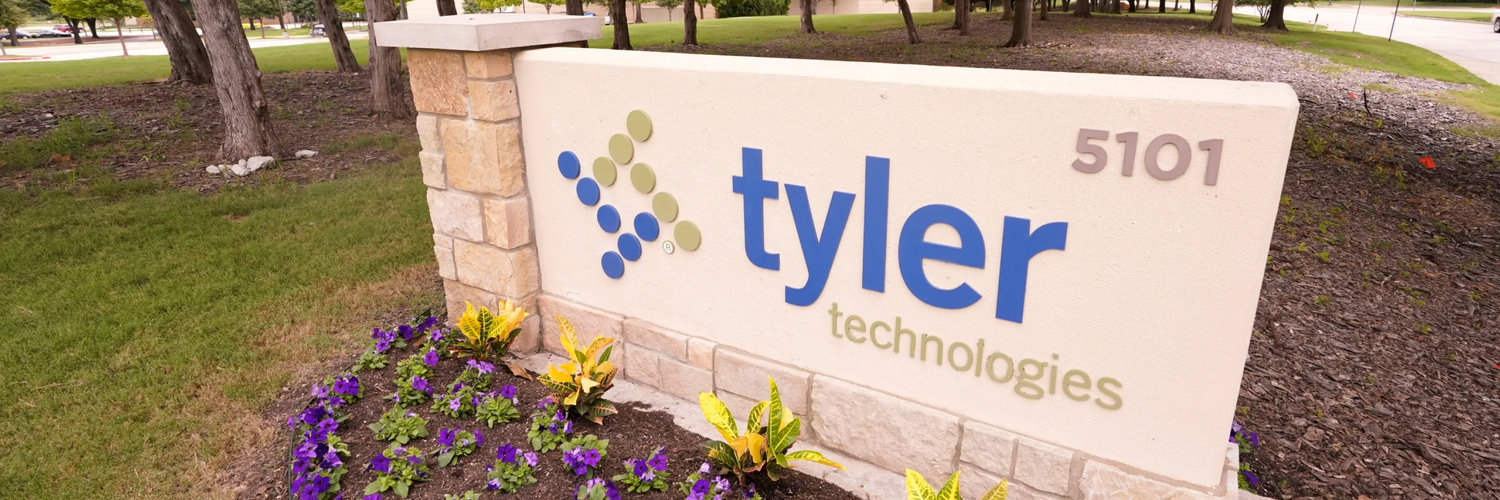
Tyler Technologies makes software for local governments, schools, courts, and other public agencies. Its products help customers run core tasks like property tax billing, permits, payroll, records management, court case handling, police and jail administration, and online payments. The company sells these software systems and the related setup, support, and maintenance services that keep them running. Its main customers are government offices and public institutions that need specialized software built around public-sector rules and workflows. Tyler usually earns money from software licenses, subscriptions, cloud hosting, implementation work, and ongoing support contracts. That creates a steady, long-term relationship with customers because these systems are deeply embedded in daily operations. What makes Tyler different is its focus on a narrow, hard-to-serve market. Public agencies need software that can handle regulated processes, public records, and local requirements, so they often prefer vendors with deep domain knowledge rather than broad general-purpose software. Tyler sits in the middle of that workflow, acting as the technology backbone for many government administrative functions.

Tyler Technologies makes software for local governments, schools, courts, and other public agencies. Its products help customers run core tasks like property tax billing, permits, payroll, records management, court case handling, police and jail administration, and online payments. The company sells these software systems and the related setup, support, and maintenance services that keep them running.
Its main customers are government offices and public institutions that need specialized software built around public-sector rules and workflows. Tyler usually earns money from software licenses, subscriptions, cloud hosting, implementation work, and ongoing support contracts. That creates a steady, long-term relationship with customers because these systems are deeply embedded in daily operations.
What makes Tyler different is its focus on a narrow, hard-to-serve market. Public agencies need software that can handle regulated processes, public records, and local requirements, so they often prefer vendors with deep domain knowledge rather than broad general-purpose software. Tyler sits in the middle of that workflow, acting as the technology backbone for many government administrative functions.
Strong quarter: Tyler said it delivered 21.7% SaaS revenue growth, record SaaS bookings, record total bookings and record second quarter free cash flow.
AI traction: Management said AI has not slowed core demand; instead, customer interest is building around embedded AI features such as document automation, resident assistants and priority-based budgeting.
Cloud push: Tyler is increasing incentives for customers to move to the cloud, including cloud-only AI features, faster time to value and transitional pricing, with disincentives expected to ramp later.
Transactions strength: Transaction revenues were strong, helped by higher volumes, new names and more software sold under transaction-based arrangements, especially in DMV and similar use cases.
Capital allocation: Management emphasized share repurchases and said the company has already bought back more than 5.5% of shares outstanding year-to-date.
Outlook: Management said the full-year outlook is unchanged, margins should continue to expand, and hiring remains limited in the second half.