
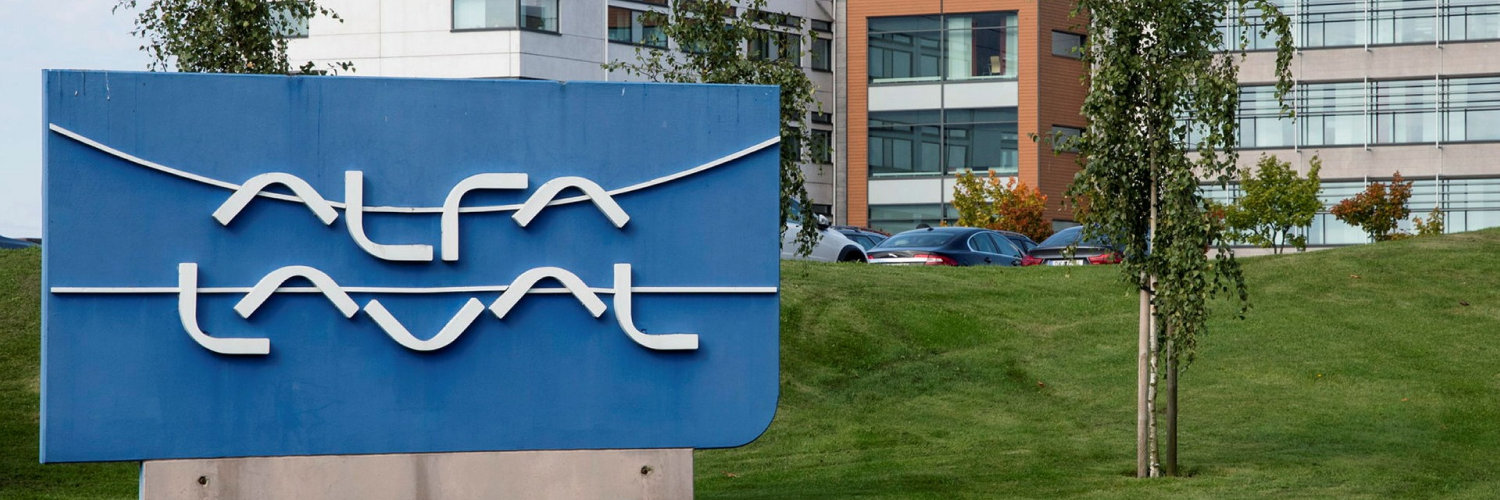

Alfa Laval AB
LSE:0NNF



Decide at what price you'd be comfortable buying and we'll help you stay ready.
|
A
|
Alfa Laval AB
LSE:0NNF
|
SE |
|
P
|
Phoenix Mecano AG
LSE:0QKP
|
CH |
|
S
|
Salvatore Ferragamo SpA
LSE:0P52
|
IT |

|
First Solar Inc
LSE:0R06
|
US |
|
Dovre Group Oyj
LSE:0JCD
|
FI |
Alfa Laval AB
Alfa Laval AB, rooted deeply in the rich industrial fabric of Sweden, has been a pivotal figure in heat transfer, separation, and fluid handling technologies. Its journey began in 1883 when Gustav de Laval pioneered centrifugal separator innovation, a leap that laid the foundation for a thriving business. Over the decades, Alfa Laval has evolved, expanding its portfolio to encompass heat exchangers, separators, pumps, and valves. The company thrives on its expertise in engineering solutions critical to industries like maritime, food and beverage, energy, and environmental protection. Spanning over 100 countries, its global reach ensures that Alfa Laval is more than equipped to offer tailored solutions that boost performance and sustainability for its clients.
At the core of Alfa Laval's business model lies its ability to solve complex industrial challenges through innovative technology that enhances processes and reduces environmental impact. The company's revenue streams are diversified; they predominantly come from sales of equipment paired with a significant portion from after-sales services, including maintenance and spare parts, ensuring steady income well beyond the initial sale. This approach not only fosters lasting client relationships but also underscores Alfa Laval's standing as a leader in sustainable industrial practices. Through continual investment in research and development, it not only secures its competitive edge but also positions itself adeptly to tackle the evolving demands of the industries it serves.
Alfa Laval AB, rooted deeply in the rich industrial fabric of Sweden, has been a pivotal figure in heat transfer, separation, and fluid handling technologies. Its journey began in 1883 when Gustav de Laval pioneered centrifugal separator innovation, a leap that laid the foundation for a thriving business. Over the decades, Alfa Laval has evolved, expanding its portfolio to encompass heat exchangers, separators, pumps, and valves. The company thrives on its expertise in engineering solutions critical to industries like maritime, food and beverage, energy, and environmental protection. Spanning over 100 countries, its global reach ensures that Alfa Laval is more than equipped to offer tailored solutions that boost performance and sustainability for its clients.
At the core of Alfa Laval's business model lies its ability to solve complex industrial challenges through innovative technology that enhances processes and reduces environmental impact. The company's revenue streams are diversified; they predominantly come from sales of equipment paired with a significant portion from after-sales services, including maintenance and spare parts, ensuring steady income well beyond the initial sale. This approach not only fosters lasting client relationships but also underscores Alfa Laval's standing as a leader in sustainable industrial practices. Through continual investment in research and development, it not only secures its competitive edge but also positions itself adeptly to tackle the evolving demands of the industries it serves.
Stable start: Alfa Laval said the quarter was broadly in line with expectations, with strong transactional demand but a softer project business and only limited financial impact from Middle East tensions.
Orders up: Order intake grew 6% organically year over year, helped by Energy, Food & Pharma and a better-than-expected Ocean division, while service was the main weak spot.
Margins improved: Sales were held back by heavy late-2025 invoicing and currency moves, but the gross margin rose to 39.9% and the operating margin stayed strong.
Outlook firmer: Management said it is a bit more optimistic about 2026 than at the start of the year and expects second-quarter demand to be higher than in Q1.
Cost pressure: The company flagged rising inflation, especially in energy-linked inputs and logistics, and said it may raise prices by midyear if needed.
Capital and cash: Free cash flow before acquisitions was SEK 708 million, while net debt to EBITDA stayed just shy of 0.7 despite the Cryogenics acquisition.
