Choose the stock you wish to monitor with a price target
Recently Viewed
A
Alphabet Inc
XMUN:ABEA
US
BrainChip Holdings Ltd
ASX:BRN
AU
Ascentech KK
TSE:3565
JP
A
Asics Corp
OTC:ASCCF
JP
L
Linkers Industries Ltd
NASDAQ:LNKS
MY
Back to Note
Company Overview
Business Description
Sector
Communication Services
Industry
Media
Headquarters
United States of AmericaUS
Employees
194 668
IPO date
Aug 19, 2004
Alphabet is the parent company of Google. Its core business is selling digital advertising around Google Search, YouTube, Gmail, Maps, and other widely used services. It also sells cloud computing services to businesses through Google Cloud, and it makes money from consumer products and devices tied to its software and services.
Alphabet’s main customers are advertisers, businesses, developers, and everyday users. Advertisers pay to place ads where people are already looking for information or watching videos, while cloud customers pay for computing power, storage, and software tools. Most of the company’s value comes from being the gateway people use to find information, reach audiences, and run digital services.
What makes Alphabet different is that it sits in the middle of both the consumer internet and enterprise technology markets. Google’s search engine and YouTube attract huge user attention, which supports its ad business, while Google Cloud gives it a separate sales channel to business customers. Alphabet also has smaller experimental bets, but the core business is still built on advertising, cloud services, and the software ecosystem around Google.
This is Alphabet’s main business. It includes Google Search, YouTube ads, Android, Chrome, Gmail, Maps, Google Play, and devices and subscriptions tied to those products.
Customers
Advertisers, app and content creators, consumer users, and people who buy Google subscriptions or devices.
Revenue Model
It earns mostly from ads sold against search, video, and other Google surfaces, plus fees from app sales, subscriptions, and hardware.
Google Cloud
This business sells cloud computing tools for storing data, running software, and building apps on Google’s infrastructure.
Customers
Businesses, government agencies, and developers that need cloud services and data tools.
Revenue Model
It makes money from usage-based charges for computing, storage, networking, and managed software services.
Other Bets
This segment groups smaller businesses outside Google’s core products, including long-term projects in areas like self-driving technology, health, and life sciences.
Customers
Specialized customers, partners, and users depending on the project, often through pilots or enterprise agreements.
Revenue Model
It earns from early-stage product sales, service contracts, licensing, and partnership payments, though some projects are still under development.
1 / 3
Management
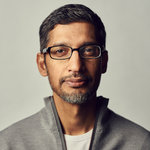
Mr. Sundar Pichai
CEO & Director
Sundar Pichai is an Indian-American business executive, best known as the Chief Executive Officer (CEO) of Alphabet Inc. and its subsidiary Google LLC. Born Pichai Sundararajan on June 10, 1972, in Madurai, Tamil Nadu, India, he grew up in a middle-class family in Chennai. Pichai earned his degree in Metallurgical Engineering from the Indian Institute of Technology Kharagpur, where he distinguished himself as a remarkable student.
He later pursued an M.S. in Material Sciences and Engineering from Stanford University and an MBA from the Wharton School of the University of Pennsylvania, where he was named a Siebel Scholar and a Palmer Scholar.
Pichai joined Google in 2004 and quickly rose through the ranks due to his leadership and product management skills. He initially worked on the Google Toolbar and later led the launch of Google Chrome, which became one of the world’s most popular web browsers. Known for his engineering expertise and innovative vision, he played vital roles in the development of key Google products, including Chrome OS, Google Drive, and Android.
In 2015, Pichai was appointed CEO of Google, reflecting the company's confidence in his leadership capabilities. When Google restructured to form Alphabet Inc. in 2015, he was appointed CEO of Google LLC. In December 2019, Pichai also became the CEO of Alphabet Inc., taking over from Larry Page.
Under his leadership, Pichai has been instrumental in driving Google's global growth and expansion into areas like artificial intelligence, hardware, and cloud computing. He is known for his strategic decision-making, focus on innovation, and commitment to making technology accessible to more people around the world.
Ms. Ruth M. Porat
President & Chief Investment Officer
Ruth Porat currently serves as President and Chief Investment Officer of Alphabet and Google, focusing on long-term investment strategies and the management of Other Bets. She served as Chief Financial Officer of Alphabet and Google from 2015 to 2024, playing a key role in strengthening the company's financial discipline, optimizing operational efficiency, and supporting major investments in cloud computing, AI, and hardware. Prior to joining Google, she was Executive Vice President and CFO at Morgan Stanley, where she advised on landmark transactions during the financial crisis and led the firm's global financial operations. Porat holds a BA from Stanford University, an MSc from the London School of Economics, and an MBA from the Wharton School at the University of Pennsylvania.
Mr. Sergey Brin
Co-Founder & Director
Sergey Brin is a renowned computer scientist and entrepreneur, best known as the co-founder of Google. Born on August 21, 1973, in Moscow, Russia, Brin immigrated to the United States with his family at the age of six. He attended the University of Maryland, where he earned his Bachelor of Science degree in computer science and mathematics. Brin later pursued a Ph.D. in computer science at Stanford University, where he met Larry Page.
Together, Brin and Page launched Google in 1998, initially operating out of a garage. Their search engine revolutionized the way people access information on the internet, eventually growing into one of the world's most influential technology companies. In 2015, Google underwent a corporate restructuring, creating a holding company called Alphabet Inc., under which Google became a subsidiary. Brin served as the President of Alphabet until 2019.
Throughout his career, Brin has been instrumental in pioneering various technological advancements, including efforts in artificial intelligence and autonomous vehicles. He is also known for his philanthropic endeavors, particularly in funding research for Parkinson's disease, a condition his mother has struggled with. Brin's impact on technology and innovation continues to be felt globally.
Mr. J. Kent Walker
President of Global Affairs, Chief Legal Officer & Company Secretary
J. Kent Walker is a prominent executive at Alphabet Inc., serving as the company's President of Global Affairs and Chief Legal Officer. In his role, he is responsible for overseeing legal, policy, trust, and safety teams, and guiding the company's work on important issues such as privacy, copyright, and online safety. Walker joined Google, now Alphabet, in 2006 as Vice President and General Counsel, and he has played a critical role in shaping the company's legal and regulatory strategies over the years.
Before joining Google, Walker had an extensive career in legal and executive positions. He worked at eBay as Deputy General Counsel, was a senior lawyer at Netscape, and held significant roles at AOL Time Warner and other tech companies. He also practiced law at the U.S. Department of Justice as an Assistant U.S. Attorney, gaining considerable experience in legal matters related to technology.
Walker is known for his expertise in navigating the complex intersection of technology, law, and public policy, and he frequently represents Alphabet in discussions with policymakers and regulators worldwide. His educational background includes a bachelor's degree from Harvard University and a law degree from Stanford Law School.
Dr. Prabhakar Raghavan
Senior Vice President of Knowledge and Information - Google
Dr. Prabhakar Raghavan is a prominent computer scientist and technology executive, currently serving as a senior vice president at Google, which is part of Alphabet Inc. He plays a significant role in overseeing Google’s Knowledge and Information organization, which includes Search, Assistant, Geo, Ads, Commerce, and Payments products. His work focuses on making information and services universally accessible and useful to users around the world.
Dr. Raghavan holds a Ph.D. in Electrical Engineering and Computer Science from the University of California, Berkeley. He has made notable contributions to the fields of search algorithms, web search, and information retrieval through both academic and applied research.
Before his tenure at Google, Dr. Raghavan held important positions at companies like Yahoo!, where he was the head of Yahoo! Labs and responsible for research in algorithmic science, and at IBM Research as a chief technology officer. He has co-authored several highly cited scientific papers and a popular textbook, "Introduction to Information Retrieval," which is widely used in academic courses on the subject.
Throughout his career, Dr. Raghavan has been active in contributing to the scientific community through his involvement in conferences, editorial boards, and his influence as a thought leader in technology and information science. His work has earned him recognition as a member of the National Academy of Engineering, reflecting his significant impact on the field.
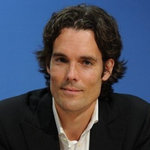
Mr. Philipp Schindler
Senior Vice President & Chief Business Officer of Google
Philipp Schindler is the Chief Business Officer at Alphabet Inc., the parent company of Google. In his role, Schindler is responsible for overseeing all global and regional direct sales and channel teams, which involves managing a large part of Google's commercial endeavors. He ensures that Google's advertising and sales strategies are effectively implemented to drive growth.
Before his time at Google, Schindler worked at AOL and was a significant part of its European operations. His experience spans various facets of digital advertising and business strategy, and he has a strong background in developing partnerships and scaling business initiatives globally. Schindler is known for his adeptness at navigating complex business landscapes and fostering significant growth in competitive markets.
Ms. Anat Ashkenazi
Senior VP & CFO
Biography unavailable
Ms. Amie Thuener O'Toole
Chief Accounting Officer & VP
Amie Thuener O'Toole is a prominent financial executive known for her role as the Chief Accounting Officer (CAO) at Alphabet Inc., the parent company of Google. In her position, she is responsible for overseeing Alphabet's accounting functions and ensuring the integrity and accuracy of financial reporting. Amie Thuener O'Toole joined Google in 2013, initially serving as the Director of SEC Reporting and Technical Accounting.
Before her tenure with Google and Alphabet, she gained extensive experience at key financial firms, including a significant role as a Managing Director at PricewaterhouseCoopers (PwC). Her expertise spans technical accounting, SEC reporting, and corporate finance. Amie's leadership and financial acumen have contributed significantly to maintaining Alphabet's reputation for transparency and compliance in financial matters. Her impressive career trajectory showcases her as a respected figure in the field of corporate accounting and finance.
Ms. Ellen West
Vice President of Investor Relations
Ellen West is not an officer at Alphabet Inc. It is possible that she may be an executive or officer in another context or company, but there is no notable public information available about an Ellen West in connection with Alphabet Inc. If there are further details about a different role or company affiliation you're interested in, please let me know!
1 / 9
Mr. Sundar Pichai
CEO & Director
Sundar Pichai is an Indian-American business executive, best known as the Chief Executive Officer (CEO) of Alphabet Inc. and its subsidiary Google LLC. Born Pichai Sundararajan on June 10, 1972, in Madurai, Tamil Nadu, India, he grew up in a middle-class family in Chennai. Pichai earned his degree in Metallurgical Engineering from the Indian Institute of Technology Kharagpur, where he distinguished himself as a remarkable student.
He later pursued an M.S. in Material Sciences and Engineering from Stanford University and an MBA from the Wharton School of the University of Pennsylvania, where he was named a Siebel Scholar and a Palmer Scholar.
Pichai joined Google in 2004 and quickly rose through the ranks due to his leadership and product management skills. He initially worked on the Google Toolbar and later led the launch of Google Chrome, which became one of the world’s most popular web browsers. Known for his engineering expertise and innovative vision, he played vital roles in the development of key Google products, including Chrome OS, Google Drive, and Android.
In 2015, Pichai was appointed CEO of Google, reflecting the company's confidence in his leadership capabilities. When Google restructured to form Alphabet Inc. in 2015, he was appointed CEO of Google LLC. In December 2019, Pichai also became the CEO of Alphabet Inc., taking over from Larry Page.
Under his leadership, Pichai has been instrumental in driving Google's global growth and expansion into areas like artificial intelligence, hardware, and cloud computing. He is known for his strategic decision-making, focus on innovation, and commitment to making technology accessible to more people around the world.
Ms. Ruth M. Porat
President & Chief Investment Officer
Ruth Porat currently serves as President and Chief Investment Officer of Alphabet and Google, focusing on long-term investment strategies and the management of Other Bets. She served as Chief Financial Officer of Alphabet and Google from 2015 to 2024, playing a key role in strengthening the company's financial discipline, optimizing operational efficiency, and supporting major investments in cloud computing, AI, and hardware. Prior to joining Google, she was Executive Vice President and CFO at Morgan Stanley, where she advised on landmark transactions during the financial crisis and led the firm's global financial operations. Porat holds a BA from Stanford University, an MSc from the London School of Economics, and an MBA from the Wharton School at the University of Pennsylvania.
Mr. Sergey Brin
Co-Founder & Director
Sergey Brin is a renowned computer scientist and entrepreneur, best known as the co-founder of Google. Born on August 21, 1973, in Moscow, Russia, Brin immigrated to the United States with his family at the age of six. He attended the University of Maryland, where he earned his Bachelor of Science degree in computer science and mathematics. Brin later pursued a Ph.D. in computer science at Stanford University, where he met Larry Page.
Together, Brin and Page launched Google in 1998, initially operating out of a garage. Their search engine revolutionized the way people access information on the internet, eventually growing into one of the world's most influential technology companies. In 2015, Google underwent a corporate restructuring, creating a holding company called Alphabet Inc., under which Google became a subsidiary. Brin served as the President of Alphabet until 2019.
Throughout his career, Brin has been instrumental in pioneering various technological advancements, including efforts in artificial intelligence and autonomous vehicles. He is also known for his philanthropic endeavors, particularly in funding research for Parkinson's disease, a condition his mother has struggled with. Brin's impact on technology and innovation continues to be felt globally.
Mr. J. Kent Walker
President of Global Affairs, Chief Legal Officer & Company Secretary
J. Kent Walker is a prominent executive at Alphabet Inc., serving as the company's President of Global Affairs and Chief Legal Officer. In his role, he is responsible for overseeing legal, policy, trust, and safety teams, and guiding the company's work on important issues such as privacy, copyright, and online safety. Walker joined Google, now Alphabet, in 2006 as Vice President and General Counsel, and he has played a critical role in shaping the company's legal and regulatory strategies over the years.
Before joining Google, Walker had an extensive career in legal and executive positions. He worked at eBay as Deputy General Counsel, was a senior lawyer at Netscape, and held significant roles at AOL Time Warner and other tech companies. He also practiced law at the U.S. Department of Justice as an Assistant U.S. Attorney, gaining considerable experience in legal matters related to technology.
Walker is known for his expertise in navigating the complex intersection of technology, law, and public policy, and he frequently represents Alphabet in discussions with policymakers and regulators worldwide. His educational background includes a bachelor's degree from Harvard University and a law degree from Stanford Law School.
Dr. Prabhakar Raghavan
Senior Vice President of Knowledge and Information - Google
Dr. Prabhakar Raghavan is a prominent computer scientist and technology executive, currently serving as a senior vice president at Google, which is part of Alphabet Inc. He plays a significant role in overseeing Google’s Knowledge and Information organization, which includes Search, Assistant, Geo, Ads, Commerce, and Payments products. His work focuses on making information and services universally accessible and useful to users around the world.
Dr. Raghavan holds a Ph.D. in Electrical Engineering and Computer Science from the University of California, Berkeley. He has made notable contributions to the fields of search algorithms, web search, and information retrieval through both academic and applied research.
Before his tenure at Google, Dr. Raghavan held important positions at companies like Yahoo!, where he was the head of Yahoo! Labs and responsible for research in algorithmic science, and at IBM Research as a chief technology officer. He has co-authored several highly cited scientific papers and a popular textbook, "Introduction to Information Retrieval," which is widely used in academic courses on the subject.
Throughout his career, Dr. Raghavan has been active in contributing to the scientific community through his involvement in conferences, editorial boards, and his influence as a thought leader in technology and information science. His work has earned him recognition as a member of the National Academy of Engineering, reflecting his significant impact on the field.
Mr. Philipp Schindler
Senior Vice President & Chief Business Officer of Google
Philipp Schindler is the Chief Business Officer at Alphabet Inc., the parent company of Google. In his role, Schindler is responsible for overseeing all global and regional direct sales and channel teams, which involves managing a large part of Google's commercial endeavors. He ensures that Google's advertising and sales strategies are effectively implemented to drive growth.
Before his time at Google, Schindler worked at AOL and was a significant part of its European operations. His experience spans various facets of digital advertising and business strategy, and he has a strong background in developing partnerships and scaling business initiatives globally. Schindler is known for his adeptness at navigating complex business landscapes and fostering significant growth in competitive markets.
Ms. Amie Thuener O'Toole
Chief Accounting Officer & VP
Amie Thuener O'Toole is a prominent financial executive known for her role as the Chief Accounting Officer (CAO) at Alphabet Inc., the parent company of Google. In her position, she is responsible for overseeing Alphabet's accounting functions and ensuring the integrity and accuracy of financial reporting. Amie Thuener O'Toole joined Google in 2013, initially serving as the Director of SEC Reporting and Technical Accounting.
Before her tenure with Google and Alphabet, she gained extensive experience at key financial firms, including a significant role as a Managing Director at PricewaterhouseCoopers (PwC). Her expertise spans technical accounting, SEC reporting, and corporate finance. Amie's leadership and financial acumen have contributed significantly to maintaining Alphabet's reputation for transparency and compliance in financial matters. Her impressive career trajectory showcases her as a respected figure in the field of corporate accounting and finance.
Ms. Ellen West
Vice President of Investor Relations
Ellen West is not an officer at Alphabet Inc. It is possible that she may be an executive or officer in another context or company, but there is no notable public information available about an Ellen West in connection with Alphabet Inc. If there are further details about a different role or company affiliation you're interested in, please let me know!
We rebuilt our DCF valuation models from the ground up and upgraded how Intrinsic Value is calculated. Alpha Spread now selects the method that best fits each company.
You can now see how the new methodology performed across thousands of stocks on our new Valuation Backtest page. We update the results at the end of every month.
Stock intrinsic value is the real worth of a company's stock, based on its financial health and performance.
Instead of looking at the stock's current market price, which can change due to people's opinions and emotions, intrinsic value helps us understand if a stock is truly a good deal or not.
By focusing on the company's actual financial strength, like its earnings and debts, we can make better decisions about which stocks to buy and when.