

Dover Corp
XMUN:DOV



Decide at what price you'd be comfortable buying and we'll help you stay ready.
|
D
|
Dover Corp
XMUN:DOV
|
US |

|
Caravelle International Group
NASDAQ:HTCO
|
SG |
|
B
|
Big 5 Sporting Goods Corp
XBER:BG3
|
US |

|
Ionic Rare Earths Ltd
ASX:IXRDB
|
AU |

|
Poste Italiane SpA
OTC:PITAF
|
IT |
|
B
|
Ballard Power Systems Inc
NASDAQ:BLDP
|
CA |
|
P
|
PPG Industries Inc
XBER:PPQ
|
US |

|
Prodigy Gold NL
ASX:PRX
|
AU |
|
C
|
CH Robinson Worldwide Inc
XMUN:CH1A
|
US |
Dover Corp
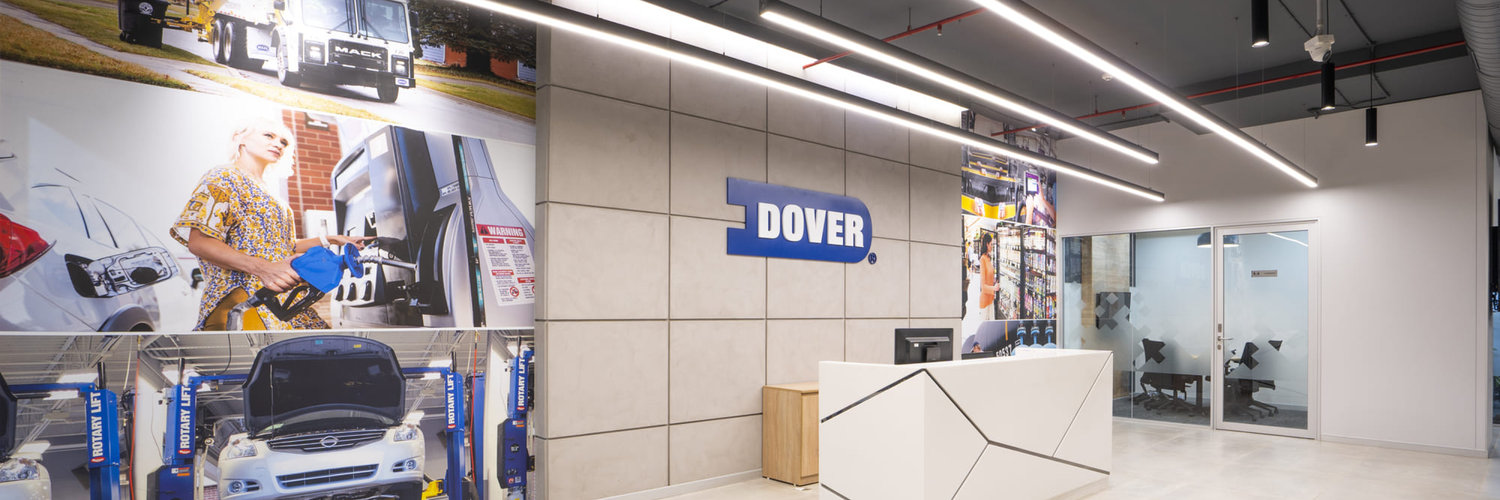
Dover Corp is an industrial company that makes specialized equipment, components, and replacement parts used in everyday business operations. Its products show up in places like fuel stations, refrigeration systems, food and beverage packaging lines, printing and marking equipment, pumps, and other factory and processing machinery. It sells mainly to businesses rather than consumers. The company earns money by selling new equipment, spare parts, consumables, and service work for the machines already in use. Its customers include manufacturers, process industries, convenience and fuel retailers, packaging companies, and service providers that maintain this equipment. A large part of Dover’s business comes from the installed base of equipment it has already placed in the market, which creates repeat demand for parts and maintenance. What makes Dover’s role different is that it sits deep in the industrial value chain, where customers care more about reliability, compatibility, and service support than flashy branding. Instead of one big consumer product line, Dover owns a collection of niche businesses that each serve a specific technical need and often build long relationships with customers over time.

Dover Corp is an industrial company that makes specialized equipment, components, and replacement parts used in everyday business operations. Its products show up in places like fuel stations, refrigeration systems, food and beverage packaging lines, printing and marking equipment, pumps, and other factory and processing machinery. It sells mainly to businesses rather than consumers.
The company earns money by selling new equipment, spare parts, consumables, and service work for the machines already in use. Its customers include manufacturers, process industries, convenience and fuel retailers, packaging companies, and service providers that maintain this equipment. A large part of Dover’s business comes from the installed base of equipment it has already placed in the market, which creates repeat demand for parts and maintenance.
What makes Dover’s role different is that it sits deep in the industrial value chain, where customers care more about reliability, compatibility, and service support than flashy branding. Instead of one big consumer product line, Dover owns a collection of niche businesses that each serve a specific technical need and often build long relationships with customers over time.
Orders surged: Dover posted record first-quarter bookings of $2.5 billion, up 24% year over year, with book-to-bill at 1.2 and every segment above 1, giving management more confidence in the year ahead.
Demand stayed strong: Management said the order strength was not driven by prebuying or tariffs, but by real demand and longer lead times in markets like heat exchangers, CO2 refrigeration, aerospace and defense, and data center cooling.
Outlook intact: Dover reaffirmed full-year guidance and said it is still targeting double-digit adjusted EPS growth for 2026, while noting it is “driving to the top end of the range” and may revisit guidance next quarter if booking trends stay strong.
Margins improving: Q1 margin performance was helped by volume leverage, pricing actions, productivity, and mix, while some businesses are still being held back by temporary capacity and facility-consolidation costs.
Cash returns continue: Free cash flow was $131 million in the quarter, or 6% of revenue, and Dover said its full-year free cash flow target remains 14% to 16% of revenue.
Big growth areas: Clean Energy & Fueling and Climate & Sustainability Technologies stood out, with organic growth of 11% and 15% respectively, while Dover pointed to AI, power infrastructure, liquid cooling, and CO2 refrigeration as major growth engines.
