
Viscofan SA
SWB:VIS



Decide at what price you'd be comfortable buying and we'll help you stay ready.
VIS's latest stock split occurred on Nov 25, 2026
The company executed a 2-for-1 stock split, meaning that for every share held, investors received 2 new shares.
Before the split, VIS traded at 440.8 per share. Afterward, the share price was about 53.9.
The adjusted shares began trading on Nov 25, 2026. This was the only stock split in VIS's history.
Global
Stock Splits Monitor
| Date | Company | Split | Pre-Split Price | Post-Split Price | |
|---|---|---|---|---|---|
|
Nov 27, 2026
|
B-52 Capital PCL
SET:B52
|
80-for-77
x1.038961038961
|
0.16 0.154 THB | 0.16 0.16 THB | |
|
Nov 27, 2026
|
VPBank Securities JSC
VN:VPX
|
145-for-100
x1.45
|
21150.0002 14586.207 VND | 14700 14700 VND | |
|
Nov 27, 2026
|
Daiwa Office Investment Corp
TSE:8976
|
4-for-1
x4
|
296300 66905 JPY | 70800 70800 JPY | |
|
Nov 27, 2026
|

|
Takara & Company Ltd
TSE:7921
|
3-for-1
x3
|
4200 1310 JPY | 1351 1351 JPY |
|
Nov 27, 2026
|

|
Nachi-Fujikoshi Corp
TSE:6474
|
5-for-1
x5
|
4635 817 JPY | 936 936 JPY |
 7921
 6474
Viscofan SA
Glance View
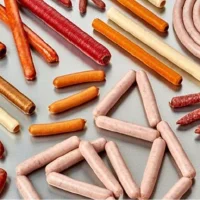
Viscofan SA makes edible and non-edible casings used to shape and package meat products such as sausages, hot dogs, and deli meats. Its main products are cellulose, collagen, fibrous, and plastic casings, along with related packaging materials and some equipment used to apply them. In simple terms, it supplies the “skin” that helps meat processors give products a uniform shape, protect them during handling, and improve shelf life. Its customers are meat processors, sausage makers, and food companies that need a steady supply of casings as part of their production lines. Viscofan makes money mainly by selling these consumable casing products, which are bought again and again as factories keep producing food. It also earns from equipment and services tied to how those casings are used in production. What makes Viscofan’s business different is that it sits in a very specific and important niche inside the food industry. It does not sell finished food to consumers; instead, it sells a production input that food makers rely on every day. That makes the company more like a specialized supplier to the meat-processing industry than a traditional food brand.
Create a free account · No card needed
