
EnBW Energie Baden Wuerttemberg AG
XETRA:EBK



Decide at what price you'd be comfortable buying and we'll help you stay ready.

|
Johnson & Johnson
NYSE:JNJ
|
US |

|
Berkshire Hathaway Inc
NYSE:BRK.A
|
US |

|
Bank of America Corp
NYSE:BAC
|
US |

|
Mastercard Inc
NYSE:MA
|
US |

|
UnitedHealth Group Inc
NYSE:UNH
|
US |

|
Exxon Mobil Corp
NYSE:XOM
|
US |

|
Pfizer Inc
NYSE:PFE
|
US |

|
Nike Inc
NYSE:NKE
|
US |

|
Visa Inc
NYSE:V
|
US |

|
Alibaba Group Holding Ltd
NYSE:BABA
|
CN |

|
JPMorgan Chase & Co
NYSE:JPM
|
US |

|
Coca-Cola Co
NYSE:KO
|
US |

|
Verizon Communications Inc
NYSE:VZ
|
US |

|
Chevron Corp
NYSE:CVX
|
US |

|
Walt Disney Co
NYSE:DIS
|
US |

|
PayPal Holdings Inc
NASDAQ:PYPL
|
US |
Q1-2024 Earnings Call
AI Summary
Earnings Call on May 14, 2024
Earnings: EnBW reported group adjusted EBITDA of EUR 1.3 billion for Q1, lower than last year as power and commodity prices normalized.
Guidance: Management confirmed full year guidance for all metrics, expecting robust performance despite market normalization.
Investments: Gross investments climbed to EUR 1.3 billion, nearly 80% higher year-over-year, with 90% focused on energy transition growth projects.
Net Debt: Net debt remained stable at EUR 11.5 billion but is forecast to rise by about EUR 4 billion during 2024 due to high CapEx.
Renewables Progress: Strong momentum in renewables with new solar and wind projects; on track for 6.5–7.5 GW renewables target by 2025.
Hedging: Fully hedged power sales for 2024, so recent power price increases are not expected to boost this year’s results.
ESG Recognition: EnBW received an A- score from CDP and published its first climate transition plan and ESG fact book.
EnBW delivered strong earnings in absolute terms, with group adjusted EBITDA at EUR 1.3 billion for Q1 2024. However, this was below the exceptional prior year due to normalization in power and commodity markets. The company emphasized that this decline was anticipated as price volatility subsides.
Management confirmed its full-year guidance across all metrics, stating that robust performance in the first quarter and stable market conditions support confidence in both segment and group outlooks. Guidance already reflects the lower volatility and decreased power price environment.
Gross investments reached EUR 1.3 billion in Q1, up almost 80% year-over-year. The majority, around 90%, was allocated to energy transition growth projects, including renewables, hydrogen, and grid expansion. About 60% went into sustainable generation infrastructure, while one-third supported system-critical infrastructure.
Net debt was stable at EUR 11.5 billion at quarter end but is expected to rise by around EUR 4 billion during 2024, mainly due to increased investments and slightly lower retained cash flow. The company issued EUR 500 million in green hybrid notes and plans to use the proceeds to refinance an existing hybrid note. Management does not currently plan to increase its hybrid debt stack.
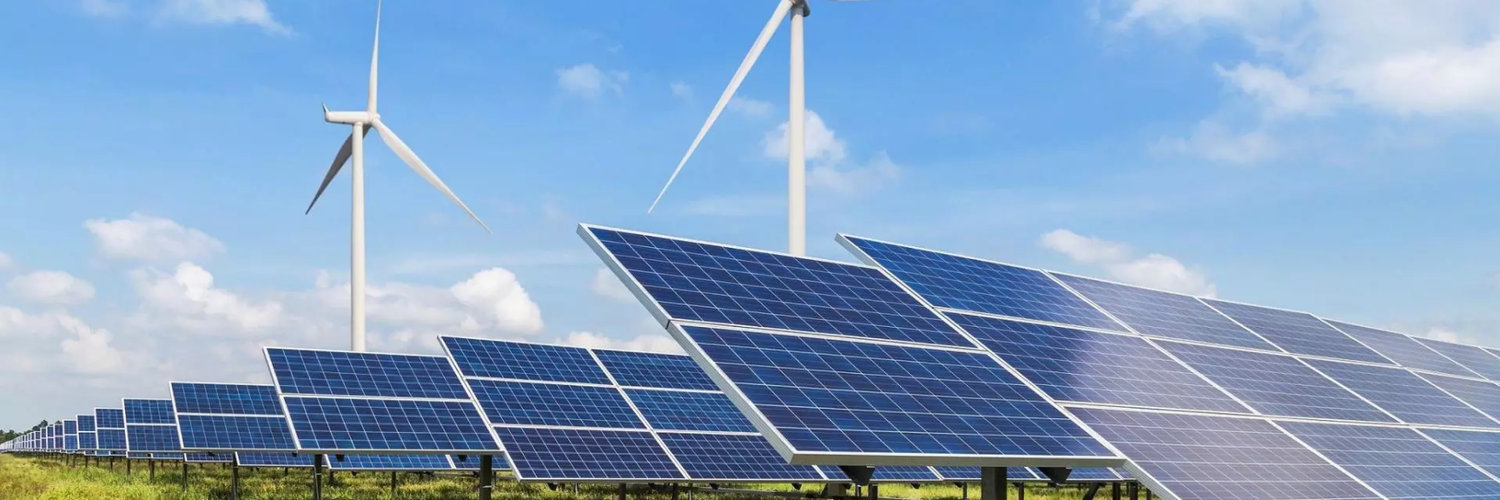
EnBW advanced several renewable projects, including starting construction of Germany's largest solar park in the southwest and securing all awarded capacity in the latest German solar tender. Renewables capacity reached 6.3 GW, with a target of 6.5–7.5 GW by 2025. Offshore wind farm He Dreiht has more than half its capacity secured via long-term PPAs.
The company is fully hedged for 2024, with hedge levels for 2025 at 70–90% and for 2026 at 30–60%. As a result, recent increases in German power prices will not materially impact 2024 results. PPA prices for offshore wind remain less volatile due to their long-term nature.
EnBW received recognition for its environmental achievements with an A- score from CDP. The company published its first climate transition plan and ESG fact book, both well received by the sustainable finance community. Investments and operational decisions are closely tied to accelerating the clean energy transition.
Low-risk grid and renewables activities contributed 67% of total earnings, over EUR 900 million in adjusted EBITDA, up from 58% last year. Thermal generation and trading saw lower EBITDA due to reduced hedge margins, closure of nuclear operations, and lower trading results. The smart customer infrastructure segment benefited from normalized procurement prices and strong B2B performance.

Ladies and gentlemen, welcome to the EnBW's investor and analyst conference call of the first 3 months 2024. I am George, the Chorus Call operator. [Operator Instructions] The conference must not be recorded for publication or broadcast.
At this time, it's my pleasure to hand over to Lenka Zikmundova, Head of Investor Relations. Please go ahead.
Thank you, George, and good afternoon, ladies and gentlemen. Thank you for joining EnBW's conference call on the first quarter of fiscal 2024. On with me today is Thomas Kusterer, our Deputy CEO and CFO, who will guide you through our presentation, after which we will start our Q&A session.
And with that, I would like to pass the ball to Thomas.
Thank you, Lenka, and good afternoon, everyone. The first quarter of 2024 was a good one in absolute terms, however, relatively weaker in comparison to an outstanding prior year. Overall, it was largely anticipated since the extremely elevated power and commodity prices seen in 2022 and 2023 are entering in a normalization phase.
Nevertheless, we have delivered robust earnings from all our segments, leading to the group adjusted EBITDA at EUR 1.3 billion and we confirm our full year guidance across all metrics. This is a consistent proof of the power and robustness of our integrated business model.
We are also on track with our progress in ESG and clean energy transition. This has been rewarded at the beginning of 2024 by CDP and internationally renowned nonprofit organization which recognized EnBW as a leader for environmental achievements on climate change, granting us an A- score.
We tried to provide a full transparency on our ESG activities and decarbonization road map. Just recently, EnBW published its first climate transition plan as well as its first ESG fact book. Both publications enjoyed a very positive response from our sustainable finance community. Same applies to our EUR 500 million green hybrid bond issued at the beginning of this year.
Turning now to our operational and strategic progress. EnBW has also successfully continued to move at pace with this project that highly contribute to promoting the energy transition. In renewables, we started construction of the largest solar park in the southwest of Germany in February.
The subsidy 3 plants will go into operations in 2025 with installed capacity of 80 megawatts and once completed, will be capable of generating enough solar power to supply around 70,000 households with electricity. Wind and solar, we are also successful in the latest German solar tender which ended on March 1. EnBW has been awarded for all 4 projects with a total capacity of around 40 megawatts.
As you can see, we are well on course to reach our renewables target of 6.5 to 7.5 gigawatts by 2025 from currently 6.3 gigawatts of installed renewables capacity. In our offshore business, we made further progress in He Dreiht. In April, EnBW and the German steel manufacturer Stahl-Holding-Saar, signed a 15-year PPA for 50 megawatts of generation capacity from the 960 megawatts offshore wind farm.
In the meantime, more than half of the capacity of He Dreiht is now secured by long-term PPAs with several German companies. Besides that, our large-scale gas and hydrogen infrastructure projects are gaining traction as well. In March, we kicked off construction of a new 250-kilometer pipeline for natural gas and hydrogen called South German natural gas pipeline. It will be the first hydrogen pipeline in the southwest of Germany with a connection to European transport routes and is expected to start transporting hydrogen in the early 2030s.
And finally, construction works have also started on our new H2-ready power plant in Heilbronn. This is the third trial of fuel switch projects launched by EnBW, with a total dispatchable capacity of 1.5 gigawatts. Thanks to the continuous expansion of new climate-friendly capacity EnBW has been able to decommission old and less climate-friendly power plants.
During the first 3 months of this year, we reduced our coal-fired generation capacity by almost 400 megawatts with the plant being shut down for good or moved into reserve at the request of the grid operator.
Speaking of generation business and to round the introduction off, I'm very happy that our management team is complete again. In mid-April, our Supervisory Board appointed Peter Heydecker, as new member of the Management Board responsible for sustainable generation infrastructure starting May 1.
Previously, Peter was in charge of EnBW's International Energy Trading business, which is part of the generation segment. He took over from Georgios Stamatelopoulos, who have been managing the division in a dual role since he became the new CEO of EnBW in March.
Let's now move on to Page 3 of the slide deck and dive into the earnings. As just mentioned, with EUR 1.3 billion for the group, our adjusted EBITDA was below last year's level as the commodity and power market normalizes. This expected development was mainly driven by sustainable generation infrastructure.
Low-risk activities comprising our grids as well as renewables business came up with a robust contribution of 67% of our total earnings in Q1, accounting for more than EUR 900 million in adjusted EBITDA compared to 58% in Q1 of last year. The decline in adjusted group net profit in the reporting period is primarily due to a reduction in EBITDA.
Let's now take a look at our business segments, starting on Slide 4 with sustainable generation infrastructure in which we achieved an adjusted EBITDA of almost EUR 800 million.
Starting with Renewables, adjusted EBITDA amounted to EUR 331 million. The decrease was driven by lower realized electricity prices, mainly from pump storage, despite the relocation of the remaining 545 megawatts of these assets in our portfolio to renewables in accordance with the updated EU taxonomy classification.
The decline in spread was expected and could be offset only to a minor extent by new capacity additions in wind and solar and by higher run-of-river power generation and better offshore wind conditions.
Adjusted EBITDA in Thermal Generation and Trading was EUR 467 million, marked by significantly lower realized hedge margins, the absence of income from nuclear power generation following the closure of the last unit in Germany in April 2023 and lower trading results on the back of reduced volatility in commodity markets.
EnBW's hedging strategy remains unchanged with up to 3 years rolling forward. As such, we are fully hedged for 2024, hedge levels for 2025 reached 70% to 90% and 30% to 60% for 2026, and we have started hedging first volumes for 2027 as well.
Adjusted EBITDA of system-critical infrastructure on Slide 5 came in at EUR 574 million, on par with the previous year high level as a result of higher earnings from our growth projects in which we are increasingly investing.
Now expenses for maintaining the grid reserve and for redispatch, which are temporary of nature, also drove earnings, this was slightly offset by increased personnel expenses. Year-on-year, our third segment, smart infrastructure for customers was significantly up on the back of seasonally lower procurement prices due to market normalization compared to the first quarter of 2023. Moreover, the good underlying performance, in particular from our B2B business, at EnBW subsidiaries supported our Q1 results in 2024.
Moving on to Slide 7. For the first quarter 2024, our gross investments totaled EUR 1.3 billion. This was almost 80% above the previous year's figures. 90% of these investments were allocated to growth projects linked to the energy transition, while 10% of the investment went into retrofitting existing assets. We have invested around 60% of our gross investments in sustainable generation infrastructure. Mainly this includes investments in our offshore activities in Germany and U.K. and in our 3 hydrogen-ready fuel switch projects from coal to gas.
About 1/3 of our gross investments were made in system-critical infrastructure, as in previous years, the focus was on expansion and modernization of our electricity transmission and distribution grid. The remaining investments went into smart infrastructure for customers, mainly the further expansion of our electric vehicle fast-charging infrastructure.
Overall, we recorded a higher amount of proceeds from divestments and cofinancing contributions by partners, particularly for our offshore wind farm He Dreiht and power transmission grid operator TransnetBW.
Ladies and gentlemen, let's turn to our retained cash flow, which amounted to a very solid EUR 1.1 billion in the first 3 months 2024. The decline year-on-year was mainly driven by lower operating earnings, as already touched upon and marginally higher dividend distributions to partners.
As illustrated on Slide 9, net debt remained stable at EUR 11.5 billion at the end of the first quarter since both investments and retained cash flow were roughly equal. In January, we issued EUR 500 million in green subordinated notes, of which 50% are classified as equity and therefore, reduced net debt by EUR 250 million.
We intend to use these proceeds to replace the EUR 500 million green hybrid note issued in 2019, which are callable from August 2024. As already mentioned at the beginning of the presentation, we confirm our full year guidance, which already reflects the decreasing volatility and lower power price environment. With a robust performance during the first quarter and an overall good beginning of the year, we feel comfortable with both the outlook on segment as well as on group level.
And now let me hand back to Lenka.
Thank you, so much. Ladies and gentlemen, we will now start with the Q&A session. George, operator, please begin.
[Operator Instructions] Our first question comes from Prithvi Vetsa with Bank of America.
So I just had a quick query on the guidance of net debt. I mean like is it -- can you provide any guidance for net debt for the full year? And also like comment on your bond issuance plans for the year? And may I also note the upside that you are like factoring into your guidance? I mean like in Germany, we have seen power prices rise in the last month. So would that have like any upside in your current guidance?
Prithvi, thanks actually for asking the question. Regarding your first question and potential upside from the increase of power price, I mean we are fully hedged for 2024. So we do not expect that does have a material impact on our guidance. So as I just said, fully hedged, so no material impact, at least not for 2024.
Regarding the bond issuance, I mean, we have prefinanced pretty much the better part for our capital needs for 2024. Do I fully rule out that we will be in the market somewhere in this year? No, but that needs to be seen very much depending on our investments going forward for 2024.
And regarding net debt guidance, we do expect actually that net debt is going to increase from currently the EUR 11.5 billion to EUR 50 billion to EUR 60 billion, very much depending, of course, on our investments in 2024. I mean, as I've just mentioned during the presentation, our retained cash flow compared to prior year is going down. Our gross investments are potentially going up. And that means that we might see the increase in net debt as I just alluded to.
On top of the CapEx, actually, we need to be -- we need to see how much in payments are actually developing over the course of this year very much depending on power prices at the end of the year. But factoring all these in, we assume an increase of roughly EUR 4 billion from today until year-end. Prithvi, does that answer your question?
Yes, yes, yes. It does. And then may I ask like one last question. Maybe 2 more. So like the first one is on the hybrid bonds. I mean, like given that like you are seeing an increase in net debt, like do you plan to increase your existing hybrid stack? And the second question is on PPAs. So like what kind of -- what range of PPA prices are you seeing for your offshore wind projects?
Prithvi, let me get start with the second question, PPA prices. We will not comment on PPA prices. Actually, it's market-sensitive information as you might be fully aware of. However, what we are seeing in principle is that the PPA prices are not as volatile as the power price because they are longer term, of course. I mean, as I just mentioned, we have just signed -- for 50 megawatts, a 15-year PPA, so sensitivity is much lower, and we are quite happy with the current levels.
Regarding the hybrid issuance and what we plan to do, we do not plan despite the fact that we do have free capacity. We do, for the time being, not planned to increase our hybrid volume. So do not expect that we will be in the market in the near future with any new hybrids.
[Operator Instructions] It looks like we have no more questions over the phone. We have a last-minute registration from the line of Andrew Moulder with (sic) Credit Suisse [ CreditSights ].
It's Andrew Moulder at CreditSights.
Andrew, and we are fully aware of that.
I just wanted to make sure everybody else on the call. No, I just had a simple question really or maybe not simple. I'm not sure. I just wanted to understand how you will now be accounting the CapEx that you spent on the transmission networks now that you've sold 49%. I mean when I think about it, I presume you're going to still be fully consolidating Transnet. So when I look at the investments in your cash flow statement, is that 100% of the CapEx? Or will that only show 49% or 51% of the CapEx that's being spent on the transmission networks?
Yes. That's a good question, actually, Andrew, and you just pointed out that we are fully consolidating. So it's included in our -- the gross investment is included in the numbers. So we have the gross investment and then we have the divestment. So we are showing both. So but when you're talking about our gross investments, it's 100% included. Does that answers...
Yes. Well, then where on your cash flow statement, would I see the amount of money that the other investors are putting into the...
In divestments, Andrew.
Okay. So even though it's not a divestment, it's just an additional investment that they're making?
Exactly, exactly, exactly. They're providing it. It's not a divestment in terms of really divesting something. It is a contribution by our partners for the CapEx on an annual basis.
Ladies and gentlemen, this was our last question.
Okay. Then we are done. Once again, thank you Thomas for your answers and comments. And thanks to all of you for joining. As always, appreciate the great questions. And if you have any further questions, please don't hesitate to reach out to our Investor Relations team. We are at your disposal for the rest of the day. All the best, and have a great day. Bye-bye.
Bye.
Ladies and gentlemen, the conference is now over. Thank you for choosing Chorus Call, and thank you for participating in the conference. You may now disconnect your lines. Goodbye.