Research Content
Uploading...

 Alphabet Inc Research
NASDAQ:GOOGL
Alphabet Inc Research
NASDAQ:GOOGL
NASDAQ:GOOGL
High Quality
Overvalued
-33%
Alphabet Inc Research


Analyst: Marcus Reed
Reviewed By: Carlos Mendes
Updated
Nov 5, 2025
12 minutes reading time
Summary
High Quality
Overvalued
-33%
Still a digital empire - but empires can be disrupted
Alphabet is one of the most dominant businesses ever built, with products used by billions and margins that most companies envy. But its core strength, Google Search, is under pressure. AI tools are changing how people find information, and Alphabet must reinvent its golden goose without killing it. The business is outstanding, the moat is real, but the future will be harder than the past.

Alpha Spread Analyst Team
Key Points:
- Alphabet runs Google, YouTube, Android, and other internet products used by billions daily.
- Revenue and profits have grown steadily, supported by global ad demand.
- Generates huge cash flow with minimal capital needs - a capital-light giant.
- Google Search and YouTube dominate attention and ad budgets across the web.
- Biggest risks: regulatory pressure and AI-driven disruption to the search business.
Bear Theses
AI erodes search economics. If users shift to AI assistants that bypass traditional search results, Alphabet's highest-margin ad engine could face steady, structural decline.
Regulatory and TAC pressure. Antitrust rulings, privacy limits, or rising payments to stay the default (TAC) could squeeze margins and curb Alphabet's ability to leverage data.
Cloud momentum stalls. AWS and Azure hold deep enterprise relationships; if Google Cloud can't keep closing the gap, Alphabet's best diversification play may never fully offset ad-business risk.
Bull
Theses
Cash-rich core, fast-growing Cloud. Search and YouTube still gush free cash flow, while Google Cloud is now profitable and scaling, giving Alphabet two engines instead of one.
AI leadership with room to monetize. DeepMind, Gemini, and custom TPUs put Alphabet at the forefront of generative-AI research; weaving those models into Search, Ads, and Cloud can unlock new revenue without huge incremental cost.
Embedded defaults and data moat. Billions rely on Android, Chrome, Maps, and Gmail by default, feeding Alphabet's unmatched data flywheel and keeping users and advertisers inside the ecosystem.
What the Company Does
Alphabet makes some of the world's most popular digital tools. Google Search, YouTube, Android, Chrome, Gmail, Maps, and Drive are used by billions every day. Each product helps strengthen the others, creating a powerful system that people rely on for information, entertainment, and work.
The company earns most of its money from advertising. When you search for something on Google or watch a video on YouTube, advertisers bid to show you ads. Alphabet gets paid when people click or watch. Ads from Search and YouTube make up about three-quarters of Alphabet's total sales. At the same time, other parts of the business like YouTube subscriptions, Google Play, and Google Cloud are growing and bringing in steady, recurring revenue.
Alphabet uses its advertising profits to build huge data centers, create custom computer chips, and develop new AI technologies. It also makes hardware products like Pixel phones, Nest smart-home devices, and Fitbit wearables. While selling devices isn’t its main focus, they help keep users connected to Alphabet’s services and improve the data that makes its products smarter.
Finally, Alphabet invests in "Other Bets" - new ideas that could fuel future growth. These include self-driving cars through Waymo, health tech through Verily, drone delivery with Wing, and cutting-edge AI research at DeepMind. These projects are small now, but could become important parts of the company in the future.
In short, Alphabet’s business is designed to capture attention, convert it into cash through targeted ads, reinvest the cash into cutting-edge infrastructure and innovation, and continue the loop, staying deeply integrated into digital life.
Frequently Asked Questions
Why are so many Alphabet services free?
Free services like Search, Maps, and Gmail attract billions of users, generating valuable attention and data. Alphabet monetizes this attention by selling ads, making far more money than it would by charging users directly.
How exactly does Alphabet make money from ads?
Advertisers compete in real-time auctions to show their ads on Google Search or YouTube. The highest bidder’s ad gets displayed, and Alphabet earns money whenever someone clicks that ad or views a sponsored video.
What is Google Cloud?
Google Cloud lets businesses use the same powerful servers, storage, and AI tools that Alphabet uses internally. Companies pay Alphabet to rent computing resources instead of building their own infrastructure.
Why invest in hardware if it’s not profitable?
Devices like Pixel and Nest help Alphabet keep users connected to its apps and services. More connected users provide valuable data, strengthen brand loyalty, and improve the overall ecosystem.
Market & Competition
Alphabet’s empire is still vast, but AI and new discovery habits are starting to redraw the maps.
— Alpha Spread Analyst Team
Market Opportunity
Alphabet built its empire by shaping how billions of people find information, watch videos, and discover new products. That empire is sitting right in the middle of two massive (and still expanding) digital markets: online advertising and cloud computing.
The global ad market continues to balloon, driven by the shift of shopping, entertainment, and discovery online. Every day, brands spend billions to catch your attention exactly where Alphabet has prime real estate: Google Search, YouTube, and billions of Android devices around the world.
But advertising isn't the only huge growth driver. Businesses are increasingly racing to adopt AI, and AI needs cloud infrastructure. Alphabet’s Google Cloud, long overshadowed by rivals, is now capitalizing on this shift by offering specialized AI services, custom chips, and powerful machine-learning tools. That’s opening up an entirely new, highly profitable market for Alphabet.
And beyond ads and cloud, Alphabet’s quiet bets in areas like autonomous driving, health technology, and generative AI promise to unlock even more billion-dollar opportunities. Alphabet isn’t just sitting on a gold mine; it’s digging new tunnels.
Competitive Landscape
Alphabet remains a giant in search, video, and mobile, but the ground is shifting fast. New players are changing how people discover information, where they shop, and how they consume content.
Here's where the main threats are coming from:
| Who | How they compete with Alphabet |
|---|---|

Amazon.com Inc
NASDAQ:AMZN
|
Captures shopping searches directly; more users start product searches on Amazon instead of Google. Also competes in cloud computing through AWS, leading in enterprise adoption over Google Cloud. |

Meta Platforms Inc
NASDAQ:META
|
Instagram and Facebook competes for ad budgets by keeping users inside social and video platforms, reducing time spent on Google properties. |
Microsoft Corp
NASDAQ:MSFT
|
Challenges Google Cloud with Azure in enterprise cloud services and AI tools, and threatens traditional search habits by integrating AI assistants into search and productivity apps. |

Tik Tok
ByteDance
|
Pulls user attention away from YouTube through short-form video, reducing YouTube’s viewing time and share of video ad dollars. |

AI platforms
ChatGPT, Perplexity, others
|
Offer direct answers instead of traditional search results, potentially reducing the number of ad-driven queries handled by Google. |
Beyond these rivals, regulators in the U.S. and Europe are also tightening the screws, aiming to limit Alphabet’s dominance in ads and data collection.
The fights are getting tougher, but Alphabet’s scale, data, and brand still give it powerful defenses.
Positioning & Economic Moat
Alphabet’s strength isn’t built on just one advantage - it’s the result of multiple layers working together.
From distribution to data to brand power, these layers make it extremely difficult for rivals to catch up.
Wide
Economic Moat
Alphabet Inc
No Moat
Narrow
Wide
Default Presence: Google’s services come pre-installed on billions of devices through Android and Chrome. And beyond physical access, Google owns the mental default: for billions of people, "search" simply means "Google." That kind of brand association is almost impossible to dislodge.
Data Flywheel: Every search, video, and map query feeds Alphabet's AI models, making them smarter over time. Better results attract more users, more users create more data - and the cycle reinforces itself.
Deep Ads Marketplace: Alphabet runs the largest, most liquid ad auction in the world. Advertisers come for scale and targeting precision; publishers and creators stay because the platform reliably delivers revenue.
Together, these advantages don't just make Alphabet dominant. They make its ecosystem self-reinforcing, growing stronger the longer it leads.
Frequently Asked Questions
What is an economic moat?
An economic moat is a long-term advantage that protects a business from competition — like a moat around a castle. It makes it harder for others to steal customers, undercut prices, or copy the business model.
Moats come in different sizes:
— No moat: The company competes purely on price or speed. Rivals can easily take market share.
— Narrow moat: The company has some edge — maybe technology, brand, or switching costs — but it’s not untouchable.
— Wide moat: The company has deep, lasting advantages that are hard to copy. Think platforms, ecosystems, or massive scale.
Alphabet is widely considered to have a wide moat. Its strength isn't just from size, but from the way its products, data, and default positions reinforce each other. Billions use Google Search, YouTube, Maps, and Android without thinking, because they’re the easiest choice. Every interaction improves Alphabet's AI models, creating a feedback loop that keeps users locked in. Breaking that cycle would take massive time, money, and brand trust - a challenge few competitors have overcome.
What's the risk from AI chatbots like ChatGPT?
If users start asking AI assistants for answers instead of typing queries into Google, search traffic (and the ads attached to it) could decline.
Growth Performance
Ads: The Cash Cow
For most of its life, Alphabet ran on a single engine: digital ads. Search ads, YouTube video ads, and display ads across the web brought in massive profits, year after year. Today, ads still make up the majority of Alphabet’s revenue. But growth is slowing as the market matures and competition from platforms like Amazon and TikTok pulls user attention and ad budgets in new directions. Ads remain a powerhouse, but they no longer drive the company’s future alone.
Cloud: The Growth Engine
Google Cloud is the fastest-growing part of Alphabet's business. After years of heavy investment, Cloud is now profitable and scaling fast, fueled by businesses needing AI-ready infrastructure, machine learning tools, and secure cloud services. While it still trails AWS (Amazon.com Inc) and Azure (Microsoft Corp), Cloud gives Alphabet a second major revenue engine - and one that’s growing faster than the traditional ad business.
AI & Bets: The Next Gear
Alphabet is betting that artificial intelligence will unlock its next major wave of growth. From launching the Gemini AI model to embedding AI across Search, YouTube, and Workspace, the company is racing to weave AI into everything it does.
Beyond AI, "Other Bets" like Waymo (self-driving cars) and Verily (healthcare tech) could eventually become major businesses, but for now, they remain long-term plays fueled by Alphabet's cash flow.
Frequently Asked Questions
Why is Google Cloud still behind AWS and Microsoft Azure?
AWS and Azure had a head start and built deep relationships with enterprise customers. Google Cloud is catching up by specializing in AI infrastructure and open-source tools, but it still has a smaller market share compared to the top two players.
What exactly is Alphabet doing with AI?
Alphabet is weaving AI across its entire business: upgrading Search with AI summaries, adding AI tools to YouTube and Gmail, building new models like Gemini, and offering AI services through Google Cloud. The goal is to make AI a default layer in everything users and businesses touch.
Are "Other Bets" like Waymo important for growth?
They could be, but not yet. Projects like Waymo (self-driving cars) and Verily (health tech) are long-term bets. They lose money today, but if even one succeeds, it could open up huge new markets for Alphabet in the future.
Margins & Profitability
Ads: How Alphabet Makes Big Profits
Alphabet’s ad business is a money machine. Google Search and YouTube don’t need huge sales teams or warehouses full of products. People come to them naturally, and advertisers pay to reach them.
The biggest cost Alphabet faces is TAC (traffic acquisition costs) - paying companies like Apple to keep Google the default search engine. Even after these payouts, Alphabet keeps a big chunk of each advertising dollar. That’s why the ad side of the business is so profitable.
Cloud: From a Drag to a Boost
For years, Google Cloud made it harder for Alphabet's profits to look good. Building giant data centers and winning business customers is expensive. But that’s changing.
Now that Cloud is profitable and growing, it's helping Alphabet's overall margins, not hurting them. As more companies rent Google's AI-ready servers, the same fixed costs get spread across more customers, meaning extra revenue brings more profit without a matching rise in costs. That’s called operating leverage.
Capital Efficiency: Getting a Lot from Every Dollar
Alphabet invests a lot: in AI, in new cloud servers, and in moonshot projects like Waymo. But it spends smart.
Instead of pouring money into factories or hardware, Alphabet mostly invests in software, data, and scalable infrastructure that can be reused across products.
That smart spending gives Alphabet strong returns on invested capital (ROIC): it earns a lot more from each dollar it invests compared to most companies. Simply put, Alphabet doesn't just make a lot of money. It uses its money very efficiently.
Frequently Asked Questions
What's a "margin" anyway?
A margin is the slice of each sales dollar the company keeps after paying costs. Gross margin looks at costs to make the product. Operating margin also subtracts running the business (staff, R&D, marketing). Higher margins mean more money left over.
What is ROIC, and why should I care?
ROIC stands for Return on Invested Capital — basically, it answers the question: “For every dollar NVIDIA puts into its business, how much profit does it get back?”
It’s a key way to measure how efficiently a company turns its resources into results.
Alphabet scores high because it doesn’t have to build expensive factories or carry heavy inventory. Instead, it invests in software, AI, cloud infrastructure, and data systems — assets that can be reused, scaled, and monetized across billions of users with minimal extra cost.
How is ROIC different from profit margins?
— Margins show how much profit is made from sales.
— ROIC shows how well the company turns investment dollars into profit.
A company can have strong margins but still poor ROIC if it wastes money chasing growth. Alphabet stands out because it manages to keep both high: it runs a highly profitable ad business, and it invests in ways that generate lasting returns without constant reinvestment.
What is an "operating leverage"?
Fixed costs stay mostly the same even when sales grow. If revenue doubles but expenses barely move, profit rises faster than sales. That amplifying effect is called operating leverage.
For Alphabet, Cloud’s fixed costs are now spread over more customers, boosting profitability as Cloud scales.
Free Cash Flow
When you look at a business, profits on paper are one thing, but real cash is what truly matters.
Free cash flow shows how much money Alphabet actually keeps after running the business and investing for the future. It’s what’s left over to reward shareholders, build new projects, or protect against hard times. That’s why it deserves its own spotlight.
How Alphabet Prints Cash
Alphabet’s business turns revenue into real cash with impressive efficiency.
Ads and Cloud services require upfront investments, but once the platforms are running, each new dollar of revenue adds very little extra cost. Google doesn't need big inventories, factories, or heavy logistics. That’s why Alphabet consistently generates billions in free cash flow every quarter - even after paying for operations, content costs, and building new data centers.
How Durable the Stream Is
This cash machine is built to last, but it’s not invincible.
Advertising remains the biggest source, and while ad budgets can swing with the economy, Alphabet's reach across search, video, and apps helps smooth the bumps. Cloud revenue adds a growing layer of subscription-like stability.
Risks like rising TAC costs, tighter privacy rules, or shifts in how people search (like using AI assistants) could pressure cash flow over time. But Alphabet's diversity of services and global scale give it strong buffers against sudden shocks.
How Alphabet Uses Its Cash
Alphabet doesn't just sit on the cash it generates - it puts it to work.
The company returns huge amounts to shareholders through massive stock buybacks, shrinking the number of shares over time and boosting long-term value. In April 2024, Alphabet initiated its first-ever quarterly cash dividend starting at $0.20 per share, adding a modest income component to its capital-return program. It also keeps a large cash reserve ready for future needs: acquisitions, moonshot investments, or navigating regulatory challenges.
Alphabet's free cash flow doesn’t just sustain the business. It funds the next generation of innovation.
Frequently Asked Questions
Why is Free Cash Flow more important than earnings?
Earnings can be shaped by accounting rules, but free cash flow is the money that actually lands in the bank.
Net income includes non-cash items: like stock-based compensation, depreciation, and accounting estimates that may not reflect real transactions. Alphabet's reported profits can swing with shifts in stock expenses or regulatory settlements.
Free cash flow strips out that noise. It shows what's left after Alphabet pays for operations, covers capital expenses like new data centers, and funds R&D.
That leftover cash is what fuels buybacks, investments in AI and moonshots, and Alphabet’s large cash reserves. For many investors, free cash flow is the clearest signal of Alphabet’s financial strength.
How do share buybacks help me?
When Alphabet uses its cash to repurchase its own stock, those shares are permanently removed from circulation. As a result, the company's earnings, cash flows, and assets are divided among fewer shares.
You still own the same number of shares, but each one now represents a slightly larger piece of Alphabet's business. Over time, this can boost earnings per share (EPS) and support a higher stock price, even if overall profits stay steady. In short, buybacks quietly increase the ownership stake of every remaining shareholder.
Management

Mr. Sundar Pichai
CEO & Director
Sundar Pichai is an Indian-American business executive, best known as the Chief Executive Officer (CEO) of Alphabet Inc. and its subsidiary Google LLC. Born Pichai Sundararajan on June 10, 1972, in Madurai, Tamil Nadu, India, he grew up in a middle-class family in Chennai. Pichai earned his degree in Metallurgical Engineering from the Indian Institute of Technology Kharagpur, where he distinguished himself as a remarkable student.
He later pursued an M.S. in Material Sciences and Engineering from Stanford University and an MBA from the Wharton School of the University of Pennsylvania, where he was named a Siebel Scholar and a Palmer Scholar.
Pichai joined Google in 2004 and quickly rose through the ranks due to his leadership and product management skills. He initially worked on the Google Toolbar and later led the launch of Google Chrome, which became one of the world’s most popular web browsers. Known for his engineering expertise and innovative vision, he played vital roles in the development of key Google products, including Chrome OS, Google Drive, and Android.
In 2015, Pichai was appointed CEO of Google, reflecting the company's confidence in his leadership capabilities. When Google restructured to form Alphabet Inc. in 2015, he was appointed CEO of Google LLC. In December 2019, Pichai also became the CEO of Alphabet Inc., taking over from Larry Page.
Under his leadership, Pichai has been instrumental in driving Google's global growth and expansion into areas like artificial intelligence, hardware, and cloud computing. He is known for his strategic decision-making, focus on innovation, and commitment to making technology accessible to more people around the world.
He later pursued an M.S. in Material Sciences and Engineering from Stanford University and an MBA from the Wharton School of the University of Pennsylvania, where he was named a Siebel Scholar and a Palmer Scholar.
Pichai joined Google in 2004 and quickly rose through the ranks due to his leadership and product management skills. He initially worked on the Google Toolbar and later led the launch of Google Chrome, which became one of the world’s most popular web browsers. Known for his engineering expertise and innovative vision, he played vital roles in the development of key Google products, including Chrome OS, Google Drive, and Android.
In 2015, Pichai was appointed CEO of Google, reflecting the company's confidence in his leadership capabilities. When Google restructured to form Alphabet Inc. in 2015, he was appointed CEO of Google LLC. In December 2019, Pichai also became the CEO of Alphabet Inc., taking over from Larry Page.
Under his leadership, Pichai has been instrumental in driving Google's global growth and expansion into areas like artificial intelligence, hardware, and cloud computing. He is known for his strategic decision-making, focus on innovation, and commitment to making technology accessible to more people around the world.

Ms. Ruth M. Porat
President & Chief Investment Officer
Ruth Porat currently serves as President and Chief Investment Officer of Alphabet and Google, focusing on long-term investment strategies and the management of Other Bets. She served as Chief Financial Officer of Alphabet and Google from 2015 to 2024, playing a key role in strengthening the company's financial discipline, optimizing operational efficiency, and supporting major investments in cloud computing, AI, and hardware. Prior to joining Google, she was Executive Vice President and CFO at Morgan Stanley, where she advised on landmark transactions during the financial crisis and led the firm's global financial operations. Porat holds a BA from Stanford University, an MSc from the London School of Economics, and an MBA from the Wharton School at the University of Pennsylvania.

Mr. Sergey Brin
Co-Founder & Director
Sergey Brin is a renowned computer scientist and entrepreneur, best known as the co-founder of Google. Born on August 21, 1973, in Moscow, Russia, Brin immigrated to the United States with his family at the age of six. He attended the University of Maryland, where he earned his Bachelor of Science degree in computer science and mathematics. Brin later pursued a Ph.D. in computer science at Stanford University, where he met Larry Page.
Together, Brin and Page launched Google in 1998, initially operating out of a garage. Their search engine revolutionized the way people access information on the internet, eventually growing into one of the world's most influential technology companies. In 2015, Google underwent a corporate restructuring, creating a holding company called Alphabet Inc., under which Google became a subsidiary. Brin served as the President of Alphabet until 2019.
Throughout his career, Brin has been instrumental in pioneering various technological advancements, including efforts in artificial intelligence and autonomous vehicles. He is also known for his philanthropic endeavors, particularly in funding research for Parkinson's disease, a condition his mother has struggled with. Brin's impact on technology and innovation continues to be felt globally.
Together, Brin and Page launched Google in 1998, initially operating out of a garage. Their search engine revolutionized the way people access information on the internet, eventually growing into one of the world's most influential technology companies. In 2015, Google underwent a corporate restructuring, creating a holding company called Alphabet Inc., under which Google became a subsidiary. Brin served as the President of Alphabet until 2019.
Throughout his career, Brin has been instrumental in pioneering various technological advancements, including efforts in artificial intelligence and autonomous vehicles. He is also known for his philanthropic endeavors, particularly in funding research for Parkinson's disease, a condition his mother has struggled with. Brin's impact on technology and innovation continues to be felt globally.

Dr. Prabhakar Raghavan
Senior Vice President of Knowledge and Information - Google
Dr. Prabhakar Raghavan is a prominent computer scientist and technology executive, currently serving as a senior vice president at Google, which is part of Alphabet Inc. He plays a significant role in overseeing Google’s Knowledge and Information organization, which includes Search, Assistant, Geo, Ads, Commerce, and Payments products. His work focuses on making information and services universally accessible and useful to users around the world.
Dr. Raghavan holds a Ph.D. in Electrical Engineering and Computer Science from the University of California, Berkeley. He has made notable contributions to the fields of search algorithms, web search, and information retrieval through both academic and applied research.
Before his tenure at Google, Dr. Raghavan held important positions at companies like Yahoo!, where he was the head of Yahoo! Labs and responsible for research in algorithmic science, and at IBM Research as a chief technology officer. He has co-authored several highly cited scientific papers and a popular textbook, "Introduction to Information Retrieval," which is widely used in academic courses on the subject.
Throughout his career, Dr. Raghavan has been active in contributing to the scientific community through his involvement in conferences, editorial boards, and his influence as a thought leader in technology and information science. His work has earned him recognition as a member of the National Academy of Engineering, reflecting his significant impact on the field.
Dr. Raghavan holds a Ph.D. in Electrical Engineering and Computer Science from the University of California, Berkeley. He has made notable contributions to the fields of search algorithms, web search, and information retrieval through both academic and applied research.
Before his tenure at Google, Dr. Raghavan held important positions at companies like Yahoo!, where he was the head of Yahoo! Labs and responsible for research in algorithmic science, and at IBM Research as a chief technology officer. He has co-authored several highly cited scientific papers and a popular textbook, "Introduction to Information Retrieval," which is widely used in academic courses on the subject.
Throughout his career, Dr. Raghavan has been active in contributing to the scientific community through his involvement in conferences, editorial boards, and his influence as a thought leader in technology and information science. His work has earned him recognition as a member of the National Academy of Engineering, reflecting his significant impact on the field.

Mr. Philipp Schindler
Senior Vice President & Chief Business Officer of Google
Philipp Schindler is the Chief Business Officer at Alphabet Inc., the parent company of Google. In his role, Schindler is responsible for overseeing all global and regional direct sales and channel teams, which involves managing a large part of Google's commercial endeavors. He ensures that Google's advertising and sales strategies are effectively implemented to drive growth.
Before his time at Google, Schindler worked at AOL and was a significant part of its European operations. His experience spans various facets of digital advertising and business strategy, and he has a strong background in developing partnerships and scaling business initiatives globally. Schindler is known for his adeptness at navigating complex business landscapes and fostering significant growth in competitive markets.
Before his time at Google, Schindler worked at AOL and was a significant part of its European operations. His experience spans various facets of digital advertising and business strategy, and he has a strong background in developing partnerships and scaling business initiatives globally. Schindler is known for his adeptness at navigating complex business landscapes and fostering significant growth in competitive markets.

Ms. Amie Thuener O'Toole
Chief Accounting Officer & VP
Amie Thuener O'Toole is a prominent financial executive known for her role as the Chief Accounting Officer (CAO) at Alphabet Inc., the parent company of Google. In her position, she is responsible for overseeing Alphabet's accounting functions and ensuring the integrity and accuracy of financial reporting. Amie Thuener O'Toole joined Google in 2013, initially serving as the Director of SEC Reporting and Technical Accounting.
Before her tenure with Google and Alphabet, she gained extensive experience at key financial firms, including a significant role as a Managing Director at PricewaterhouseCoopers (PwC). Her expertise spans technical accounting, SEC reporting, and corporate finance. Amie's leadership and financial acumen have contributed significantly to maintaining Alphabet's reputation for transparency and compliance in financial matters. Her impressive career trajectory showcases her as a respected figure in the field of corporate accounting and finance.
Before her tenure with Google and Alphabet, she gained extensive experience at key financial firms, including a significant role as a Managing Director at PricewaterhouseCoopers (PwC). Her expertise spans technical accounting, SEC reporting, and corporate finance. Amie's leadership and financial acumen have contributed significantly to maintaining Alphabet's reputation for transparency and compliance in financial matters. Her impressive career trajectory showcases her as a respected figure in the field of corporate accounting and finance.
CEO and Founders’ Shadow
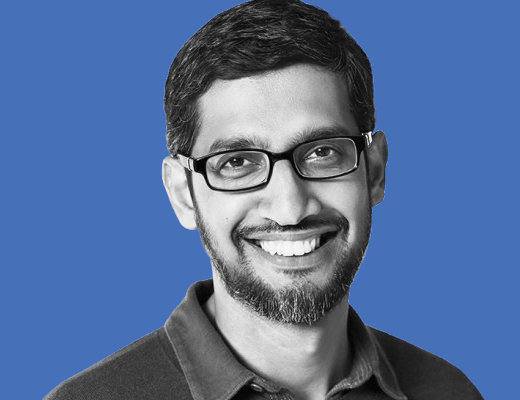
Alphabet is officially led by Sundar Pichai, who serves as CEO of both Alphabet and Google.
Pichai is known for his calm, product-driven style: more builder than showman. He focuses on integrating AI across Alphabet’s products and strengthening operational discipline as the company grows more complex.
But Alphabet’s original founders - Larry Page and Sergey Brin - still cast a long shadow. Thanks to Alphabet’s dual-class share structure, they retain effective voting control even though they stepped back from day-to-day management. That means big strategic moves, like major acquisitions or deep bets on AI, are still heavily shaped by the vision of the founders, even if Pichai runs the show operationally.
Alphabet’s Management Playbook
Alphabet’s culture is built around scale without rigidity. It gives product teams autonomy to innovate quickly, while major platform decisions (like Search, Cloud, YouTube) stay tightly coordinated.
Engineering excellence is the foundation: key executives often come from technical backgrounds, and internal debates favor data and experimentation over politics. The structure also encourages long-term bets through separate units like X (the “moonshot factory”) and Other Bets, where projects like Waymo and Verily are nurtured semi-independently.
Decision-making moves slower than at a startup, but Alphabet trades speed for durability, balancing innovation with the need to manage one of the world's largest user bases responsibly.
Ownership & Incentives
Founders Larry Page and Sergey Brin still control Alphabet through their special Class B shares, even while holding relatively small economic stakes. Sundar Pichai and other top executives are heavily paid in stock-based compensation, with rewards tied to Alphabet’s long-term total shareholder return (TSR).
Insider ownership (by executives and board members) remains modest compared to founder-led companies like Meta or NVIDIA. However, the incentive structure strongly aligns management with shareholders: executives benefit most if Alphabet's value grows steadily over the years, not from chasing short-term stock pops.
Long-Term View
Alphabet’s future depends on one hard question: can it evolve search fast enough to stay essential in an AI-driven world?
— Alpha Spread Analyst Team
Alphabet still owns some of the internet’s most valuable ground: Search, YouTube, Maps, Android. For decades, people didn’t just browse the web - they "Googled" it. That habit built one of the most powerful cash machines in history.
But AI is starting to reshape how people expect answers: faster, more conversational, more direct. New habits are forming, slowly but surely. Alphabet doesn’t need to throw away its search empire, but it must weave AI into the experience without losing what made Google indispensable: speed, trust, and the ability to explore.
If it gets the balance right, Alphabet can reinforce its dominance. If it stumbles, it risks watching discovery drift toward new platforms it doesn’t fully control.
Frequently Asked Questions
Does Alphabet need to replace search with AI?
No. Search isn't going away. Alphabet's challenge is to evolve search by adding AI where it helps (faster answers, better summaries) without losing the speed, trust, and control that made Google so valuable in the first place.
What's the real risk from AI assistants?
The danger isn't that people will stop searching altogether. It's that more questions could be answered by AI platforms outside of Google's control (like Siri, ChatGPT, or Alexa). Even small shifts in where people start their searches could chip away at Alphabet's user base and ad revenue over time.
How could regulation hurt Alphabet?
Regulators could limit Alphabet's ability to stay the default search option on phones and browsers or restrict how much data it can collect and use for targeting ads. Either would make Alphabet's ad engine less efficient and lower profitability.
Valuation
GOOGL
Intrinsic Value
205.83
USD
Overvaluation 33%
Alphabet’s stock trades at a fair price, but that fairness reflects the uncertainty about its next chapter. The market still values Alphabet's dominance in search, ads, YouTube, and Android. What's being debated is whether AI shifts will subtly reshape these strengths or seriously erode them.
YouTube, Chrome, and Android remain highly defensible. Their advantage comes from user habits, content ecosystems, and platform control - things AI can’t replace overnight. Search is where the risk sits: if users increasingly turn to AI assistants instead of typing queries into Google, Alphabet's most profitable engine could face pressure.
The current valuation assumes Alphabet will adapt - that it will successfully weave AI into search, keep users engaged, and preserve its advertising machine. But it also leaves little margin for error.
It’s not a bargain, and it’s not overpriced - it’s a bet on Alphabet’s ability to evolve faster than the platform shifts happening around it.
Frequently Asked Questions
What is "intrinsic value" on Alpha Spread?
It’s our best estimate of what the stock is worth based on the company’s cash flows and market comparisons - not on today’s share price. Think of it as a “fair price” tag.
How do you arrive at "intrinsic value"?
We model Alphabet's future cash flows, discount them back to today at a rate that reflects business risk, then add a sanity check using comparable companies. Market mood doesn't drive the model. Fundamentals do.
Why combine DCF with multiples?
DCF is powerful but sensitive to small tweaks. Cross‑checking with peer multiples (P/E, EV/EBITDA, etc) keeps the valuation grounded in market reality.
Should You Buy It
In a world of rapid change, Alphabet still owns the roads most people travel.
— Alpha Spread Analyst Team
Alphabet offers quality, scale, and huge cash flows at a reasonable valuation. You're not paying a bargain price, but you’re also not paying for hype. The stock reflects real assets: a dominant ad business, a growing cloud platform, and a deep pipeline of AI innovation.
The open question is execution. Alphabet needs to integrate AI into its core products without losing user trust, revenue, or relevance.
The market assumes Alphabet will adapt but leaves little room for big mistakes.
Investor Fit
- Long-term compounders who value steady cash flow today and optionality from AI and Cloud over the next decade.
- Investors comfortable with tech volatility who can handle regulatory headlines and evolving business models without panicking.
- Not a fit for traders chasing quick AI hype, as Alphabet’s AI integration will play out over years, not quarters.
- Not ideal for income-focused investors, since Alphabet prioritizes buybacks over paying dividends.
Did you find this research helpful?
What was missing or confusing?
What did you like most?
Thank you for your feedback!
It will help us to make research reports better.
Last Research Reports


