Research Content
Uploading...

 Microsoft Corp Research
NASDAQ:MSFT
Microsoft Corp Research
NASDAQ:MSFT
NASDAQ:MSFT
High Quality
Slightly Undervalued
+6%
Microsoft Corp Research


Analyst: Marcus Reed
Reviewed By: Carlos Mendes
Updated
Nov 5, 2025
11 minutes reading time
Summary
High Quality
Slightly Undervalued
+6%
A business that rarely misses, and rarely comes cheap
Microsoft is strong in all the right places: cloud, business software, and AI. The company has a real advantage, strong leadership, and a strategy that builds momentum over time. But the stock price already expects near-perfect results. If everything goes right, that may be fine. If not, there is little room for mistakes. This is a great business, but it only makes sense if you are thinking long term and willing to be patient.

Alpha Spread Analyst Team
Key Points:
- Microsoft powers how the modern workplace operates, from documents and meetings to cloud and AI.
- Its wide moat comes from deep product integration, high switching costs, and strong network effects.
- Free cash flow is strong and consistent, giving the company flexibility to invest and return capital.
- Leadership is stable, focused, and has a strong track record of long-term execution.
- The stock looks expensive, and future returns will depend on flawless execution across all fronts.
Bear Theses
Valuation leaves little room for stumbles. The stock already prices in near-perfect execution; even solid results could disappoint if growth or AI adoption slows.
Rise of AI-native challengers. Lean startups or big-tech rivals could launch cheaper, smarter cloud and productivity tools, gradually eroding Microsoft’s lock-in and premium pricing.
Regulatory and antitrust pressure. Governments may force Microsoft to unbundle Teams, Copilot, or app-store rules, weakening its all-in-one moat and cross-selling power.
Bull
Theses
Deep, sticky ecosystem drives recurring cash. Microsoft 365, Azure, LinkedIn, and Xbox/Game Pass reinforce one another, making it painful for customers to leave and allowing steady price increases.
Multiple growth engines under one roof. Cloud, AI-powered Copilot upsells, and gaming subscriptions each have long runways; together they can offset slowdowns in any single segment.
Proven leadership and disciplined capital use. Satya Nadella's team has turned Microsoft into a cloud-first powerhouse, keeps ROIC high, and funnels vast free cash flow into high-return projects, buybacks, and dividends.
What the Company Does
If you've ever used Word, Excel, or Outlook, you’ve used Microsoft.
This is the company that builds the software most people use to do their jobs. And it’s not just apps: Microsoft also runs a giant cloud platform called Azure, which powers websites, apps, and even AI tools behind the scenes.
Most of Microsoft’s money comes from businesses, not consumers. Companies pay every month to use Microsoft's tools. That makes the business very stable, because once people rely on this software, they almost never switch.
Microsoft also owns LinkedIn (the top site for hiring and networking), GitHub (where coders build software), and Xbox (one of the biggest names in gaming).
Now, Microsoft is adding AI to everything. You can ask Word to write a draft. Ask Excel to build a chart. Ask Outlook to summarize your emails. These features are part of a new tool called Copilot, and they're a big reason why businesses are paying even more to use Microsoft.
Frequently Asked Questions
What is Microsoft 365?
Microsoft 365 is a subscription that gives you access to tools like Word, Excel, Outlook, and Teams. Instead of buying the software once and keeping it forever, you pay every month to always get the latest version, along with cloud storage and other features.
What is Azure, and why does it matter?
Azure is Microsoft's cloud platform. It lets companies run websites, store data, train AI models, and much more - all using Microsoft's servers instead of their own. Think of it as "renting computer power and infrastructure online."
What is Copilot?
Copilot is Microsoft's built-in AI assistant. It lives inside tools like Word, Excel, and Outlook, and helps you do things faster: like write text, build charts, or summarize messages. It's designed to make everyday tasks easier by adding smart automation.
Market & Competition
Giants battle Microsoft product-to-product, but nobody matches its entire system.
— Alpha Spread Analyst Team
Market Opportunity
Microsoft plays in some of the biggest markets in tech, and every one of them is still growing.
First, there's business software. Tools like Word, Excel, Outlook, and Teams have become the default in offices around the world. These aren't nice-to-haves, they're essential. And because more companies are switching to monthly software subscriptions (instead of one-time licenses), this market is now all about steady, recurring revenue.
Next is cloud computing, where companies move their servers and data into online platforms like Azure. It's cheaper, faster, and more flexible than running everything in-house. The shift to cloud isn't a trend; it's a long-term transformation. Most businesses are still early in that journey, which gives Microsoft a long runway.
Then there's artificial intelligence, where Microsoft is moving quickly to embed smart features into tools people already use. That's a huge advantage. While other companies are building new apps from scratch, Microsoft is putting AI into Word, Excel, Outlook, and more, giving people instant value with no learning curve.
Finally, don't forget gaming. With Xbox, Game Pass, and the Activision Blizzard deal, Microsoft is now a top player in the global gaming industry. Games aren't just entertainment; they're one of the most profitable parts of consumer tech.
Microsoft isn't betting on one product or one market. It’s in multiple high-growth areas at once, and has the resources, relationships, and distribution to win across all of them.
Competitive Landscape
Microsoft doesn't compete with one company, it competes with many of the biggest tech giants across different markets. Each one is strong in its own category. But what makes Microsoft different is that it connects everything into one system, while most of its rivals focus on a single layer.
| Company | Focus | How Microsoft Competes |
|---|---|---|

Amazon.com Inc
NASDAQ:AMZN
|
AWS (cloud platform) | AWS is the largest cloud provider, but Azure is catching up fast, especially with companies already using Microsoft 365, since Azure plugs right into their existing setup. |

Alphabet Inc
NASDAQ:GOOGL
|
Google Workspace + Google Cloud | Google Docs, Sheets, and Gmail are popular in startups and schools. But Microsoft 365 is still preferred by most big companies because it offers more features, stronger admin tools, and better integration with other systems. |

Salesforce Inc
NYSE:CRM
|
Salesforce CRM platform | Salesforce dominates CRM, but Microsoft’s Dynamics is growing fast, especially among companies that want everything — CRM, email, documents — in one ecosystem. |

Sony Group Corp
TSE:6758
|
PlayStation consoles & studios | PlayStation leads in console sales, but Microsoft is betting on subscriptions with Game Pass and cloud gaming — a more flexible model that could grow faster long-term. |
Most competitors beat Microsoft in one slice of the market. Google has strong search. AWS leads in cloud. But Microsoft connects it all - productivity, cloud, AI, and developer tools - into a single experience that's hard to match and even harder to rip out. It's not about winning every fight. It's about owning the system everything plugs into.
Positioning & Economic Moat
Microsoft has a wide economic moat, one of the strongest in big tech.
This moat is built on three things: switching costs, tight product integration, and network effects.
Wide
Economic Moat
Microsoft Corp
No Moat
Narrow
Wide
Once a company starts using Microsoft, it rarely stops at just one tool, and the deeper it goes, the harder it is to leave. That gives Microsoft strong pricing power, sticky revenue, and long-term customer lock-in.
For example: a company starts with Teams for video calls. Outlook comes bundled, so email is next. Then Word, Excel, OneDrive, and now everything works together: meetings, files, chats, calendars. One login. One bill. IT teams love it because it's easy to manage. Employees don't need to learn anything new. That's lock-in.
Same with Azure. If you're already using Microsoft 365, it just makes sense to choose Azure for cloud. It connects to the same tools, the same logins, the same policies. No extra work. No extra risk. Not always cheaper - just easier.
Network effects make the moat even wider. Office formats are the default in business. Most plug-ins, workflows, and data tools are built around Word, Excel, and PowerPoint. LinkedIn works the same way — more users make the platform more valuable for everyone else.
Microsoft wins by making its products work better together. The more you use, the harder it is to leave, and that’s the moat.
Frequently Asked Questions
What are "switching costs"?
Switching costs are the time, money, and risk a customer faces when moving to another vendor. For Microsoft tools, companies would need to migrate files, retrain staff, change security setups, and rebuild workflows. That hassle discourages switching and keeps revenue sticky.
What is an "economic moat"?
An economic moat is a long-term advantage that shields a company from rivals, like the water around a castle. The wider the moat, the harder it is for competitors to steal customers or force price cuts.
Moats come in different sizes:
— No moat: The company competes purely on price or speed. Rivals can easily take market share.
— Narrow moat: The company has some edge, but it's not untouchable.
— Wide moat: The company has deep, lasting advantages that are hard to copy.
Microsoft sits firmly in the wide-moat camp. Its core edge is integration and lock-in: once a business starts paying for Microsoft 365, adding Outlook, Teams, Word, and Excel is painless, and moving away is painful. Azure plugs into the same logins and policies, LinkedIn benefits from its massive user base, and most business workflows revolve around Office file formats.
These switching costs and network effects keep customers in Microsoft's orbit, even if a rival tool is cheaper or has one better feature.
Growth Performance
Expanding the Core
Microsoft 365 (the company’s subscription for Word, Excel, Teams, Outlook, and more) keeps growing. New businesses are still signing up, but most of the growth now comes from selling more to existing customers. Microsoft does this by offering higher-tier plans, adding extra tools like security features, storage, and now AI-powered assistants. Once companies are inside the ecosystem, upgrading is easy, and that drives steady revenue growth.
Azure and the Cloud Flywheel
Azure, Microsoft's cloud platform, is one of the company's fastest-growing businesses. As companies move their apps and data to the cloud, Azure benefits, especially among customers who already use Microsoft tools like 365 or Windows Server. Azure is deeply connected to the rest of the Microsoft stack, which makes it a natural choice for IT teams. That connection is the flywheel: the more Microsoft software you use, the more likely you are to pick Azure.
AI as a Revenue Multiplier
Instead of launching separate AI apps, Microsoft is building AI into the tools people already use. Its Copilot features in Word, Excel, Outlook, and Teams help users write, analyze, and summarize faster. This means Microsoft can charge more for the same tools, and customers are willing to pay for the time savings. It's early, but demand is strong, and this could become a major long-term revenue boost.
Gaming Goes Subscription
Microsoft's gaming business is shifting from hardware to services. Xbox Game Pass offers hundreds of games for one monthly price, like Netflix, but for gaming. The acquisition of Activision Blizzard gave Microsoft control of massive franchises like Call of Duty and World of Warcraft. These titles attract millions of players and strengthen Game Pass as a platform. It's a long play, but it positions Microsoft for recurring revenue in a fast-growing industry.
Bottom Line
Microsoft isn't chasing one big hit. It's growing by stacking new value - cloud, AI, gaming - on top of tools businesses already depend on. That makes its growth not just strong, but hard to disrupt.
Frequently Asked Questions
What does "higher-tier plan" mean?
Microsoft 365 comes in basic and premium levels. Higher-tier plans cost more but unlock extras like advanced security, bigger OneDrive storage, or AI Copilot features. Upgrading is mostly a flip of a switch, so it is an easy way for Microsoft to grow revenue from existing customers.
How does Xbox Game Pass make money?
Instead of selling each game at full price, Game Pass charges a flat monthly fee for access to a large library, similar to Netflix but for games. The goal is predictable, recurring revenue rather than one-off sales of consoles and discs.
Why did Microsoft buy Activision Blizzard?
Game Pass was a big part of the story, but not the only one. The deal brings Microsoft five key advantages:
— Must-have franchises: Call of Duty, Diablo, Overwatch, and World of Warcraft draw huge audiences and make Game Pass more attractive.
— Mobile footprint: King's Candy Crush studio gives Microsoft a direct path into mobile gaming, a market Xbox barely touched.
— More ways to earn: Activision's mix of full-price games, subscriptions (WoW), and in-game purchases diversifies Microsoft's revenue beyond console sales.
— Cross-platform leverage: Owning hit IP means Microsoft can make money even when players use PlayStation, Switch, or a phone.
— Stronger position against Sony and Tencent: A larger catalog of popular titles makes it harder for rivals to match Microsoft's content library.
In short, the acquisition isn't just about filling Game Pass; it's about expanding into mobile, securing top-tier content, and reducing reliance on hardware sales.
Margins & Profitability
High-Margin Core
Microsoft makes most of its money from software, and software is one of the most profitable business models on earth. Once a product like Word or Excel is built, it can be sold millions of times with almost no extra cost. That means every new customer adds more profit without adding much expense. This is why Microsoft's core business (Microsoft 365, Windows, Dynamics) runs with very high margins.
Operating Leverage in Action
As Microsoft grows, it becomes more efficient. Selling one subscription costs money. Selling a hundred costs only a little more. This is called operating leverage, and it means profit grows faster than revenue. Microsoft benefits from this across almost all parts of its business, especially in cloud and productivity software. The company has kept its cost base under control while expanding, which is why its margins have improved over time.
Cloud Isn't Cheap — But It Pays Off
Running data centers isn't as cheap as selling software, but Microsoft makes cloud profitable by layering on higher-value services. Azure offers not just storage and computing, but also AI tools, databases, analytics, and security, which all carry better margins than basic infrastructure. As more companies move up the value chain, Azure's margin profile improves. And because many Azure customers also use other Microsoft tools, the whole relationship becomes more profitable over time.
Smart Capital Allocation
Microsoft doesn't just earn high margins; it uses its profits well. The company reinvests in AI, security, and infrastructure, while also returning cash to shareholders through buybacks and dividends. It doesn't waste money chasing flashy ideas or overbuilding hardware. This discipline has helped Microsoft keep returns on capital consistently high, a sign of strong leadership and efficient execution.
Bottom Line
Microsoft runs one of the most profitable business models in tech. Its mix of high-margin software, growing cloud services, and disciplined cost control makes it a cash-generating machine, with plenty of room left to grow.
Frequently Asked Questions
What's a "margin" anyway?
A margin is the slice of every sales dollar Microsoft keeps after paying costs. Gross margin factors in the cost to deliver software and run data centers. Operating margin also subtracts expenses like staff, R&D, and marketing.
Because most Microsoft products are digital and cheap to copy, those margins are among the highest in big tech.
What is ROIC, and why should I care?
ROIC means Return on Invested Capital. It asks, “For every dollar Microsoft puts into products, cloud servers, and acquisitions, how much profit comes back?” Investors track it to see whether management is using money wisely.
Microsoft scores very high: the company spends mainly on software, AI models, and targeted data-center upgrades - assets that can serve millions of customers without being rebuilt each time.
How is ROIC different from profit margins?
— Margins show how much profit is made from sales.
— ROIC shows how well the company turns investment dollars into profit.
A firm can post strong margins yet waste cash on projects that never pay off. Microsoft stands out because it does both well: healthy margins from scalable software and cloud services, plus disciplined spending that turns those margins into strong, enduring returns.
What exactly is "operating leverage"?
It means fixed costs stay mostly the same while revenue grows. Selling the first Microsoft 365 seat is expensive (engineering, marketing, servers). Selling the millionth seat adds very little extra cost, so profit grows faster than sales.
What is "capital allocation" and why does it matter?
Capital allocation is how leadership decides to spend profits: reinvest in new products, pay dividends, buy back shares, or make acquisitions. Smart allocation keeps growth high and waste low.
Why did Microsoft buy Activision Blizzard?
Game Pass was a big part of the story, but not the only one. The deal brings Microsoft five key advantages:
— Must-have franchises: Call of Duty, Diablo, Overwatch, and World of Warcraft draw huge audiences and make Game Pass more attractive.
— Mobile footprint: King's Candy Crush studio gives Microsoft a direct path into mobile gaming, a market Xbox barely touched.
— More ways to earn: Activision's mix of full-price games, subscriptions (WoW), and in-game purchases diversifies Microsoft's revenue beyond console sales.
— Cross-platform leverage: Owning hit IP means Microsoft can make money even when players use PlayStation, Switch, or a phone.
— Stronger position against Sony and Tencent: A larger catalog of popular titles makes it harder for rivals to match Microsoft's content library.
In short, the acquisition isn't just about filling Game Pass; it's about expanding into mobile, securing top-tier content, and reducing reliance on hardware sales.
Free Cash Flow
Free cash flow is the money a company keeps after running the business and reinvesting in things like servers, office space, and new products. It's what's left over to pay dividends, buy back stock, or invest in the future. For Microsoft, this number is massive, and that matters more than earnings on paper.
A Machine That Prints Cash
Microsoft turns a big chunk of its revenue into real, usable cash. That’s because its core products, like Office, Windows, and Azure, don't require a lot of ongoing costs to maintain. Once they're built, they mostly run themselves. Even as Microsoft spends more on AI and cloud infrastructure, it still generates far more cash than it uses.
Stable, Predictable, and Growing
Microsoft's free cash flow isn't lumpy or unpredictable. It grows steadily year after year, with only minor bumps. That's rare in tech. Even during market downturns, customers don't cancel Word, Excel, or Azure - they rely on them to keep working. This gives Microsoft a steady stream of cash no matter what's happening in the economy.
What Microsoft Does With the Cash
The company uses its cash in smart, balanced ways. It invests in long-term bets like AI and cloud. It returns money to shareholders through dividends and stock buybacks. And it keeps a cushion of cash on hand, which gives it flexibility to act when opportunities come up, like acquiring LinkedIn or Activision.
Bottom Line
Microsoft's free cash flow is strong, stable, and deeply tied to how the business works. This isn't a company burning cash to grow. It's one that earns real money, reinvests wisely, and still has plenty left over.
Frequently Asked Questions
Why is Free Cash Flow more important than earnings?
Earnings can be an accounting puzzle; free cash flow is the money that actually hits the bank.
Net income includes non-cash items—stock-based pay, depreciation, amortization—and timing estimates that may never turn into real cash. Microsoft's reported profit can fluctuate when it marks down acquired intangibles or books share-based compensation for thousands of employees. Free cash flow strips all that out. It shows what is left after Microsoft pays suppliers, funds new cloud servers, and covers day-to-day costs.
That leftover cash finances dividends, buybacks, and big deals like LinkedIn or Activision. For that reason, many analysts see free cash flow as the cleaner "hard-currency" yardstick of Microsoft's financial power.
How do share buybacks help me?
When Microsoft spends cash to repurchase its own stock, the shares are retired. The company's earnings, future dividends, and assets are then divided among fewer shares.
You still hold the same number of shares, but each one now represents a slightly bigger slice of Microsoft's business. That smaller share count can lift earnings per share (EPS) and often supports a higher share price even if total profit stays flat. In short, buybacks quietly increase the ownership weight of every remaining share you already own.
Management

Mr. Bradford L. Smith LCA
President & Vice Chairman
Bradford L. Smith is a prominent figure in the technology sector, serving as the President and Chief Legal Officer (CLO) of Microsoft Corporation. In his capacity, Smith plays a critical role in guiding the company's legal, corporate affairs, and external communications strategies. He joined Microsoft in 1993 and has since been instrumental in shaping the company's policies regarding regulatory compliance, privacy, and technology law.
Smith graduated from Princeton University in 1981 and later earned his law degree from Columbia University in 1985. Before joining Microsoft, he worked as an associate and then partner at the law firm Covington & Burling in Washington, D.C. At Microsoft, he has been a leading advocate for issues like cybersecurity, digital privacy, and corporate responsibility in the tech industry.
Brad Smith is also recognized for his efforts in bridging technology with public policy, emphasizing the need for ethical standards and accountability in the digital age. He has been influential in Microsoft's initiatives to ensure accessibility and promote inclusive practices both within the company and through its products. Smith co-authored "Tools and Weapons: The Promise and the Peril of the Digital Age," demonstrating his expertise and thought leadership on the societal impacts of technology.
Smith graduated from Princeton University in 1981 and later earned his law degree from Columbia University in 1985. Before joining Microsoft, he worked as an associate and then partner at the law firm Covington & Burling in Washington, D.C. At Microsoft, he has been a leading advocate for issues like cybersecurity, digital privacy, and corporate responsibility in the tech industry.
Brad Smith is also recognized for his efforts in bridging technology with public policy, emphasizing the need for ethical standards and accountability in the digital age. He has been influential in Microsoft's initiatives to ensure accessibility and promote inclusive practices both within the company and through its products. Smith co-authored "Tools and Weapons: The Promise and the Peril of the Digital Age," demonstrating his expertise and thought leadership on the societal impacts of technology.

Mr. Judson B. Althoff
Executive VP & Chief Commercial Officer
Judson B. Althoff is a prominent executive at Microsoft Corporation, where he has served as Executive Vice President and Chief Commercial Officer. He joined Microsoft in March 2013 and has been instrumental in reshaping the company’s sales and marketing strategies, particularly in how Microsoft engages with enterprise customers.
Before his current role, Althoff led Microsoft's Worldwide Commercial Business, focusing on the company's commercial strategy across sales and marketing, and driving the growth of cloud and other enterprise services. He has championed digital transformation for businesses, underscoring the importance of cloud computing and digital capabilities in modern enterprises.
Prior to joining Microsoft, Althoff had a significant career at Oracle Corporation, where he held various leadership roles, including Senior Vice President of Worldwide Alliances, Channels, and Embedded Sales. His experience at Oracle focused on building and managing partner ecosystems and driving large-scale sales growth.
Althoff is known for his customer-centric approach and strong leadership skills. His contributions have been essential in Microsoft's evolution towards a cloud-first, mobile-first world, aligning the company's offerings with the changing technology landscape.
He holds a degree in Mechanical Engineering from the Illinois Institute of Technology. Althoff is widely regarded in the industry for his strategic insight and ability to drive business results through innovation and collaboration.
Before his current role, Althoff led Microsoft's Worldwide Commercial Business, focusing on the company's commercial strategy across sales and marketing, and driving the growth of cloud and other enterprise services. He has championed digital transformation for businesses, underscoring the importance of cloud computing and digital capabilities in modern enterprises.
Prior to joining Microsoft, Althoff had a significant career at Oracle Corporation, where he held various leadership roles, including Senior Vice President of Worldwide Alliances, Channels, and Embedded Sales. His experience at Oracle focused on building and managing partner ecosystems and driving large-scale sales growth.
Althoff is known for his customer-centric approach and strong leadership skills. His contributions have been essential in Microsoft's evolution towards a cloud-first, mobile-first world, aligning the company's offerings with the changing technology landscape.
He holds a degree in Mechanical Engineering from the Illinois Institute of Technology. Althoff is widely regarded in the industry for his strategic insight and ability to drive business results through innovation and collaboration.

Mr. Christopher David Young
Executive Vice President of Business Development, Strategy & Ventures
Christopher David Young is not a widely recognized public figure or known executive officer at Microsoft Corporation. If you were referring to a specific individual at Microsoft, additional context or correct details might be necessary to provide a comprehensive biography or overview. Without further information, it is difficult to identify or describe this person in relation to Microsoft Corp. If you are referring to someone specific, please check the spelling or provide more context. Otherwise, the statement is "FALSE."

Ms. Carolina Dybeck Happe
Executive VP & COO
Carolina Dybeck Happe is a renowned Swedish executive known for her expertise in financial management and corporate leadership. She serves as the Chief Financial Officer (CFO) and Executive Vice President of General Electric (GE), a role she assumed in early 2020. Before her tenure at GE, she was noteworthy for her role as CFO at A.P. Moller-Maersk, a leading global conglomerate in shipping and energy, where she was instrumental in steering financial strategies and transformation initiatives.
Dybeck Happe's career also includes significant roles at Assa Abloy, where she worked for over a decade in various financial and managerial positions, including CFO. Her extensive experience spans multiple sectors and global markets, underscoring her adeptness in navigating complex financial landscapes.
She is recognized for her strong leadership qualities, analytical skills, and ability to drive performance and strategic growth in corporations. Her academic credentials include a Master of Science in Business and Economics from Uppsala University in Sweden. She is highly respected in the industry for her contributions towards enhancing fiscal responsibility and fostering innovative financial practices. Prior to joining GE, Carolina Dybeck Happe was slated to join Microsoft, but she chose to accept the role at GE instead.
Dybeck Happe's career also includes significant roles at Assa Abloy, where she worked for over a decade in various financial and managerial positions, including CFO. Her extensive experience spans multiple sectors and global markets, underscoring her adeptness in navigating complex financial landscapes.
She is recognized for her strong leadership qualities, analytical skills, and ability to drive performance and strategic growth in corporations. Her academic credentials include a Master of Science in Business and Economics from Uppsala University in Sweden. She is highly respected in the industry for her contributions towards enhancing fiscal responsibility and fostering innovative financial practices. Prior to joining GE, Carolina Dybeck Happe was slated to join Microsoft, but she chose to accept the role at GE instead.

Ms. Alice L. Jolla
Corporate VP & Chief Accounting Officer
Alice L. Jolla serves as the Corporate Vice President and Chief Accounting Officer of Microsoft Corporation. In her role, she is responsible for Microsoft's accounting operations, including corporate financial reporting, financial systems, controls, and global accounting functions. With a background in accounting and a deep understanding of the tech industry, Jolla has been influential in maintaining and enhancing the company's financial integrity and reporting standards.
Before assuming her current position, Alice Jolla held various leadership roles within Microsoft's finance organization, which equipped her with extensive experience in financial planning and analysis, internal controls, and regulatory compliance. Her strategic insight and expertise in these areas have been critical in supporting Microsoft's financial growth and compliance objectives.
Alice L. Jolla is recognized for her commitment to fostering a culture of transparency and accountability within the company. She actively engages in initiatives that promote diversity and inclusion within the corporate finance field, highlighting her leadership both within Microsoft and in the broader business community.
Before assuming her current position, Alice Jolla held various leadership roles within Microsoft's finance organization, which equipped her with extensive experience in financial planning and analysis, internal controls, and regulatory compliance. Her strategic insight and expertise in these areas have been critical in supporting Microsoft's financial growth and compliance objectives.
Alice L. Jolla is recognized for her commitment to fostering a culture of transparency and accountability within the company. She actively engages in initiatives that promote diversity and inclusion within the corporate finance field, highlighting her leadership both within Microsoft and in the broader business community.

Mr. James Kevin Scott
Executive VP of AI & CTO
James Kevin Scott is known for his role as the Chief Technology Officer (CTO) at Microsoft Corporation. He joined Microsoft in 2017, bringing with him a wealth of experience in leading technology teams and driving innovation in the tech industry.
Before joining Microsoft, Kevin Scott was Vice President of Engineering and Operations at LinkedIn, where he played a crucial role in building the company’s technology infrastructure and expanding its engineering teams. His leadership was instrumental in scaling LinkedIn’s operations as the platform grew rapidly in popularity.
At Microsoft, Kevin Scott is responsible for driving the company’s technological direction and overseeing strategies related to areas like artificial intelligence, cloud computing, and hardware development. He works closely with other executives to align Microsoft’s technology objectives with its business goals.
Scott holds a Bachelor of Science in Computer Science from Lynchburg College, a Master of Science in Computer Science from Wake Forest University, and he completed advanced studies in Computer Science at the University of Virginia. Known for his deep technical expertise and strategic vision, Scott also emphasizes the importance of ethical considerations in technology development, particularly concerning AI.
In addition to his work at Microsoft, Kevin Scott is an advocate for fostering talent in the engineering community and has been involved in various initiatives to encourage education and diversity in tech fields. His contributions to both Microsoft and the broader technology landscape are widely recognized.
Before joining Microsoft, Kevin Scott was Vice President of Engineering and Operations at LinkedIn, where he played a crucial role in building the company’s technology infrastructure and expanding its engineering teams. His leadership was instrumental in scaling LinkedIn’s operations as the platform grew rapidly in popularity.
At Microsoft, Kevin Scott is responsible for driving the company’s technological direction and overseeing strategies related to areas like artificial intelligence, cloud computing, and hardware development. He works closely with other executives to align Microsoft’s technology objectives with its business goals.
Scott holds a Bachelor of Science in Computer Science from Lynchburg College, a Master of Science in Computer Science from Wake Forest University, and he completed advanced studies in Computer Science at the University of Virginia. Known for his deep technical expertise and strategic vision, Scott also emphasizes the importance of ethical considerations in technology development, particularly concerning AI.
In addition to his work at Microsoft, Kevin Scott is an advocate for fostering talent in the engineering community and has been involved in various initiatives to encourage education and diversity in tech fields. His contributions to both Microsoft and the broader technology landscape are widely recognized.

Mr. Brett Iversen
Vice President of Investor Relations
Brett Iversen is a prominent figure at Microsoft Corporation, known for his significant contributions in the field of investor relations. He serves as the General Manager of Investor Relations at Microsoft, a role in which he is responsible for communicating and managing relationships with the investing community. Iversen plays a key role in articulating Microsoft's financial performance, strategies, and business initiatives to investors, analysts, and stakeholders. His expertise helps in ensuring that the financial markets are well-informed about Microsoft's growth and value propositions. With a strong background in finance and strategic communications, Iversen's work supports Microsoft's mission by fostering transparency and trust with its shareholders.

Mr. Hossein Nowbar
Chief Legal Officer
Hossein Nowbar is a prominent executive at Microsoft Corporation, where he has held several key legal and compliance roles. As a corporate vice president, Nowbar serves as Microsoft's Deputy General Counsel. He plays an integral role in leading the company's legal and corporate affairs, focusing on navigating the complex regulatory landscape affecting Microsoft’s global operations.
Nowbar's responsibilities include overseeing legal matters related to corporate governance, compliance, and ethics. He has been instrumental in shaping corporate strategy through his legal expertise, ensuring that Microsoft adheres to the highest standards of legal integrity and ethical conduct.
Before assuming his current role, Nowbar held various senior legal positions within Microsoft, contributing to significant legal and business developments across the company. His prior experience also includes roles in private practice and other corporate legal departments, which have equipped him with extensive knowledge and skills in corporate law and governance.
His leadership within Microsoft has been vital in steering the company's legal strategies and ensuring compliance with international regulations. Known for his strategic vision and adept legal acumen, Nowbar continues to guide Microsoft's global legal and compliance initiatives effectively.
Nowbar's responsibilities include overseeing legal matters related to corporate governance, compliance, and ethics. He has been instrumental in shaping corporate strategy through his legal expertise, ensuring that Microsoft adheres to the highest standards of legal integrity and ethical conduct.
Before assuming his current role, Nowbar held various senior legal positions within Microsoft, contributing to significant legal and business developments across the company. His prior experience also includes roles in private practice and other corporate legal departments, which have equipped him with extensive knowledge and skills in corporate law and governance.
His leadership within Microsoft has been vital in steering the company's legal strategies and ensuring compliance with international regulations. Known for his strategic vision and adept legal acumen, Nowbar continues to guide Microsoft's global legal and compliance initiatives effectively.

Mr. Frank X. Shaw
Chief Communications Officer
Frank X. Shaw is the Corporate Vice President of Communications at Microsoft Corp. In this role, Shaw oversees the company’s communications strategies on a global scale, helping to shape and convey Microsoft's narrative across various platforms. With a career spanning several decades in both technology and public relations, he has been instrumental in managing communications for large organizations.
Before joining Microsoft, Shaw held key positions at Waggener Edstrom Worldwide, where he worked closely with technology clients, including Microsoft, enhancing his expertise in tech communications. His experience in integrated communications strategies has been critical in navigating the complex landscape of technology advancements and how they are communicated to the public.
Shaw is known for his ability to distill complex technological concepts into understandable messaging and is active on various social media platforms, where he engages with the tech community and shares insights about Microsoft and the tech industry in general. His leadership in communications has been crucial in maintaining and enhancing Microsoft’s brand reputation worldwide.
Before joining Microsoft, Shaw held key positions at Waggener Edstrom Worldwide, where he worked closely with technology clients, including Microsoft, enhancing his expertise in tech communications. His experience in integrated communications strategies has been critical in navigating the complex landscape of technology advancements and how they are communicated to the public.
Shaw is known for his ability to distill complex technological concepts into understandable messaging and is active on various social media platforms, where he engages with the tech community and shares insights about Microsoft and the tech industry in general. His leadership in communications has been crucial in maintaining and enhancing Microsoft’s brand reputation worldwide.

Mr. Takeshi Numoto
Executive VP & Chief Marketing Officer
Takeshi Numoto is a prominent executive at Microsoft Corporation, known for his leadership and strategic vision. He has played a significant role in the company's marketing and product management efforts. Numoto initially joined Microsoft in 1997 and has held various pivotal positions within the company, contributing significantly to its growth and product offerings.
One of his notable roles was as the Corporate Vice President of Cloud and Enterprise Marketing, where he was responsible for driving the company’s marketing strategy for cloud services and enterprise technology products. His leadership helped in positioning Microsoft as a leader in the cloud computing market, especially with services like Microsoft Azure.
Numoto is recognized for his deep understanding of both global markets and technological trends, which has been crucial in aligning Microsoft's product strategies with customer needs and industry shifts. Before his focus on marketing, he also served in Microsoft’s Office division where he contributed to product management and planning.
His contributions have been instrumental in the transition and growth of some of Microsoft's key business areas, cementing the company’s position in the competitive landscape of technology solutions.
One of his notable roles was as the Corporate Vice President of Cloud and Enterprise Marketing, where he was responsible for driving the company’s marketing strategy for cloud services and enterprise technology products. His leadership helped in positioning Microsoft as a leader in the cloud computing market, especially with services like Microsoft Azure.
Numoto is recognized for his deep understanding of both global markets and technological trends, which has been crucial in aligning Microsoft's product strategies with customer needs and industry shifts. Before his focus on marketing, he also served in Microsoft’s Office division where he contributed to product management and planning.
His contributions have been instrumental in the transition and growth of some of Microsoft's key business areas, cementing the company’s position in the competitive landscape of technology solutions.
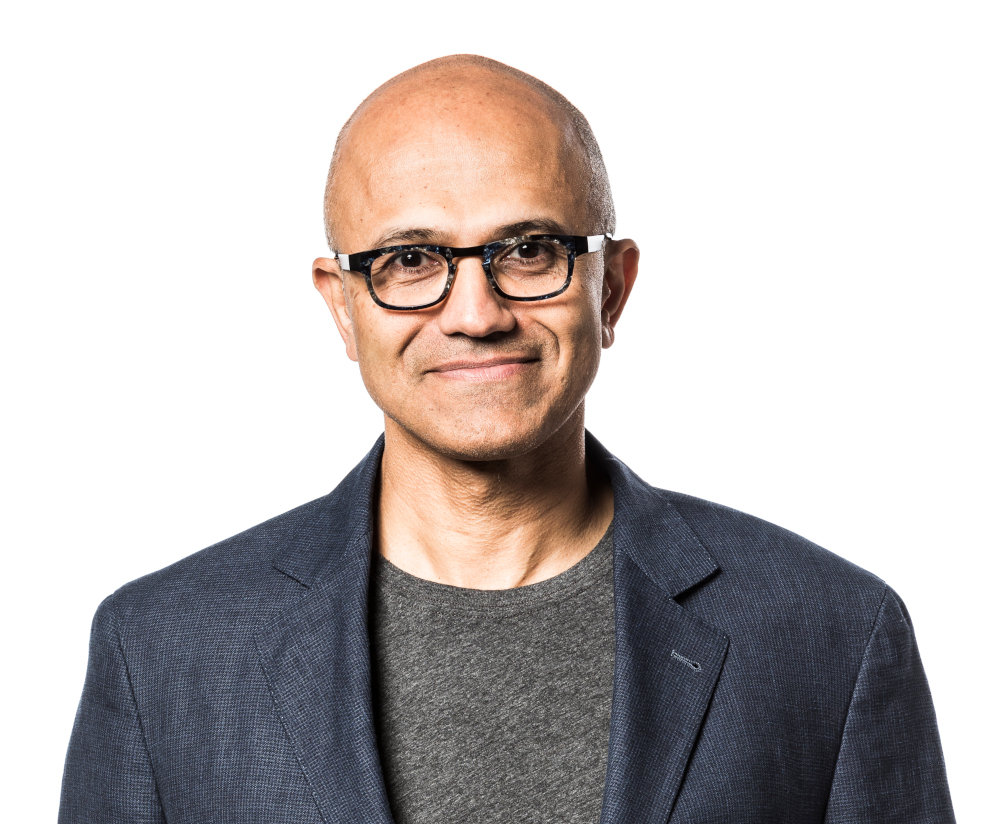
Satya Nadella: The Architect of the Turnaround
When Satya Nadella became CEO in 2014, Microsoft looked like a company stuck in the past. Windows was fading, mobile had failed, and the future was unclear.
Nadella changed everything. He shifted the company's focus to the cloud, turned Office into a subscription, bet early on AI, and pushed Microsoft to be more open, partner-driven, and cloud-native. Today's Microsoft - cloud-first, AI-enabled, subscription-based - is a direct result of his leadership.
Skin in the Game and Long-Term Focus
Executives at Microsoft are heavily paid in stock and those rewards depend on long-term performance, not short-term stock bumps. Nadella personally owns a meaningful stake in the company, which helps align his decisions with shareholder interests. The leadership team is also unusually stable, with most key execs in their roles for years - a sign of internal alignment and continuity.
Bottom Line
Microsoft's leadership isn't chasing fads or trying to be flashy. They've executed a clear, long-term strategy with discipline and turned one of tech's slow giants into a modern powerhouse. This is a team that knows how to build, scale, and allocate capital, and they've earned investor trust.
Frequently Asked Questions
What does "skin in the game" mean?
It means leaders have meaningful personal stakes (mostly stock) that rise or fall with Microsoft's long-term performance. Nadella and other top execs receive much of their compensation in shares that vest over several years, so they win only if shareholders win over time.
Long-Term View
Microsoft's future depends on one thing: staying the system businesses can't function without.
— Alpha Spread Analyst Team
This is a bet on Microsoft staying essential. Not flashy, not disruptive - just necessary. If the world keeps shifting toward cloud-based work, AI-powered tools, and tightly integrated systems, Microsoft keeps winning. It already powers company email, meetings, documents, files, and internal systems. If Microsoft keeps layering value into that system (like Copilot) customers won't want to leave, and revenue keeps compounding.
What Could Break the Story
The risk isn't a sudden collapse, it's erosion. If smarter AI-native tools steal attention, or if regulators force Microsoft to unbundle key services, the moat could shrink. Customers might start mixing vendors or moving to simpler tools with less lock-in. Microsoft doesn't need to fail; it just needs to fall behind. Long-term success depends on staying useful, improving fast enough, and making sure its system always feels like the easiest path forward.
Valuation
MSFT
Intrinsic Value
393.04
USD
Undervaluation 6%

Microsoft's stock isn’t cheap. It trades well above its intrinsic value, and that premium reflects just how much investors trust the business. They're not just paying for stable revenue; they're paying for a future where Microsoft stays central to AI, cloud, and enterprise software for years to come.
To justify the price, Microsoft needs to keep executing across multiple fronts:
- AI features like Copilot must drive meaningful upsell.
- Azure must keep taking share from AWS and Google.
- And Microsoft 365 must remain the default for business productivity.
That's all achievable, but the price leaves little room for disappointment. You're not buying a turnaround story or a hidden gem. You're buying one of the most widely owned, well-run companies in the world, and paying up for the quality.
The risk isn't that the business fails. It's that it performs well… and the stock doesn't go anywhere.
Frequently Asked Questions
What is "intrinsic value" on Alpha Spread?
It's our best estimate of what the stock is worth based on the company's cash flows and market comparisons - not on today's share price. Think of it as a "fair price" tag.
How do you arrive at "intrinsic value"?
We model Microsoft's future cash flows, discount them back to today at a rate that reflects business risk, then add a sanity check using comparable companies. Market mood doesn't drive the model - fundamentals do.
Why combine DCF with multiples?
DCF is powerful but sensitive to small tweaks. Cross‑checking with peer multiples (P/E, EV/EBITDA, etc) keeps the valuation grounded in market reality.
Should You Buy It
Quality rarely comes at a discount. And this isn't an exception.
— Alpha Spread Analyst Team
This is one of the strongest, most predictable businesses in the market. It dominates enterprise software, prints cash, and keeps stacking new growth engines like cloud and AI on top of an already massive base. If you're looking for stability, scale, and long-term relevance, Microsoft checks every box.
But the stock already reflects all of that. It's priced for continued execution, not for surprises. There's no "value story" here, just a great company with a full price tag.
Investor Fit
This is for investors who measure success in decades, not quarters. You're paying up to own the digital plumbing of modern business (cloud, Office, AI), knowing the valuation could cap near-term returns. If you're okay giving up some upside in exchange for business durability, Microsoft earns its spot in a long-term portfolio.
Did you find this research helpful?
What was missing or confusing?
What did you like most?
Thank you for your feedback!
It will help us to make research reports better.
Last Research Reports


