

Rivian Automotive Inc
NASDAQ:RIVN



Decide at what price you'd be comfortable buying and we'll help you stay ready.

|
Rivian Automotive Inc
NASDAQ:RIVN
|
US |

|
Husqvarna AB
STO:HUSQ B
|
SE |

|
Moskovskaya Gorodskaya Telefonnaya Set' PAO
MOEX:MGTS
|
RU |
Rivian Automotive Inc


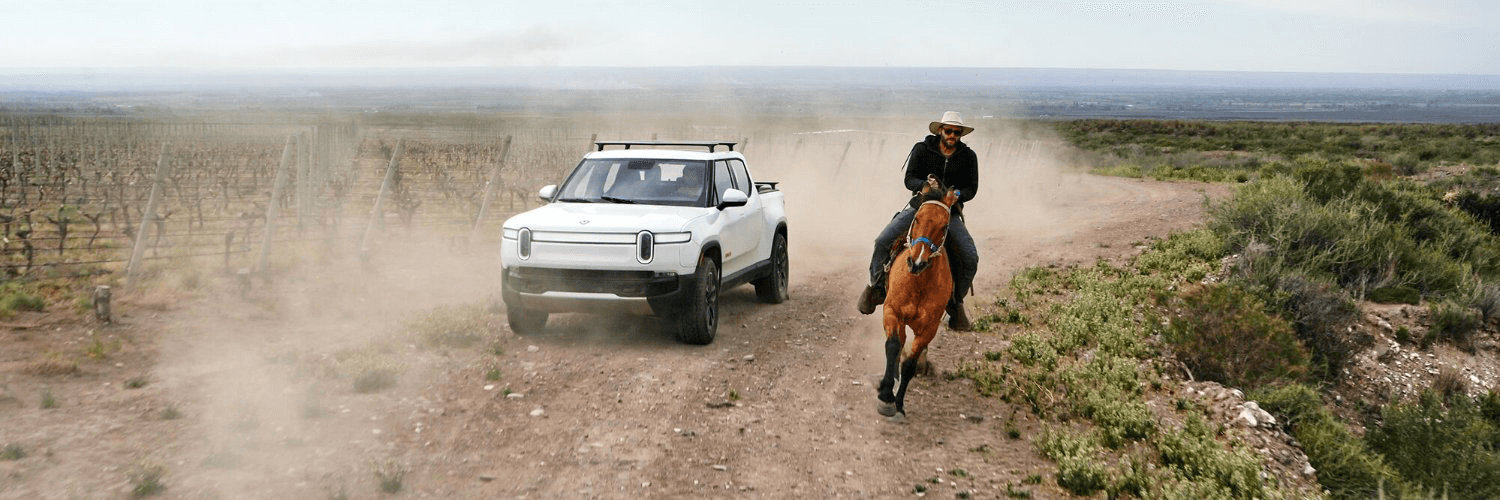
Once upon a time in the rapidly evolving landscape of automotive innovation, Rivian Automotive Inc. carved out a niche for itself in the electric vehicle (EV) sector, aiming to redefine adventure through sustainable transport. Founded by the visionary RJ Scaringe in 2009, Rivian sought to blend the power of electrification with the rugged spirit of adventure vehicles. The company's journey was characterized by a meticulous focus on design and technology, leading to the creation of electric pickup trucks and SUVs that could endure the toughest terrains while boasting impeccable sustainability credentials. Rivian's flagship models, the R1T truck and R1S SUV, symbolize this harmonious blend of adventure and eco-consciousness. By using skateboard chassis technology, the company has maximized the use of space and efficiency for its electric drivetrains.
Rivian's revenue engine is fired up through several channels. Primarily, it generates income by selling its cutting-edge electric vehicles directly to consumers, bypassing traditional dealership models. This approach not only enhances customer experience but also allows Rivian to maintain stronger control over pricing and margins. Complementary to vehicle sales, Rivian has invested in establishing a proprietary network of charging stations, catering to the needs of its adventurous clientele and ensuring technical support on the go. By integrating technology and vertically controlling much of its supply chain, Rivian aims to drive up efficiency and ensure quality, all while making strides in its mission towards a more sustainable, adventurous future on the road.

Once upon a time in the rapidly evolving landscape of automotive innovation, Rivian Automotive Inc. carved out a niche for itself in the electric vehicle (EV) sector, aiming to redefine adventure through sustainable transport. Founded by the visionary RJ Scaringe in 2009, Rivian sought to blend the power of electrification with the rugged spirit of adventure vehicles. The company's journey was characterized by a meticulous focus on design and technology, leading to the creation of electric pickup trucks and SUVs that could endure the toughest terrains while boasting impeccable sustainability credentials. Rivian's flagship models, the R1T truck and R1S SUV, symbolize this harmonious blend of adventure and eco-consciousness. By using skateboard chassis technology, the company has maximized the use of space and efficiency for its electric drivetrains.
Rivian's revenue engine is fired up through several channels. Primarily, it generates income by selling its cutting-edge electric vehicles directly to consumers, bypassing traditional dealership models. This approach not only enhances customer experience but also allows Rivian to maintain stronger control over pricing and margins. Complementary to vehicle sales, Rivian has invested in establishing a proprietary network of charging stations, catering to the needs of its adventurous clientele and ensuring technical support on the go. By integrating technology and vertically controlling much of its supply chain, Rivian aims to drive up efficiency and ensure quality, all while making strides in its mission towards a more sustainable, adventurous future on the road.
Positive Gross Profit: Rivian achieved its first full year of positive gross profit in 2025, with over $1.3 billion improvement year-over-year.
R2 Launch & Demand: R2, Rivian's first mass-market EV, is set to begin deliveries in Q2 2026, targeting the underserved $45,000–$50,000 midsize SUV segment amid strong demand and positive reviews.
2026 Guidance: Rivian expects to deliver 62,000–67,000 vehicles in 2026, with 9,000–11,000 per quarter in the first half and a ramp-up in R2 deliveries in the second half.
VW Partnership: Revenue from the Volkswagen Group joint venture is driving strong software and services results, expected to contribute about 60% YoY growth in that segment.
Improving Unit Economics: Automotive cost of goods sold per unit fell by about $9,500 in 2025 thanks to material cost and operational improvements.
Profitability Path: Management reiterated that 2026 is a transition year, with automotive gross profit expected to improve in Q4 as R2 production ramps.
Liquidity & Capex: Rivian ended 2025 with $6.1 billion in cash and expects $2 billion more from Volkswagen in 2026; capital expenditures are guided at $1.95–$2.05 billion for 2026.
Management
