
Rockwell Automation Inc
NYSE:ROK



Decide at what price you'd be comfortable buying and we'll help you stay ready.
ROK's latest stock split occurred on Apr 14, 1987
The company executed a 2-for-1 stock split, meaning that for every share held, investors received 2 new shares.
The adjusted shares began trading on Apr 14, 1987. This was stock split number 2 in ROK's history, following the previous one in Jun 20, 1983.
Global
Stock Splits Monitor
| Date | Company | Split | Pre-Split Price | Post-Split Price | |
|---|---|---|---|---|---|
|
Nov 23, 2026
|

|
Agrogeneration SA
PAR:ALAGR
|
1-for-110
/110
|
0.041 4.51 EUR | 4.6 4.6 EUR |
|
Nov 23, 2026
|
Zip Co Ltd
F:YRRA
|
1-for-5
/5
|
0.9746 4.873 EUR | 4.873 4.873 EUR | |
|
Nov 23, 2026
|

|
Lisata Therapeutics Inc
F:8NE
|
1-for-15
/15
|
0.7 10.5 EUR | 0.7673 0.7673 EUR |
|
Nov 23, 2026
|
|
Agrogeneration SA
F:81E
|
1-for-110
/110
|
0.031 3.41 EUR | 4.8005 4.8005 EUR |
|
Nov 23, 2026
|
Star Shine Holdings Group Ltd
HKEX:1440
|
4-for-1
x4
|
16.3 4.075 HKD | 4.34 4.34 HKD | |
 ALAGR
 8NE
Rockwell Automation Inc
Glance View
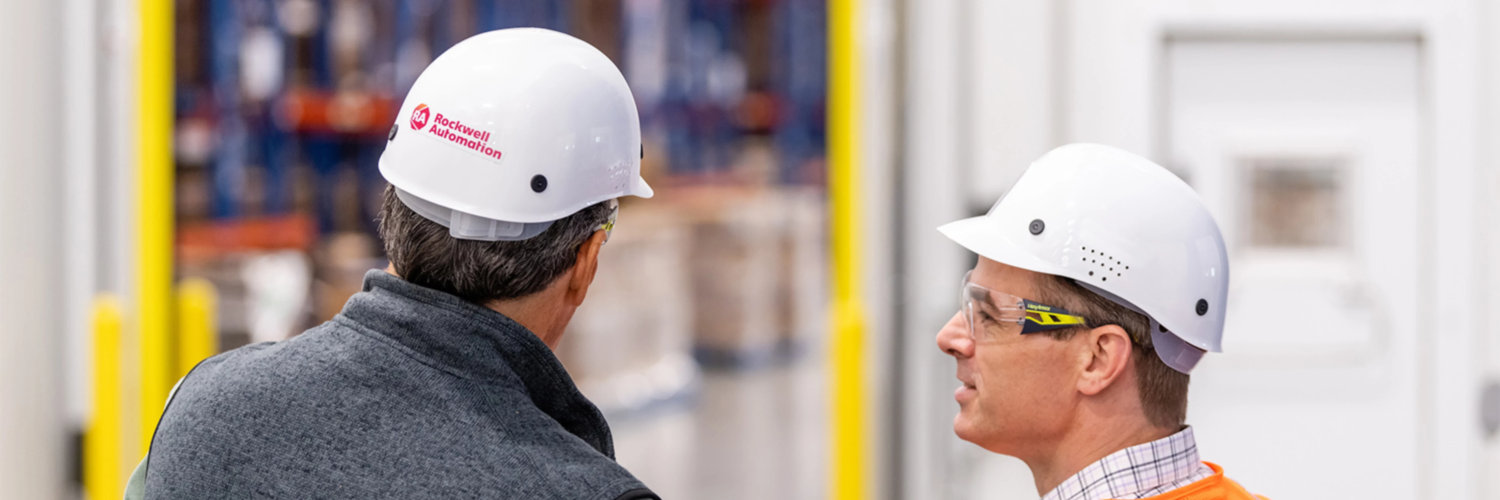
Rockwell Automation makes industrial automation equipment and software that help factories run machines, move materials, and monitor production. Its products include control systems, sensors, drives, industrial software, and related services used to connect and automate manufacturing equipment. It sells mainly to manufacturers and other industrial customers that need to run plants more safely, consistently, and efficiently. The company makes money by selling hardware, software licenses, subscriptions, and support services. A customer may buy a new control system for a plant buildout, then keep paying Rockwell for software updates, technical support, and lifecycle services over time. That mix gives Rockwell both one-time project sales and recurring revenue tied to installed equipment. What makes Rockwell different is that it sits in the middle of factory automation: it helps translate factory needs into the controls and software that run real machines on the plant floor. Its business depends less on consumer demand and more on industrial capital spending, maintenance, and factory upgrades. For beginners, think of Rockwell as a core supplier to manufacturers that want to automate and digitally manage production.
Create a free account · No card needed
