
Carlisle Companies Inc
XMUN:CLE



Decide at what price you'd be comfortable buying and we'll help you stay ready.
|
C
|
Carlisle Companies Inc
XMUN:CLE
|
US |

|
Toyota Tsusho Corp
OTC:TYHOF
|
JP |
|
D
|
Dave and Buster's Entertainment, Inc
SWB:9DB
|
US |

|
Endava PLC
NYSE:DAVA
|
UK |

|
Bidvest Group Ltd
OTC:BDVSF
|
ZA |

|
Reliability Inc
OTC:RLBY
|
US |
|
M
|
Mudanjiang Hengfeng Paper Co Ltd
SSE:600356
|
CN |
Carlisle Companies Inc
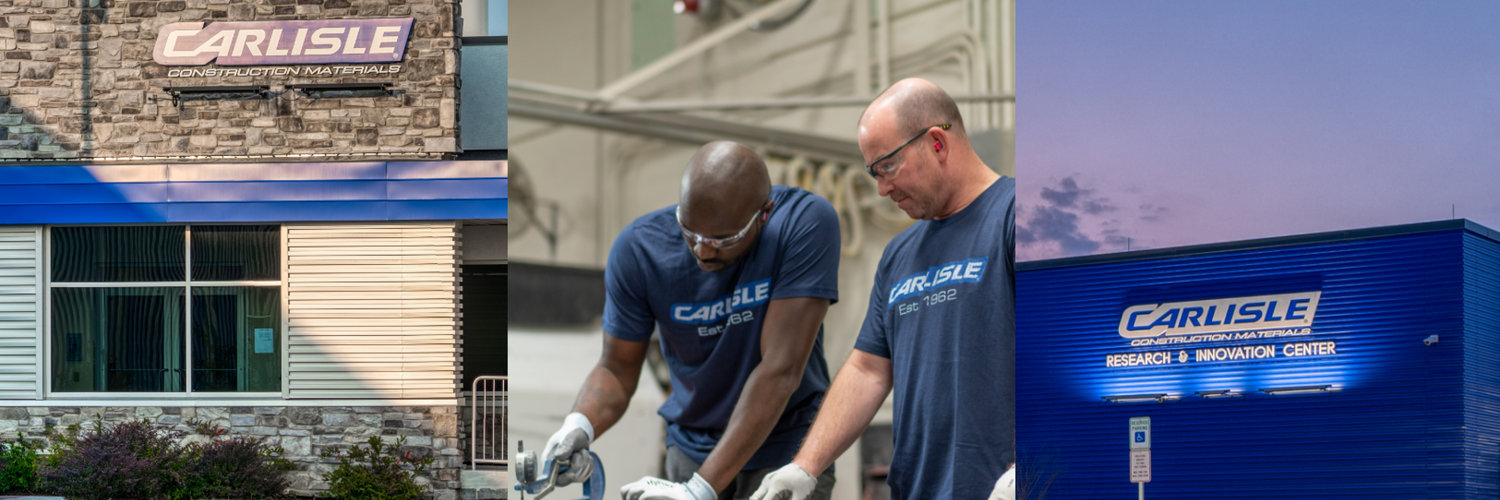
Carlisle Companies makes specialty products that sit in the middle of construction and industry. A big part of the business is commercial roofing and building-envelope materials, such as roof membranes, insulation, and waterproofing products that help keep large buildings dry and energy efficient. It also sells engineered products used in industrial, aerospace, and other technical applications. Its customers are mainly roofing contractors, distributors, builders, manufacturers, and original equipment makers. Carlisle earns money by manufacturing these products and selling them through a network of channel partners and direct business relationships. In some lines, it also makes money from replacement and aftermarket demand, which helps support repeat sales after the original installation or equipment sale. What makes Carlisle different is that it is not a broad, commodity industrial company. It focuses on niche products where reliability, technical performance, and long product life matter a lot. That gives it a strong role in the value chain: it supplies specialized components and systems that are hard to swap out once customers design them into a building or machine.
Carlisle Companies makes specialty products that sit in the middle of construction and industry. A big part of the business is commercial roofing and building-envelope materials, such as roof membranes, insulation, and waterproofing products that help keep large buildings dry and energy efficient. It also sells engineered products used in industrial, aerospace, and other technical applications.
Its customers are mainly roofing contractors, distributors, builders, manufacturers, and original equipment makers. Carlisle earns money by manufacturing these products and selling them through a network of channel partners and direct business relationships. In some lines, it also makes money from replacement and aftermarket demand, which helps support repeat sales after the original installation or equipment sale.
What makes Carlisle different is that it is not a broad, commodity industrial company. It focuses on niche products where reliability, technical performance, and long product life matter a lot. That gives it a strong role in the value chain: it supplies specialized components and systems that are hard to swap out once customers design them into a building or machine.
Record quarter: Carlisle posted record Q2 revenue of $1.6 billion and record adjusted EPS of $7.03, with revenue up 8% year over year and EPS up 12%.
Inflation pressure: Management said raw materials and freight costs rose faster than pricing in the quarter, especially because of Middle East-related disruptions, creating a temporary drag on margins.
Full-year outlook: Carlisle raised its 2026 revenue outlook to mid-single-digit growth but lowered its margin outlook to flat adjusted EBITDA margin year over year, mainly because of the timing of price realization versus cost inflation.
Capital returns: The company increased its full-year share repurchase target from $1 billion to $1.2 billion and returned $590 million to shareholders in the first half through buybacks and dividends.
Strategic momentum: New products, especially in insulation and waterproofing, and share gains in CWT helped offset weakness in new construction markets.
Long-term confidence: Management reiterated Vision 2030 targets, including $40 of adjusted EPS and ROIC above 25%, and said Carlisle remains on track despite tough end markets.