

Thales SA
XMUN:CSF



Decide at what price you'd be comfortable buying and we'll help you stay ready.
|
T
|
Thales SA
XMUN:CSF
|
FR |
|
H
|
Henderson Land Development Co Ltd
XMUN:HLD
|
HK |

|
Valeo SE
F:VSA2
|
FR |

|
Mediobanca Banca di Credito Finanziario SpA
F:ME90
|
IT |
|
Fresnillo PLC
LSE:FRES
|
MX |
|
I
|
Italtile Ltd
JSE:ITE
|
ZA |

|
ORIX Corp
F:OIX
|
JP |
|
Hagihara Industries Inc
TSE:7856
|
JP |
|
E
|
Eli Lilly and Co
XHAM:LLY
|
US |

|
Lonza Group AG
SIX:LONN
|
CH |
Thales SA
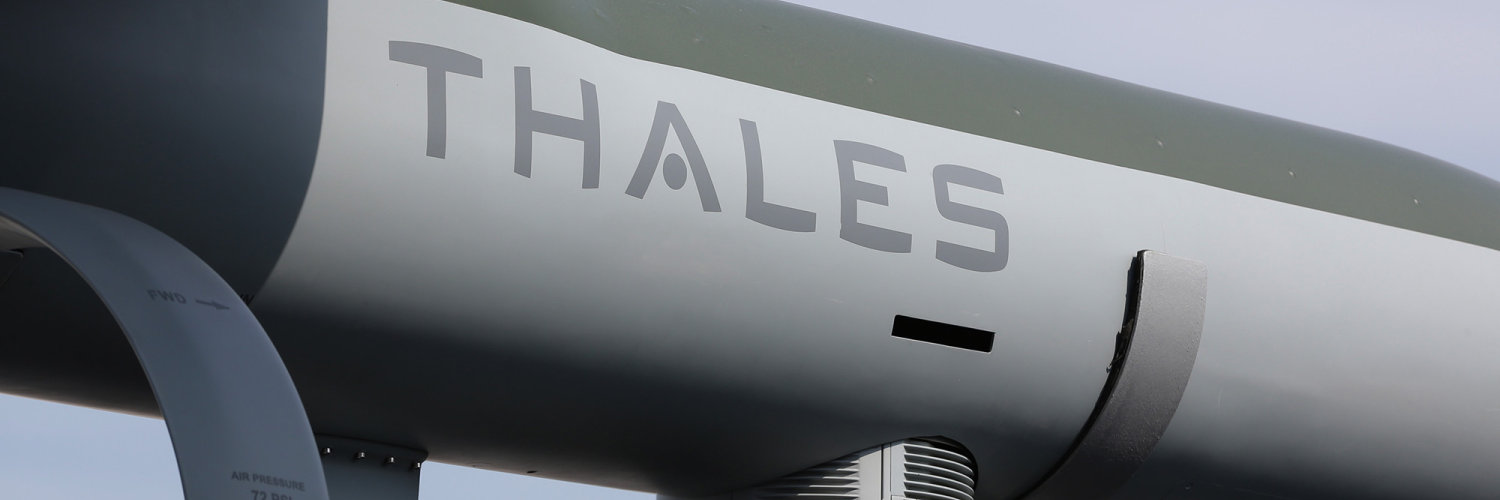
Thales SA makes the electronics and software that help run aircraft, defend countries, secure data, and control transport networks. Its products include radar, sensors, communication systems, avionics, flight control equipment, train signaling systems, and cybersecurity and identity security tools. The company is not a plane or missile maker itself; it is a systems supplier that puts the brains and sensing equipment into complex machines and critical infrastructure. Its main customers are governments, defense forces, aerospace manufacturers, airlines, rail operators, and large companies that need secure digital systems. Thales makes money by selling equipment, software, integration work, and long-term support, upgrades, and maintenance contracts. Many of its sales come from projects that last for years, because customers need these systems to stay reliable, secure, and compliant. What makes Thales different is its role at the intersection of defense, aerospace, and cybersecurity. It works in areas where trust, safety, and technical compatibility matter more than low-cost volume. That gives the business a mix of hardware, software, and service revenue tied to mission-critical systems that customers cannot easily replace.

Thales SA makes the electronics and software that help run aircraft, defend countries, secure data, and control transport networks. Its products include radar, sensors, communication systems, avionics, flight control equipment, train signaling systems, and cybersecurity and identity security tools. The company is not a plane or missile maker itself; it is a systems supplier that puts the brains and sensing equipment into complex machines and critical infrastructure.
Its main customers are governments, defense forces, aerospace manufacturers, airlines, rail operators, and large companies that need secure digital systems. Thales makes money by selling equipment, software, integration work, and long-term support, upgrades, and maintenance contracts. Many of its sales come from projects that last for years, because customers need these systems to stay reliable, secure, and compliant.
What makes Thales different is its role at the intersection of defense, aerospace, and cybersecurity. It works in areas where trust, safety, and technical compatibility matter more than low-cost volume. That gives the business a mix of hardware, software, and service revenue tied to mission-critical systems that customers cannot easily replace.
Orders: Thales posted very strong first-half order intake of EUR 12.5 billion, up 22% organically, with Defence and Space driving the win rate across Europe and the Middle East.
Sales: First-half sales rose to EUR 10.9 billion, up 7.8% organically, or 9.6% excluding the one-off cancellation of two geostationary satellites.
Profitability: Adjusted EBIT rose about 10% to nearly EUR 1.4 billion, with EBIT margin improving to 12.5% thanks mainly to gross margin expansion in Defence and Aerospace.
Cash Generation: Free operating cash flow was exceptionally strong at EUR 1.8 billion, helping cut net debt to EUR 519 million from EUR 1.6 billion at year-end.
Outlook: Management lifted 2026 book-to-bill guidance to above 1.1 and free-cash-flow conversion to 100% to 110%, while reaffirming 6% to 7% organic sales growth and a 12.6% to 12.8% EBIT margin.
Strategic Moves: Thales highlighted new partnerships, trusted cloud expansion with Google, and the planned acquisition of Exail to strengthen underwater warfare and inertial navigation.