
McDonald's Corp
BMV:MCD



Decide at what price you'd be comfortable buying and we'll help you stay ready.

|
Johnson & Johnson
NYSE:JNJ
|
US |

|
Berkshire Hathaway Inc
NYSE:BRK.A
|
US |

|
Bank of America Corp
NYSE:BAC
|
US |

|
Mastercard Inc
NYSE:MA
|
US |

|
UnitedHealth Group Inc
NYSE:UNH
|
US |

|
Exxon Mobil Corp
NYSE:XOM
|
US |

|
Pfizer Inc
NYSE:PFE
|
US |

|
Nike Inc
NYSE:NKE
|
US |

|
Visa Inc
NYSE:V
|
US |

|
Alibaba Group Holding Ltd
NYSE:BABA
|
CN |

|
JPMorgan Chase & Co
NYSE:JPM
|
US |

|
Coca-Cola Co
NYSE:KO
|
US |

|
Verizon Communications Inc
NYSE:VZ
|
US |

|
Chevron Corp
NYSE:CVX
|
US |

|
Walt Disney Co
NYSE:DIS
|
US |

|
PayPal Holdings Inc
NASDAQ:PYPL
|
US |
EV/IC
Enterprise Value to Invested Capital (EV/IC) ratio compares a company`s total enterprise value to the capital invested in its business. It shows how efficiently the company`s market value reflects the funds used to generate returns.
Enterprise Value to Invested Capital (EV/IC) ratio compares a company`s total enterprise value to the capital invested in its business. It shows how efficiently the company`s market value reflects the funds used to generate returns.
Valuation Scenarios
If EV/IC returns to its 3-Year Average (4.6), the stock would be worth Mex$5 611.95 (10% upside from current price).
| Scenario | EV/IC Value | Implied Price | Upside/Downside |
|---|---|---|---|
| Current Multiple | 4.2 | Mex$5 094 |
0%
|
| 3-Year Average | 4.6 | Mex$5 611.95 |
+10%
|
| 5-Year Average | 4.5 | Mex$5 485.72 |
+8%
|
| Industry Average | 1.9 | Mex$2 346.75 |
-54%
|
| Country Average | 1.5 | Mex$1 797.28 |
-65%
|
Forward EV/IC
Today’s price vs future invested capital

Peer Comparison
| Market Cap | EV/IC | P/E | ||||
|---|---|---|---|---|---|---|
| US |

|
McDonald's Corp
BMV:MCD
|
209.1B MXN | 4.2 | 24.4 | |
| US |

|
Starbucks Corp
NASDAQ:SBUX
|
120B USD | 4.9 | 87.6 | |
| UK |

|
Compass Group PLC
LSE:CPG
|
44.8B GBP | 2.2 | 0.3 | |
| US |
|
Chipotle Mexican Grill Inc
NYSE:CMG
|
44.3B USD | 5.6 | 28.9 | |
| US |

|
Yum! Brands Inc
NYSE:YUM
|
44.2B USD | 9.1 | 28.4 | |
| CA |

|
Restaurant Brands International Inc
NYSE:QSR
|
28B USD | 1.7 | 36 | |
| IN |

|
Eternal Ltd
NSE:ETERNAL
|
2.2T INR | 8.1 | 973.2 | |
| US |

|
Darden Restaurants Inc
NYSE:DRI
|
23B USD | 2.2 | 20.8 | |
| JP |
F
|
Friendly Corp
TSE:8209
|
2.9T JPY | 1.7 | -6.5 | |
| CN |

|
Yum China Holdings Inc
NYSE:YUMC
|
17.2B USD | 2.4 | 18.5 |
Market Distribution
| Min | 0 |
| 30th Percentile | 0.9 |
| Median | 1.5 |
| 70th Percentile | 2.9 |
| Max | 566 432.7 |
Other Multiples
McDonald's Corp
Glance View
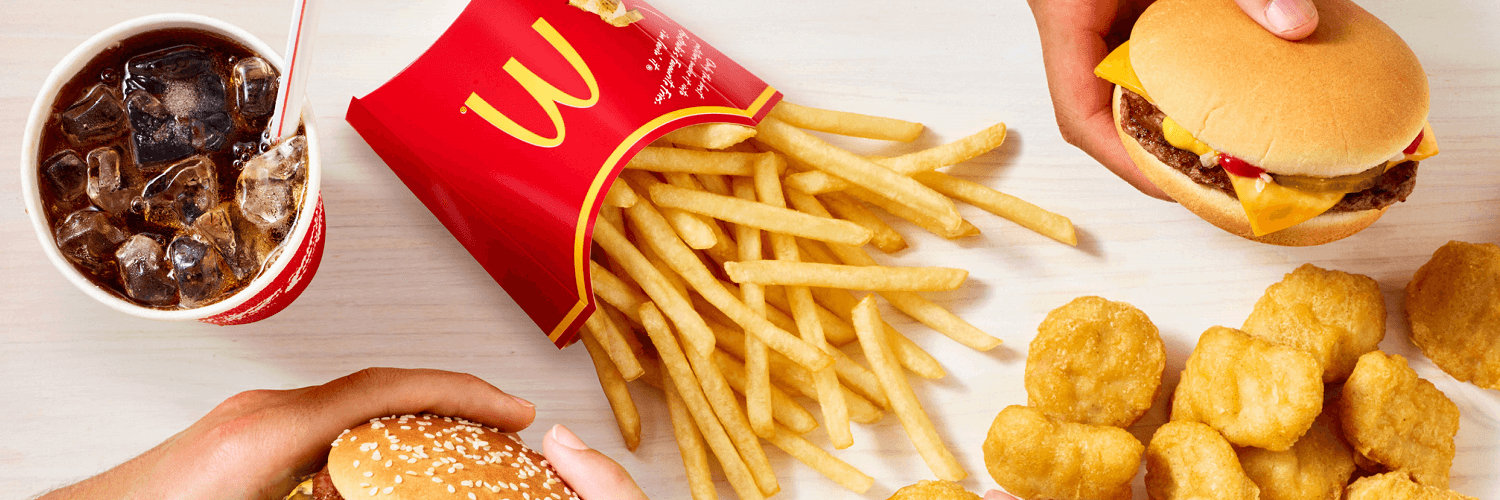
In the bustling world of global fast food, McDonald's Corporation stands as a towering testament to business acumen and operational consistency. Founded in 1940 by Richard and Maurice McDonald as a single restaurant in San Bernardino, California, the company has metamorphosed into a globally recognized giant, with thousands of outlets scattered across six continents. Ray Kroc, a visionary businessman, joined the company in 1955 and played a pivotal role in shaping McDonald's into a franchise model powerhouse. This model allowed for rapid, scalable growth, creating a symbiotic relationship between the corporation and independent franchisees, who run most of the McDonald’s restaurants around the world. McDonald’s derives a substantial portion of its revenue from franchisees through rent, royalties, and fees, all structured to encourage operational excellence and uniformity across stores, maintaining the brand's cohesive identity. The global reach of McDonald’s is not just a story of hamburgers and fries, but also of clever adaptation and shrewd market targeting. Its success is rooted in the standardization of its menu while introducing local flavors to cater to regional tastes, thereby broadening its appeal. Operational efficiency lies at the heart of its profitability, often embracing innovation in areas such as supply chain management and restaurant technology. McDonald's constantly refines its offerings and practices through a robust feedback loop that involves monitoring customer preferences and constantly adapting to health trends and consumer demand for convenience. The company’s revenue streams are diversified, benefiting not just from food sales but also through real estate investment, where McDonald's owns the land and buildings of its restaurants, leasing them to franchisees and garnering steady income. McDonald's has created an ecosystem that ensures customer loyalty and economic resilience, making it a formidable entity in the global restaurant industry.
