

Turk Hava Yollari AO
OTC:TKHVY



Decide at what price you'd be comfortable buying and we'll help you stay ready.

|
Johnson & Johnson
NYSE:JNJ
|
US |

|
Berkshire Hathaway Inc
NYSE:BRK.A
|
US |

|
Bank of America Corp
NYSE:BAC
|
US |

|
Mastercard Inc
NYSE:MA
|
US |

|
UnitedHealth Group Inc
NYSE:UNH
|
US |

|
Exxon Mobil Corp
NYSE:XOM
|
US |

|
Pfizer Inc
NYSE:PFE
|
US |

|
Nike Inc
NYSE:NKE
|
US |

|
Visa Inc
NYSE:V
|
US |

|
Alibaba Group Holding Ltd
NYSE:BABA
|
CN |

|
JPMorgan Chase & Co
NYSE:JPM
|
US |

|
Coca-Cola Co
NYSE:KO
|
US |

|
Verizon Communications Inc
NYSE:VZ
|
US |

|
Chevron Corp
NYSE:CVX
|
US |

|
Walt Disney Co
NYSE:DIS
|
US |

|
PayPal Holdings Inc
NASDAQ:PYPL
|
US |
P/OCF
Price to Operating Cash Flow (P/OCF) ratio compares a company`s market value to the cash it generates from its core operations.
Price to Operating Cash Flow (P/OCF) ratio compares a company`s market value to the cash it generates from its core operations.
Valuation Scenarios
If P/OCF returns to its 3-Year Average (2.4), the stock would be worth $73.11 (4% upside from current price).
| Scenario | P/OCF Value | Implied Price | Upside/Downside |
|---|---|---|---|
| Current Multiple | 2.3 | $70 |
0%
|
| 3-Year Average | 2.4 | $73.11 |
+4%
|
| 5-Year Average | 2.2 | $65.72 |
-6%
|
| Industry Average | 2.2 | $67.48 |
-4%
|
| Country Average | 10.6 | $322.67 |
+361%
|
Forward P/OCF
Today’s price vs future operating cash flow

Peer Comparison
| Market Cap | P/OCF | P/E | ||||
|---|---|---|---|---|---|---|
| TR |

|
Turk Hava Yollari AO
OTC:TKHVY
|
440.2B USD | 2.3 | 3.4 | |
| BR |

|
Gol Linhas Aereas Inteligentes SA
BOVESPA:GOLL4
|
11.7T BRL | 6.8 | -2.1 | |
| US |

|
Delta Air Lines Inc
NYSE:DAL
|
44.8B USD | 5.3 | 9.9 | |
| US |

|
United Airlines Holdings Inc
NASDAQ:UAL
|
29.8B USD | 3.1 | 8 | |
| CH |

|
Kinarus Therapeutics Holding AG
SIX:KNRS
|
19.5B CHF | -37 479.2 | -1 404.3 | |
| UK |

|
International Consolidated Airlines Group SA
LSE:IAG
|
17.4B GBP | 3 | 6 | |
| IE |
R
|
Ryanair Holdings PLC
LSE:RYA
|
15.4B EUR | 4.9 | 8 | |
| US |

|
Southwest Airlines Co
NYSE:LUV
|
18.8B USD | 33.6 | 22.9 | |
| IN |

|
Interglobe Aviation Ltd
NSE:INDIGO
|
1.8T INR | 6.5 | 53.2 | |
| CN |

|
Air China Ltd
SSE:601111
|
116.9B CNY | 2.8 | -66 | |
| SG |

|
Singapore Airlines Ltd
SGX:C6L
|
19.9B SGD | 4.6 | 8.7 |
Market Distribution
| Min | 1 |
| 30th Percentile | 5.3 |
| Median | 10.6 |
| 70th Percentile | 26.3 |
| Max | 2 793.6 |
Other Multiples
Turk Hava Yollari AO
Glance View
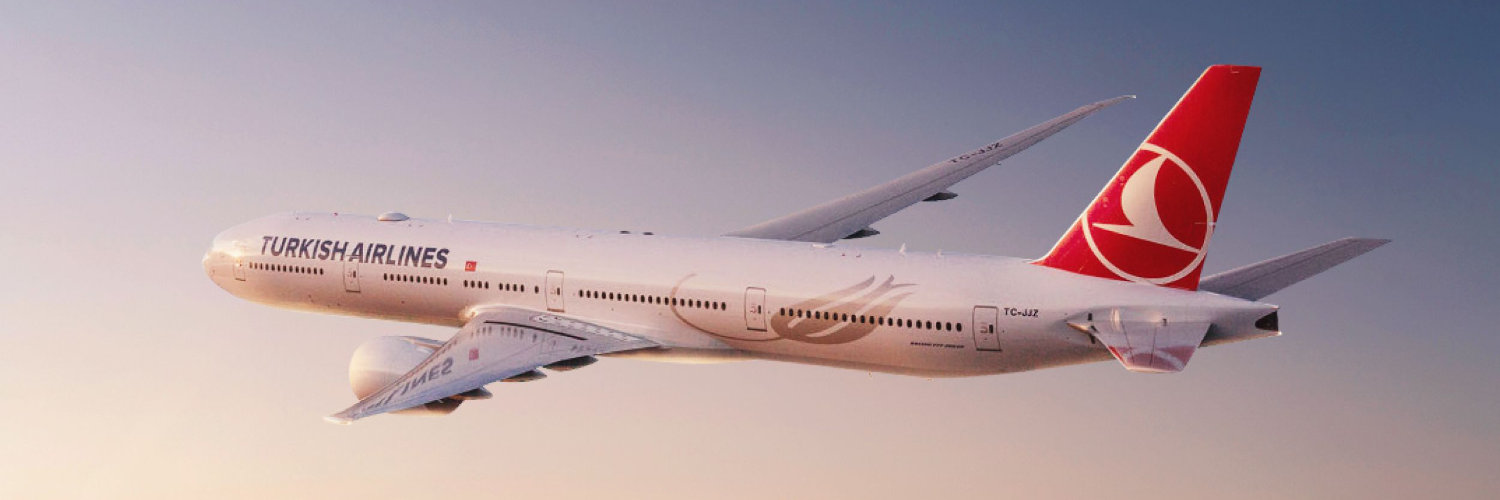
Turk Hava Yollari AO, commonly known as Turkish Airlines, stands as a testament to strategic growth and operational excellence in the rapidly evolving airline industry. Originating from the crossroads of civilization in Istanbul, the airline has leveraged its unique geographical positioning to become a global powerhouse. From its modest beginnings, Turkish Airlines has meticulously crafted a vast network that connects an impressive number of destinations across numerous countries. This widespread connectivity is strategically managed through its hub at Istanbul Airport, which serves as a pivotal bridge between Europe, Asia, Africa, and beyond. The airline's business model thrives on capturing both transit traffic from Asia to Europe and point-to-point travel, effectively utilizing its fleet to cater to international travelers, as well as serving domestic routes with equal efficiency. The financial engine propelling Turkish Airlines lies in its diverse revenue streams, primarily driven by passenger and cargo services. As an airline operating in a country that forms a natural crossroad for many international routes, it capitalizes on a significant volume of transit passengers. Additionally, the airline's commitment to expanding its cargo operations aligns smoothly with global logistics trends, thereby fortifying its income. The company's dedication to balancing cost management with quality service delivery enhances its competitive edge, ensuring customer loyalty and sustained profitability. Through strategic partnerships and alliances, such as its membership in the Star Alliance network, Turkish Airlines effectively broadens its reach and appeal in the global aviation market, allowing it to maintain robust growth trajectories in passenger and freight markets while navigating the challenges posed by fluctuating fuel prices and economic uncertainties.
