

Hanwha AeroSpace Co Ltd
KRX:012450



Decide at what price you'd be comfortable buying and we'll help you stay ready.

|
Johnson & Johnson
NYSE:JNJ
|
US |

|
Berkshire Hathaway Inc
NYSE:BRK.A
|
US |

|
Bank of America Corp
NYSE:BAC
|
US |

|
Mastercard Inc
NYSE:MA
|
US |

|
UnitedHealth Group Inc
NYSE:UNH
|
US |

|
Exxon Mobil Corp
NYSE:XOM
|
US |

|
Pfizer Inc
NYSE:PFE
|
US |

|
Nike Inc
NYSE:NKE
|
US |

|
Visa Inc
NYSE:V
|
US |

|
Alibaba Group Holding Ltd
NYSE:BABA
|
CN |

|
JPMorgan Chase & Co
NYSE:JPM
|
US |

|
Coca-Cola Co
NYSE:KO
|
US |

|
Verizon Communications Inc
NYSE:VZ
|
US |

|
Chevron Corp
NYSE:CVX
|
US |

|
Walt Disney Co
NYSE:DIS
|
US |

|
PayPal Holdings Inc
NASDAQ:PYPL
|
US |
P/OCF
Price to Operating Cash Flow (P/OCF) ratio compares a company`s market value to the cash it generates from its core operations.
Price to Operating Cash Flow (P/OCF) ratio compares a company`s market value to the cash it generates from its core operations.
Valuation Scenarios
If P/OCF returns to its 3-Year Average (10.6), the stock would be worth ₩833 908.48 (17% downside from current price).
| Scenario | P/OCF Value | Implied Price | Upside/Downside |
|---|---|---|---|
| Current Multiple | 12.7 | ₩1 000 000 |
0%
|
| 3-Year Average | 10.6 | ₩833 908.48 |
-17%
|
| 5-Year Average | 5.1 | ₩398 114.14 |
-60%
|
| Industry Average | 1 245.9 | ₩98 073 989.96 |
+9 707%
|
| Country Average | 9 | ₩707 350.51 |
-29%
|
Forward P/OCF
Today’s price vs future operating cash flow

Peer Comparison
| Market Cap | P/OCF | P/E | ||||
|---|---|---|---|---|---|---|
| KR |

|
Hanwha AeroSpace Co Ltd
KRX:012450
|
51.4T KRW | 12.7 | 36.6 | |
| US |

|
Raytheon Technologies Corp
NYSE:RTX
|
233.5B USD | 21 | 32.2 | |
| US |

|
RTX Corp
LSE:0R2N
|
236.3B USD | 21.3 | 32.6 | |
| US |

|
Boeing Co
NYSE:BA
|
182.3B USD | 72.8 | 94.8 | |
| NL |

|
Airbus SE
PAR:AIR
|
130.3B EUR | 16.3 | 25 | |
| FR |

|
Safran SA
PAR:SAF
|
114.2B EUR | 20 | 15.9 | |
| UK |

|
Rolls-Royce Holdings PLC
LSE:RR
|
95.4B GBP | 20.9 | 16.3 | |
| US |

|
Lockheed Martin Corp
NYSE:LMT
|
117.6B USD | 16 | 24.5 | |
| US |

|
Howmet Aerospace Inc
NYSE:HWM
|
97.1B USD | 51.5 | 64.5 | |
| US |

|
General Dynamics Corp
NYSE:GD
|
84.5B USD | 16.5 | 20.1 | |
| UK |
|
BAE Systems PLC
LSE:BA
|
61.1B GBP | 17.8 | 29.6 |
Market Distribution
| Min | 0.2 |
| 30th Percentile | 4.2 |
| Median | 9 |
| 70th Percentile | 16.6 |
| Max | 2 215 132.4 |
Other Multiples
Hanwha AeroSpace Co Ltd
Glance View
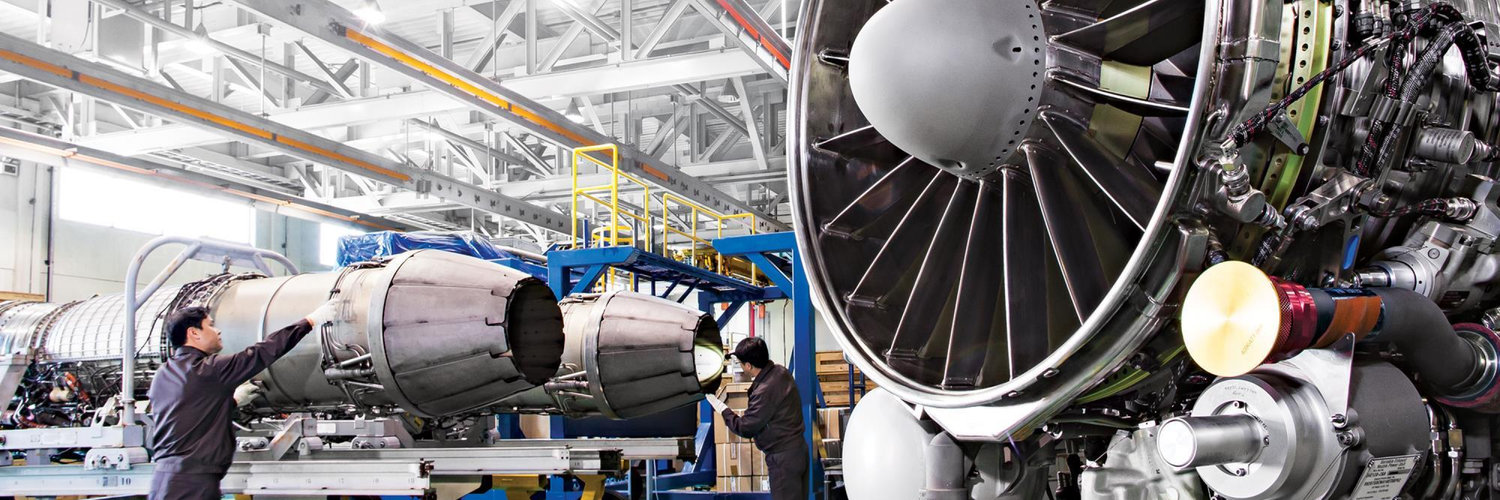
Hanwha AeroSpace Co., Ltd., rooted in South Korea's bustling industrial landscape, emerged as a formidable force in the aerospace and defense sectors, building on the rich legacy of its parent conglomerate, Hanwha Group. Originally founded as Samsung Techwin in 1977, it transitioned to Hanwha AeroSpace after its acquisition by Hanwha Group in 2014. This strategic shift allowed the company to focus its energies on expanding its capabilities in manufacturing and supplying critical components, notably gas turbine engines and aviation parts, which are key to its revenue generation. By leveraging a blend of innovative engineering and robust research and development, Hanwha AeroSpace has positioned itself as a key supplier to both commercial and military aviation markets, underscoring its role in supporting global aeronautic advancements. Central to Hanwha AeroSpace's financial viability is its diverse portfolio that spans not only aerospace components but also includes strategic defense systems such as guided weaponry and surveillance technology. The company capitalizes on long-term contracts with government and private-sector clients worldwide, securing a steady stream of income. This focus on defense-related projects aligns with global trends emphasizing national security enhancements, thereby ensuring consistent demand for Hanwha's offerings. At the heart of its business model lies a commitment to fostering long-term partnerships with leaders in the aerospace industry, an approach that ensures both technological synergies and financial stability. Through this, Hanwha AeroSpace successfully navigates the complex milieu of global aerospace demands, reinforcing its status as a linchpin in the ongoing evolution of air defense technology.
