
Northrop Grumman Corp
NYSE:NOC



Decide at what price you'd be comfortable buying and we'll help you stay ready.

|
Johnson & Johnson
NYSE:JNJ
|
US |

|
Berkshire Hathaway Inc
NYSE:BRK.A
|
US |

|
Bank of America Corp
NYSE:BAC
|
US |

|
Mastercard Inc
NYSE:MA
|
US |

|
UnitedHealth Group Inc
NYSE:UNH
|
US |

|
Exxon Mobil Corp
NYSE:XOM
|
US |

|
Pfizer Inc
NYSE:PFE
|
US |

|
Nike Inc
NYSE:NKE
|
US |

|
Visa Inc
NYSE:V
|
US |

|
Alibaba Group Holding Ltd
NYSE:BABA
|
CN |

|
JPMorgan Chase & Co
NYSE:JPM
|
US |

|
Coca-Cola Co
NYSE:KO
|
US |

|
Verizon Communications Inc
NYSE:VZ
|
US |

|
Chevron Corp
NYSE:CVX
|
US |

|
Walt Disney Co
NYSE:DIS
|
US |

|
PayPal Holdings Inc
NASDAQ:PYPL
|
US |
Q2-2025 Earnings Call
AI Summary
Earnings Call on Jul 22, 2025
Revenue Growth: Northrop Grumman reported second quarter sales of $10.4 billion, up 1% year-over-year and 9% sequentially, with all segments contributing to growth.
Margin Strength: Segment operating margin reached 11.8%, up 100 basis points year-over-year, with Defense Systems and Mission Systems showing particularly strong margin expansion.
Guidance Raised: The company increased its guidance for segment operating income, earnings per share, and free cash flow, reflecting strong Q2 performance and confidence in the second half outlook.
EPS and Cash Flow: Diluted EPS was $8.15, up 28% year-over-year, and Q2 free cash flow was $637 million. 2025 free cash flow guidance was raised to $3.05–$3.35 billion.
International Growth: International sales rose 18% year-over-year in Q2 and are up 14% year-to-date, with robust demand in Europe and the Middle East.
Key Programs: Sentinel and B-21 programs saw strong momentum, with significant new funding and improved program outlooks. Discussions are ongoing to accelerate B-21 production.
Shareholder Returns: The company repurchased nearly $900 million in stock in the first half and announced a 12% increase in its quarterly dividend.
Northrop Grumman delivered strong second quarter results, with 1% year-over-year and 9% sequential sales growth across all segments. Segment operating margin improved to 11.8%, up 100 basis points from last year, driven by higher sales volume, favorable program performance, and disciplined cost management.
Following robust Q2 results and continued momentum, management raised full-year guidance for segment operating income, EPS, and free cash flow. The company now expects higher sales in the second half, particularly from flagship programs like B-21, Sentinel, and Colombia, alongside normal seasonality. Margin guidance and expectations for key segments were also raised or reaffirmed.
Both B-21 and Sentinel received substantial funding increases, supporting accelerated production and risk reduction activities. The B-21 program may exceed 10% of company revenue in the future, pending agreement with the Air Force on an accelerated production ramp. Sentinel progress included the resumption of paused work and a positive earnings adjustment due to improved program outlook and performance incentives.
International sales grew 18% year-over-year in Q2, with strong contributions from aircraft, weapons, missile defense, and airborne systems. The company highlighted new opportunities in Europe and the Middle East, as well as strategic partnerships and local industrial collaborations to maintain long-term foothold as defense spending in NATO countries ramps up.
The company continued its strategic capital investment, notably increasing solid rocket motor production capacity and expanding facilities for tactical and hypersonic weapons. Northrop remains committed to returning about 100% of free cash flow to shareholders through dividends and share buybacks, announcing a 12% increase in its quarterly dividend and nearly $900 million in year-to-date repurchases.
Northrop Grumman is investing in emerging areas like autonomous systems, with the Beacon test bed facilitating collaboration and faster innovation. The company is preparing to meet future defense needs with both advanced and more 'attritable' (lower-cost, expendable) systems and is involved in testing new missile defense technologies, including space-based interceptors.
Recent tax reform provided the company with about $200 million in future cash tax benefits, although it raised the effective tax rate and P&L tax expense by about $50 million. The administration's push for acquisition reform and faster contracting is seen as a positive for program execution and speed.

Good day, ladies and gentlemen, and welcome to Northrop Grumman's Second Quarter 2025 Conference Call. Today's call is being recorded. My name is Josh, and I will be your operator today.
[Operator Instructions]
I would like to turn the call over to your host, Mr. Todd Ernst, Vice President, Investor Relations. Mr. Ernst, please proceed.
Thanks, Josh, and good morning, everyone, and welcome to Northrop Grumman's Second Quarter 2025 Conference Call. Before we start, matters discussed on today's call, including guidance and outlooks for 2025 and beyond, reflect the company's judgment based on information available at the time of this call. They constitute forward-looking statements pursuant to safe harbor provisions of federal securities laws. Forward-looking statements involve risks and uncertainties, including those noted in today's press release and our SEC filings. These risks and uncertainties may cause actual company results to differ materially.
Today's call will include non-GAAP financial measures that are reconciled to our GAAP results in our earnings release. In addition, we will refer to a presentation that is posted to our Investor Relations website. On the call today are Kathy Warden, our Chair, CEO and President; and Ken Crews, our CFO.
At this time, I'd like to turn the call over to Kathy. Kathy?
Thanks, Todd. Good morning, everyone, and thank you for joining us. As you saw from this morning's earnings release, we delivered a strong second quarter. The breadth and depth of our company's portfolio and our ability to respond with speed to our customers' needs continues to drive robust growth as evidenced by our strong backlog. In addition, our revenue increased 9% compared to the first quarter with higher sequential sales in all 4 segments. The team also delivered outstanding operating performance this quarter as demonstrated by an 11.8% segment operating margin.
As we look toward the second half of the year, we expect continued ramp on franchise programs and normal operational seasonality to support accelerating growth. We also expect segment margins to remain strong, consistent with our first half performance, excluding the B-21 charge, and this is driven by performance, favorable mix and international growth.
Based on the strength of our second quarter results and confidence in our second half outlook, we are increasing our guidance for segment operating income, earnings per share and free cash flow. The U.S. and our allies are making significant investments in defense capabilities, and we continue to see growing demand and opportunity for our broad range of product offerings. Whether in the space, air, land, cyber or undersea domain, our technologies and our ability to integrate hardware and software for mission solutions are core to what customers need today.
Domestically, these investments in defense are highlighted by the recently enacted reconciliation bill and FY '26 budget request, which represents a combined 22% increase in procurement and RDT&E over fiscal year 2025. This includes investments in Northrop Grumman programs and new potential growth areas. And the demand acceleration for our products extends outside the United States. In the second quarter, our international sales grew by 18% year-over-year and are up 14% year-to-date. We have a strong international book-to-bill for aircraft, weapons, missile defense and airborne systems.
In Europe, we see significant opportunities for IBCS and weapon systems. And in the Middle East, where I joined the President in May, there are several multibillion-dollar opportunities in integrated air and missile defense, munitions, E-2D, AARGM-ER and ground-based radars.
As part of our international strategy, we have extensive partnerships to support local industrial-based growth. With a commitment to continue innovating and investing in capacity and a strong global demand signal from our customers, we are confident in our long-range potential growth. One area of expected growth that I'll highlight today is air and missile defense. With products such as IBCS and GPI, we're positioned as a key capability provider for missile defense to customers around the globe.
And as we look to Golden Dome for America, we see Northrop Grumman playing a crucial role in supporting the administration's goal to move with speed and have initial operating capability in place within the next few years. This includes current products that can be brought to bear like IBCS, GATR, Triton and programs in our restricted portfolio, just to name a few. It will also include new innovations like space-based interceptors, which we're testing now. We have the ability to work across the entire architecture, and we bring the scale, innovation and research and development expertise that we can apply to each layer of this critical homeland defense initiative.
Golden Dome is just one example of how the administration is pushing for differentiating capabilities at speed and scale to achieve peace through strength. Importantly, they've recognized the need to remove barriers for industry and government that prevent us from moving faster. We are already seeing the benefits of this to include our work on Sentinel and B-21.
On Sentinel, we made significant progress on the program restructuring in the second quarter. In close partnership with the Air Force, we reached agreement on a restructure approach, which will lead to reestablishment of the program baseline. The work suspension on most aspects of the command and launch portion of the program was lifted, and we've resumed work on launch facility requirements and design. We continue to ramp on the program and make progress through development, testing and risk reduction activities.
Our second quarter results include strong Sentinel growth as well as a positive earnings adjustment, reflecting the agreements we reached with our customer and improved confidence in achieving various performance incentives. We expect Sentinel revenue momentum to continue and for the program to be a meaningful contributor to our growth in the second half of the year. In partnership with the Department of Defense, we continue to work on acceleration options for the program, and we're confident in our ability to execute all phases of the program and deliver this critical capability for our nation.
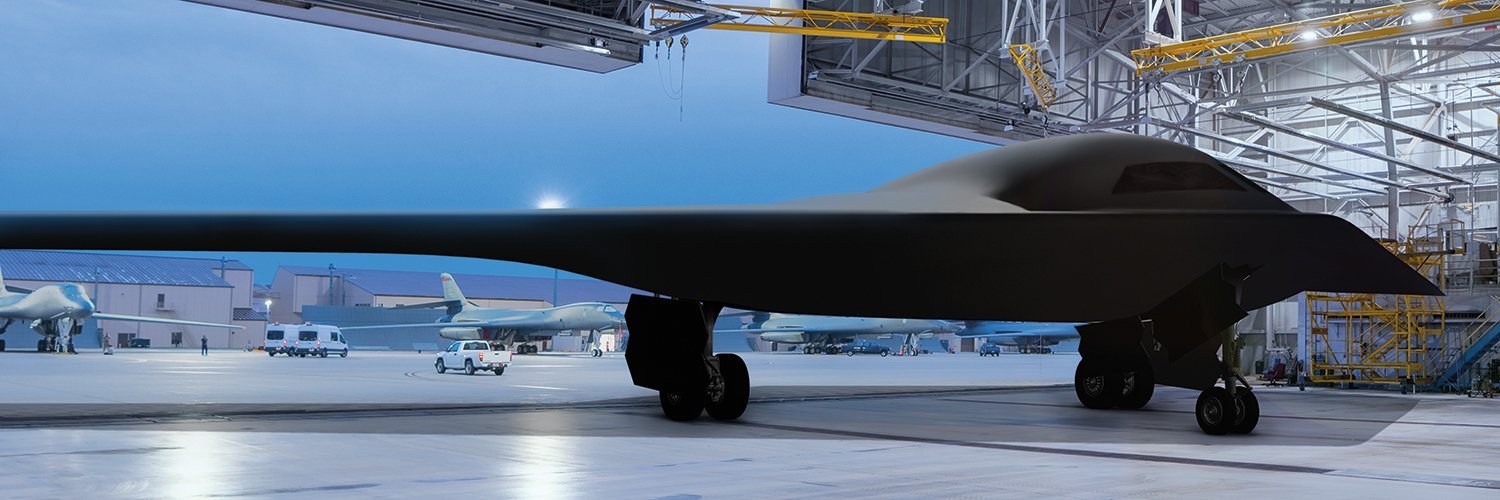
On the B-21 program, it continues to be well supported by the Defense Department and Congress, and the value and importance of a Stealth strategic bomber was certainly shown with Operation Midnight Hammer. The Air Force has recently confirmed it is committed to the successful fielding of the B-21 and is investing in the infrastructure necessary to support an increased yearly production capacity. Through reconciliation, the B-21 received an additional $4.5 billion to increase production capacity. This builds on the efforts that we and the Air Force have made previously to prepare for a more rapid production ramp.
We are in discussions with the Air Force regarding the potential for an accelerated production ramp on the program. And while the ultimate outcome of these discussions remain uncertain, we currently expect any agreement to accelerate production ramp would require further investment by the company to expand production capacity, along with the opportunity to earn improved returns on the LRIP and NTE production lots.
With the pace of change and advancements in technology, coupled with our customers' push for speed, we are constantly working to introduce new technologies and concepts to address our customers' needs. Beacon, which is highlighted on the cover of our slide deck, is one example of how we approach this. With Beacon, which we revealed in the second quarter, we've taken decades of autonomy experience and 500,000 autonomous flight hours to create a flying mission test bed. We bring software from companies of all sizes together with our flight software and hardware.
Beacon will accelerate autonomous mission capabilities for our customers by allowing a variety of industry partners to move faster because of the work Northrop has done and is doing on autonomy. Our investment in Beacon also supports the administration's call for more next-generation autonomous systems.
Before wrapping my remarks, I want to highlight the importance of our strategy to invest in the business. Speed of bringing technology to market is important in this environment and capacity is an important enabler to rapidly fielding capability. The capital investments we've made and that we continue to make allow us to meet this demand from our customers, remain competitive and lay the groundwork for our future growth.
In the area of solid rocket motors, we have invested $1 billion over the past 6 years, significantly improving our capacity and flexibility across multiple facilities. This includes investments at the Allegany Ballistics Laboratory facility in West Virginia for small motors and in Elkton, Maryland for medium-sized and hypersonic motors, both of which support growth in our tactical weapons business at DS. As a result of this investment, we were recently selected by the U.S. Navy to provide the 21-inch second stage solid rocket motor for its extended range missile programs. We developed and demonstrated this capability in less than a year.
In the Space segment, our investments at the Bacchus facility for large rocket motors support the build-out of the Kuiper satellite constellation. Overall, we expect to increase our total annual solid rocket motor production rate from 13,000 units today to 25,000 by 2029. We will continue to make strategic investments in our business to ensure we have the scale and capabilities needed to support our customers effectively. This includes emerging missile defense opportunities such as Golden Dome for America and second source qualification for several tactical missiles.
At the same time, we remain committed to returning capital to shareholders. This includes returning approximately 100% of our free cash flow to our shareholders through dividends and share repurchases this year. We repurchased nearly $900 million in stock in the first half of the year. And in the second quarter, we announced a 12% increase in our quarterly dividend, marking our 22nd consecutive annual increase. This increase is supported by the strong growth in free cash flow at the company. Reflecting our focus on delivering long-term value to shareholders over the past 10 years, we've increased our dividend at approximately 11% compounded annual growth rate.
In summary, I'd like to thank our team for an excellent quarter. We have an outstanding portfolio, robust global demand and funding environment that supports it and a high-performing team. This all leads to a strong outlook for our company.
I'll now turn to Ken to share more details on our second quarter financial results and our outlook. Ken?
Thank you, Kathy, and good morning, everyone. I'll begin my comment with top line results for the quarter. As shown on Slide 4 in the earnings deck, second quarter sales were $10.4 billion, up 1% year-over-year. Sequentially, Q2 sales were up 9% compared to Q1, with all segments contributing to this meaningful growth. And organic sales were $10.3 billion, up 2% year-over-year, reflecting the divestiture of the training services business, which closed ahead of schedule at the end of May.
Aeronautics second quarter sales increased by 2% year-over-year due to higher volume on B-21 and TACAMO, partially offset by lower restricted sales. At DS, sales grew by 7% on a GAAP basis, driven by the Sentinel program and from higher ammunition sales. The training services business generated $40 million of sales in Q2 before the transaction closed. So on an organic basis, DS sales increased 9% compared to the prior year. Mission Systems was our fastest-growing segment in Q2, with sales up by 14% year-over-year. This was driven in part by liquidation of inventory on a restricted award received in the period, which we had originally expected in Q1 and higher volume on marine programs. And at Space, Q2 sales were lower primarily due to the previously communicated wind down of work on 2 programs, reflecting $283 million of year-over-year headwinds.
Turning to Slide 5. Operational performance for the quarter was strong. Segment operating income was higher by 11% compared to Q2 of last year, and our segment operating margin rate increased 100 basis points year-over-year to 11.8%. AS operating income was up 3% compared to the prior year with a Q2 operating margin rate of 10.3%. This portfolio continues to have a mix of mature production programs and newer development programs. And when coupled with strong program execution and disciplined cost management, it provides a formula for AS to deliver healthy margin rates.
Defense Systems had a standout quarter of margin performance with the quarter 2 margin rate improving to 12.7%. This performance was driven by the recognition of a favorable EAC adjustment on the EMD phase of the Sentinel program, primarily based on expectations for achieving certain contract incentives. At Mission Systems, second quarter margins expanded to 14% and operating income increased 22% year-over-year. This quarter's margin reflects improved production efficiencies and performance across airborne radar programs. And at Space Systems, operating income dollars were reflective of the lower sales volume, partially offset by improved program performance. Operating margin rate was 10.6%, up 50 basis points from Q2 of last year, driven by higher net EAC adjustments.
Moving to earnings per share. Slide 6 shows year-over-year EPS comparison. In total, second quarter diluted earnings per share was $8.15, an increase of 28% compared to the second quarter of 2024. This was driven by 2 factors: higher sales and improved segment performance, which contributed $0.80 of year-over-year benefit and a gain of $1.04 recognized on the divestiture of the training services business.
Next, I'll provide updates on our forward outlook, starting with segment level guidance on Slide 7. For sales, we are maintaining our top line outlook at AS&DS of low $13 billion and low $8 billion, respectively. Aeronautics sales reflect mid-single-digit annual growth driven by the continued ramp on B-21 and TACAMO as well as higher volume on F-35 and B-2. We continue to expect DS will achieve double-digit sales growth this year, driven by Sentinel, IBCS and higher volume in our weapons business, stemming from 2024 award volume.
At Mission Systems, we are increasing our sales expectations to low to mid-$12 billion based on the strength of their year-to-date results and continued growth on domestic and international programs throughout their portfolio, including airborne and ground-based radar, EW and restricted programs. And at Space, we now project sales of mid- to high $10 billion, reflective of the award decision on the ESS program.
With respect to operating margin rate, we are maintaining our margin rate expectations for AS, MS and space. At DS, we are increasing our margin rate expectations to mid-10% based on their notable Q2 results.
At the company level, as shown on Slide 8, we are narrowing the range on our top line outlook and expect organic sales growth of approximately 3% for the year. This outlook projects sales in the second half of the year to be higher than in the first half by approximately $2.5 billion.
This increase in revenue is driven by a few factors. First, we expect the triad programs on B-21, Sentinel and Columbia to collectively deliver roughly $750 million in higher second half sales. B-21 LRIP Lot 3 and Lot 5 advanced procurement are expected to be awarded in Q4. These awards will also include a significant amount of revenue recognition due to inventory liquidations for materials purchased to support production schedules. Meanwhile, the Sentinel and Columbia programs are expected to continue to ramp, including higher material receipts and subcontractor deliveries in the second half of the year.
Another element of second half growth is the ramp on new recently awarded programs, including TACAMO, IBCS, international ground-based radars and multiple ammunition programs. Collectively, these new programs are expected to contribute nearly $700 million of higher second half sales.
And lastly, Q4 has historically been our strongest quarter of revenue generation, driven by production schedules and timing of materials. We expect this normal seasonality to continue this year, contributing roughly $1 billion of higher second half sales. Altogether, we expect Q3 sales to be up 3% to 4% compared to Q2 with further acceleration in Q4, positioning us to deliver on our full year sales guidance. For segment operating income, we are increasing the guidance range by $50 million at the midpoint, driven by higher margins at DS that I previously described. This reflects a company level segment OM rate of almost 11.4% in the second half.
I'd reemphasize that excluding the B-21 EAC adjustment in Q1, first half margins were also 11.4%. MS is expected to be the driver of margin dollar growth in the second half. The MS profile is enabled by continued strong program performance, higher international sales and seasonal volume increases to higher-margin production programs later in the year. With respect to earnings per share, we are increasing our guidance range driven by higher segment operating income. This increase in operational performance is being partially offset by a nonoperational item.
While the reconciliation bill recently signed into law includes several provisions that benefit cash flow, it also modifies the treatment of certain R&D tax credits that increase our estimated tax rate. As a result, we now expect a tax rate of high 17% for the year. Given the bill was approved in July, we expect an effective Q3 tax rate of approximately 21% to reflect the cumulative impacts to date. We are reaffirming our guidance for corporate unallocated expenses and expect roughly $100 million of expense in both Q3 and Q4 due to timing of state taxes and normal seasonality. Taking all those elements into account, we are increasing our EPS guidance by $0.05 and now expect a range of $25 to $25.40.
Lastly, with respect to cash, we are increasing our 2025 guidance range and now expect free cash flow of $3.05 billion to $3.35 billion. This increase is driven by the revision to Section 174 in the tax code related to treatment of R&D expenditures, partially offset by the application of the corporate minimum tax. In the quarter, we generated $637 million in free cash flow, a significant improvement compared to the first quarter. We continue to expect the largest quarter of cash generation in the fourth quarter, consistent with our seasonal pattern and sales ramp. In addition, there are a few other unique items driving higher Q4 cash flows.
First, as previously noted, reduced cash tax payments this year. Second, we have a higher-than-average level of milestone payments in the second half, including contract closeout payments at space. And lastly, we expect a significant benefit from inventory liquidations, particularly in Aeronautics in Q4.
In summary, we had an outstanding quarter of operational and financial performance. Sales, margins, earnings per share and cash all increased meaningfully from Q1 with momentum that we expect to continue in the second half of the year. These results demonstrate the value of the Northrop Grumman portfolio as well as our continued focus on disciplined program performance. We remain focused on delivering on our full year commitments while executing our business strategy and deploying our capital in value-creating ways.
With that, we'll open the call to questions.
[Operator Instructions]
Our first question comes from Doug Harned with Bernstein.
You had a really strong quarter for margins, as you described, really, really good performance. But when you look at the guidance increase for the year, it's pretty small. I mean if you look at least where I think many of us were expecting this to come out, the Q2 was really positive. Can you explain how that works given that you're also talking about maintaining this positive momentum from Q2 into the second half?
Absolutely, Doug. Thank you for the question. As mentioned in my comments, we did have very strong segment operating performance within the quarter, as you mentioned. One nonoperational item that offset that was the change regarding tax reform. And overall, tax reform was a positive change, increasing cash flow that we can invest in the business, provide opportunities for people, things of that nature. However, due to general limitations on certain credits as well as deductions related to certain R&D expenditures, the offset on the operational performance was driven by that. It increased our effective tax rate. But overall, I would like to highlight the strong performance of the operations. If you look across the segments, very strong performance in line with expectations where we need them to deliver in order to meet the guidance range that we provided.
And then if I look forward and you look at the 2026 budget, this is sort of laid out the combination of the administration's proposal plus reconciliation, there are big additions in funding for B-21 and Sentinel. And what we're trying to understand is if you look at that very strong funding profile should -- when and how might we see an impact in your revenues and earnings in those 2 programs?
So Doug, as you know, the overall budget environment is favorable for defense with the potential of a double-digit increase in FY '26 when you take the FY '26 budget as well as reconciliation. And we do expect reconciliation, although it can be spent over a multiyear period to be loaded towards the front end of that period. With programs like B-21 and Sentinel, as you know, that are receiving significant increases, B-21, $4.5 billion in funding in reconciliation; Sentinel, a couple of billion; and E2, which you didn't mention with $1.5 billion. We do expect those expenditures to be spread over a multiyear period, but certainly provide tailwinds going into 2026 and that those expenditures would begin as early as this year.
Our next question comes from Gavin Parsons with UBS.
Kathy, I believe you said any agreement to accelerate B-21 further would require further investment on your part, but it would also include the ability to earn improved returns. I was hoping you could just go into a little bit more detail on that and if that would allow you to reopen pricing on the LRIP or if that's only on future lots?
Yes, Gavin. So the important takeaway here is that the reconciliation bill now provides the funding for the expansion of production capacity for the B-21. And so we have entered into discussions, as I have alluded to before, we were already working with the Air Force on plans to accelerate production capacity. And now we are in discussions about how those funds will be used to make that happen. And we are looking to get a fair and equitable business arrangement where we would be incentivized to invest in that production capacity.
And with that would come the opportunity to earn improved returns on both the remaining lots of LRIP and the NTE units, which, as you know, already have some price in TE, but also have the ability to adjust based on inflation and other factors. So taking all of that into consideration, we're in discussions now. We should have more clarity in the coming months, and we'll certainly share that with you as the business arrangement comes together.
Our next question comes from Ronald Epstein with Bank of America.
Maybe if you could talk a little bit more about your international business. You said there was about 18% international sales growth in the quarter. And any details you could share with international backlog growth or how we should think about that? And how do you expect the growth to continue as NATO ex the U.S. starts to ramp up their spending towards that 3.5% goal for sort of the core defense piece that they've all sort of agreed to?
Yes. So as you know, there is a generational shift in defense spending that's underway in Europe. And we had seen that reflected in very strong book-to-bill, 1.4x in international. And now what we're seeing is that those awards are reflected in the strong sales growth that I mentioned, 18% year-over-year, 14% year-to-date.
And so as we look going forward, we expect those commitments that NATO countries have made to increase defense spending and general national security spending to 3.5% and 5%, respectively, of GDP to continue to provide a basis for the strong awards and sales growth within the company. It's broad-based. It's certainly weapons and ammunition, but it's also integrated air and missile defense, E-2, Triton sensors. So looking across our portfolio, 3 of our 4 sectors, MS, DS and AS, all have a very strong international pipeline.
Got it. And then if I can, just a quick follow-up on -- in the quarter, you guys took a positive EAC on Sentinel. And I think that surprised everybody. I can't speak for everybody, obviously, but it surprised us for sure because of kind of the press around Sentinel. And you talked a little bit about it in your prepared remarks. Can you go back on any more on that, kind of how that happened and what it means?
Yes. First, we are making substantial progress on the Sentinel weapon system, the milestones that we've talked about on prior calls about test milestones and continued maturation of design. There's one segment, the Command and Launch segment, where we had been paused on work while the Air Force was working through a restructure and revisit of both the acquisition approach and then working to rebaseline the entire program. And yet all during that time, good progress was being made on all other aspects of the program, and that continues.
Now we have been restarted on that work in the Command and Launch segment, and we've made really good progress in the second quarter. I highlighted in my prepared remarks, some of that progress has come from just open discussion about alternatives and options to accelerate the Sentinel program and working jointly with the department to evaluate and implement those changes and get specificity around the program plan forward has helped us to be able to move more quickly and remove barriers to performance.
So I think it's really just a transformation in how the program is operating over these last couple of quarters that will provide us that strength and stability going forward as a joint team between the government, Northrop Grumman and all of our teammates that has improved our outlook for the program meeting its milestones, and we're just really encouraged with how it's progressing.
Our next question comes from Scott Deuschle with Deutsche Bank.
Kathy, can you share your latest framework and how we should be thinking about growth at Space Systems over the next couple of years? And then how you see the segment's growth comparing to the market as a whole? Obviously, a lot going on in terms of NASA budgets, DoD budgets, et cetera, in space. So just kind of a muddle picture for investors and curious for some clarity from yourself.
Yes, Scott. I would agree that it is the most dynamic of our market segments that we're operating in right now, both with NASA budgets in question. Of course, the Congress has provided support to continuing programs like Artemis and specifically SLS and HALO, which is where we currently have work with NASA. I would remind you, NASA is only about 3% of our overall sales as a company. So not a big driver of our space revenues, but nonetheless, important missions that we're supporting.
We also see changes in the Department of Defense architectures and those reflected in some pauses and reconsideration of acquisition strategies ongoing right now. But if I cut through all of that noise in the near term, we do believe space budgets are going to continue to grow after a couple of year period of relative flatness from the U.S. Department of Defense on space. And we expect Golden Dome for America to be a significant driver of increased budget that would be available to our space sector and everything from space-based interceptors to the broader support to a Golden Dome for America architecture.
So overall, we are optimistic that our space business has significant opportunity ahead, would continue to grow after this year where we had talked about the business would be down but start to regrow into 2026, and we still have that expectation.
Our next question comes from Kristine Liwag with Morgan Stanley.
So Kathy, NATO spending is increasing. That said, our European allies have been focused on growing its indigenous capabilities and shift away from the U.S. in the longer term. In your prepared remarks, you talked about partnerships with some European players and having capacity. Lockheed has a partnership with Rheinmetall on missiles. How do you make sure that Northrop Grumman would have a long-term foothold in these markets once local capabilities catch up and they expand out their capabilities and capacity?
It really is about partnering. As you noted and I noted in my prepared remarks, we have product lines that really lend themselves to working with local industry. For example, IBCS is an architecture where we provide hardware and software. But the key element of that architecture is that it can integrate indigenous systems that are part of the country's current air and missile defense, whether that be sensors or shooters and the ability to do that sits locally within their industrial base. So we can bring partners in to facilitize. An example of that is in the U.K. where we're working with Marshall or in the Republic of Korea, where we've just signed a similar agreement with Hanwha.
So we really look at these local partnerships as a way to not only bring the best capability to the country, but support local industrial base. And I've also talked in the past about co-production, where we have expertise, but it's best for a local industrial partner to actually build the capability, munitions is a key example of this. And we just, in the quarter, signed another agreement, this one with a Lithuanian provider. That helps us to transfer knowledge and expertise through a license, but for them to actually have the ongoing ability to produce locally.
And maybe as a follow-up, you talked about the B-21 procurement acceleration, the restructuring of Sentinel and the increasing orders internationally. I mean, these all showcase the strength of your portfolio. Taking a step back, when you've looked at where you've seen the most dollar changes for program funding, which 3 programs are you most excited about today that change versus maybe where expectations were a year ago?
So the 3 that I'm most excited about are the 3 that I mentioned that are in our portfolio today, that would be B-21 with the additional $4.5 billion, mainly focused on production capacity expansion. That's something, as you know, that we have been working for a while, and it's good to see it reflected in the reconciliation bill and to now be into discussions with the Air Force about implementing and bringing that vision to reality for the good of the Air Force.
The second is Sentinel, where we have not needed additional budget increases this year, but now are seeing the opportunity in FY '26 to really accelerate the program and begin working risk reduction activities that will lead to schedule and cost improvements potentially on the program. So that's very exciting.
And then finally, E-2D, which has $1.5 billion additional funding to support the program being extended partly for the Homeland Defense mission, but also partly just as the only production capability that can match the E-3 and be a replacement for that capability. So those are 3 of our existing programs.
But I'm equally excited about Golden Dome for America, which is a new set of opportunities, very significant funding there, as you know, in the reconciliation bill and our opportunity to pursue some of that work.
Our next question comes from Robert Stallard with Vertical Research.
Kathy, I just wanted to dig into the Sentinel situation. It sounds like it's improved for you for sure. But as I understood it, a lot of the problems are on the silos. So is there some sort of breakout here where you can carry on an accelerated rate with the missiles essentially and then silos are completely independent? Or is this still a pacing item for you? Can the customer just buy the missiles regardless?
It is not -- the way we look at it is all 3 segments of the program need to move forward. And that's what is most exciting about what happened in the second quarter. We actually made progress such that the work was turned back on for the launch facilities or as you referenced them, the silos themselves. And so we are back into designing those and really nailing down with the Air Force, the appropriate requirements that will lead us to be able to move faster and potentially reduce costs on the program from the baseline that emerged coming out of the Nunn-McCurdy.
So that is the work that we're doing right now to bring that leg of the program in alignment with the others. While we have continued to make good progress on the missile and the support and sustaining equipment, we are focused now on bringing the Command and Launch to that same level of maturity and design.
Okay. That's great. And then just a quick one for Ken. I was wondering if you could give us an idea of the annualized impact of this change to the R&D tax credit in terms of the P&L tax charge and also the cash.
Yes. So when we think about cash flow in the future is we -- you should anticipate approximately $200 million of cash tax benefit over the next few years. And in terms of the ETR impact relative to our P&L side, it was roughly about $50 million.
Our next question comes from Sheila Kahyaoglu with Jefferies.
Maybe, Kathy, 2-part question on defense for you. First, just on the revenue growth profile, you called out solid rocket motors increasing to 25,000 by 2029 versus 13,000 today. Can you just talk about how Defense Systems revenue growth profile changes based on weapons commentary and international growth outlook?
And then second, similar questions on Sentinel to Ron and Rob. How does the maturation of the Command and Launch segment change the EMD margin profile for defense through the end of the decade when production starts?
Great. So let me start with your first question. And I do want to remind everyone that the 13,000 solid rocket motors to 25,000 is inclusive of small, medium and large; small and medium predominantly for our Defense Systems business and large for our space business. And we've been investing in all 3. The work on small and medium leads to increased opportunities for our tactical weapons, both second source on missiles that we are not currently a provider as well as growth on those that we are.
In addition, we have multiple programs where we are the prime Stand-in Attack Weapon, AARGM-ER, and those will likely contribute significantly to growth. Each of those have an international and a domestic component, so growth in U.S. spending and expected for international. And then the last piece that we don't talk a lot about is hypersonics. We built the hypersonics integration facility in Elkton, Maryland, and we are also providing rocket motors for those weapons as well and expect that to be an area of growth well into the future.
So we have said in the past, and I still believe it to be the case that Defense Systems is likely to have our highest sustained growth rate over these next several years, largely fueled by weapon systems as well as our integrated air and missile defense, and I talked about the strength of that portfolio.
Shifting to your second question on Sentinel and the EMD margin profile. As we looked at the program in the second quarter and the agreement that we reached with the customer on how the restructure will be accomplished, but then also beyond the restructure, the pathway to rebaseline and completing EMD, that those agreements are what led us to have confidence to increase our overall booking rate based on our expectation for realizing incentives on the program during that phase.
So our confidence increased based on increased certainty that we have through that agreement reached with the government. And now that certainty also translates into a better platform for the Integrated Air Force and Northrop Grumman team to execute on the program, turn back on of the design work on Command and Launch, the pathway for taking the missile through design and testing and completing those milestones, all of which are leading us to have higher confidence in the ability to complete the EMD phase of the program.
Do we still think about Defense Systems as a 10% margin business on a go-forward basis then?
So we're not ready to provide any guidance beyond this year, but certainly, we raised our guidance for the segment for this year and the drivers for that increased confidence certainly are fundamental. They are not onetime items. So I would have you wait until we give you some guidance for '26, but my expectation is that Defense Systems continues to perform very well and that the tailwinds for both international growth and the -- which is a mix factor and performance are both leaning favorably for them.
Our next question comes from Seth Seifman with JPMorgan.
I think you may have touched on the answers to these questions. But when you've talked about the out years before, Kathy, you said B-21 was going to grow, but probably remain a high single-digit percentage of company sales, likewise for Sentinel at mid-single digit. But now that we see this funding in the reconciliation bill, I don't know if it's possible to revise that outlook and likewise, for what it does for the $4 billion of cash flow in 2028.
Yes. So depending on the final agreement for the production rate ramp on B-21, we do now believe it could exceed the 10% of our total revenue in the future, but it's really early to provide any more definitive outlook. And as I said, in the next couple of months, as we have clarity on the entire business arrangement, we would update that. The same is really true for our cash flow outlook as we think about the investments that we would make as part of this arrangement, the improvement in incentives that, we would expect we will look at all of that in combination to be able to update you, but it is our expectation that in the long run, these investments result in both better profitability and cash flow.
And then with Sentinel and how large it could become as part of the portfolio, I don't see it reaching that 10% of revenue in the next couple of years despite the additional funding that we've received. But certainly, as we move into the production phase of the program, which is now still several years out, I would expect at that time, we might revisit whether it becomes a larger part of the portfolio.
Our next question comes from Richard Safran with Seaport Research Partners.
I had a 2-part question for you on the contracting environment. First, I want to know if you could discuss the contracting environment generally with the new administration, if you're seeing an improvement in terms and conditions and things like incentives like award fees.
Second, you've been talking a lot about the growth in international, which has been terrific. But I'm kind of wondering if you're seeing more DCS versus FMS? Or just in general, is this FMS going to be the -- pretty much the norm going forward?
Sure. So let me start with what we're seeing in contracting. There are certainly reviews underway, both driven by executive order and congressional review to look at acquisition reform, and it would be early to comment on the outcome of any of those. But we are seeing this administration have a perspective that speed is important, and we need to break down barriers. Some of those may be barriers in the contract itself. Others might just be the way that we're operating on programs, and that has been very positive. And you see that reflected in our 2Q performance, but also our outlook as we've talked about a couple of programs here today. So that fundamentally, in my view, is a net positive even outside of formal acquisition reform or changes in contracting.
With international, we continue to see a mix of direct commercial sales and FMS, and we expect that to continue. Certainly, on more complex efforts where the U.S. government involvement is key, not only in the technology that is being deployed and shared with our allies, FMS is most appropriate. But as I've talked about in munitions and other areas that we are selling off of hot production lines, DCS certainly is a more expeditious way of working with customers. So we don't expect a significant change in our mix between DCS and FMS.
Our next question comes from Jason Gursky with Citi.
Kathy, I was wondering if you could spend a bit more time talking about one of the phrases you used in your opening remarks on making some investments in some new areas for the company. I'm just kind of curious what was on your mind when you made that comment.
Yes. So we certainly highlighted one today, and that's with Beacon, where we are creating a mission testbed. This isn't something we typically would have done in the past, where we're inviting other industry partners to come and benefit from the knowledge that we've gained by having over 500,000 hours of autonomous vehicles operating in the data off of those. This idea of being able to provide very high fidelity physics-based models is something our company does very well. Many small companies don't have that insight and yet they have good ideas on software or hardware that can be applied and need to be tested and run up against both threat scenarios and operating conditions to see how they will perform.
So Beacon is a testbed that allows that to happen, and we've signed a number of partners to come and work with us in that integrated environment so we can learn together and really inform ourselves and the government on what the right mix and set of solutions are for autonomous vehicles. That's just one example, but it gives you an indication of the things that we are investing in, and these aren't large investments, but they are important investments that really unlock for us the opportunity to partner in new ways and provide value to the government in new ways.
Okay. Great. Maybe as a close follow-up to that. Northrop has obviously been very successful in what I would describe as kind of large exquisite systems to date. There seems to be this growing view that in the future, the future of warfare and the systems that we're going to need are going to be less exquisite and maybe more attritable than we have seen in the past.
I'm just curious to know what your strategic approach is to new purchasing patterns and new systems. And does Northrop stand the chance here to do it all, be involved in unmanned autonomous and attritable mass as well as the large exquisite systems? And how do you go about kind of layering in the more kind of lower-end attritable systems into your overall revenue mix and the ability to execute profitably on programs?
A few thoughts on that. First, I don't believe that it will be an either/or on exquisite systems versus lower capability, but also lower cost systems. I think it's going to be a combination and usually a combination of those systems working together. And so part of the expertise that we bring is how to have that whole family of systems work effectively.
The second is that I believe Northrop already has demonstrated the ability to work on both ends of that spectrum in our aero business, in our space business and certainly the mission systems and weapons that go on platforms of varying sizes, complexity and cost. So yes, we are pursuing that whole continuum. I'd say, with the exception of very low cost. where you aren't basically incorporating mission systems or weapons and they are meant to be fully attritable units.
So -- but the broad spectrum that our DoD client is talking about, we are operating across most of it. And the investments that I talked about like Beacon are a unique way of doing that. We're not trying to sell hardware in that case or even software. What we are doing is partnering to come up with the best integrated solution, and it will likely be us and other players coming together in a teaming construct to then bid and deliver on the units themselves. So that really is the change here in the way that we're thinking about go-to-market, but the systems that we would provide are across that entire continuum of value.
Our next question comes from David Strauss with Barclays.
Kathy, could you give a rundown on F-35, the status there, how you're going across your different efforts there? I think there's been some news on the press about a delay in the next-gen radar on F-35. So just an update there.
Yes. We're doing well on supporting the production needs for the current platform. Of course, that includes the center fuselage and other related components out of AS and the APG-81 radar. As we look forward, we are involved in the modernization program. There's not a lot I can say about that program due to its classification, but simply to say that we have an excellent radar in the APG -81 today on the aircraft, and we are working toward the fielding of APG-85 in the future. And there will be more details to come about that capability. But I would really just suggest that overall, we are progressing well in partnership with both Lockheed Martin and the joint program out just for the F-35 to deliver on those modernization efforts for the program.
Okay. And as a follow-up on B-21 and the potential for an increase in the production ramp there. So whereas in Q1, there was this charge to potentially accommodate additional production. As things stand here today with additional money and reconciliation, if you were to agree with the Air Force on increased production, you wouldn't anticipate a further charge on the program. You would expect that to be covered as part of whatever arrangement you reach with the Air Force.
So as I said in my prepared remarks and we had in the 10-Q, we recognize that accelerating the production ramp will likely require future investment by the company and our discussions with the Air Force are to accompany that with the opportunity to earn improved returns on the program to get a return on that increased investment that we would be making.
Our next question comes from Myles Walton with Wolfe Research.
Ken, maybe just -- Ken, first a clarification. I think the R&D capitalization reversal you said was a couple of hundred million dollar benefit. Is that in addition to the absence of the $250 million headwind from capitalization you're previously anticipating in the '25 guidance?
So regarding our future cash, and let me break it down into 2 pieces. Number one is in terms of our road map in terms of cash flow, nothing has changed from the previous commentary that I've made regarding, hey, we're continuing to focus on managing risk, managing opportunities, making sure that we're rationalizing investments to hit the guidance in the baseline case. The only change has been is an additional benefit of $200 million due to the additional benefits from tax reform, cash tax benefits.
And then beyond that, we have opportunities, as we've mentioned, whether it's new development programs, whether it's opportunities around B-21 investments as well as the value creation that comes with those in terms of providing for long-term cash flow in the future. And so we'll provide updates in the future for our normal process in terms of what the out years look like as we understand and get further in discussions and understand various awards.
Okay. And Kathy, maybe the question for you. You mentioned in the opening remarks around space-based interceptors that you were testing currently. Are you actually testing on-orbit space-based interceptors currently? And is it a directed energy or kinetic approach at this point that you're testing?
Yes. So these are ground-based tests today, and we are in competition, obviously. So not a lot of detail that I can provide here, but it is a capability that we believe can be accelerated and into the time frame that the administration is looking for.
Right. Josh, we're going to have to leave it there.
Right. So let me close by thanking the Northrop Grumman team for another really strong quarter of performance. The team just continues to deliver for our customers when they need us most. And many of our most valued abilities are unknown to the world because of classification. But this quarter, the results of our work were on full display, and I'm really proud of how the team stepped up to support the U.S. government.
We remain strong on our outlook for the company as both global demand as well as domestic demand for our solutions grows, and the team delivers outstanding performance. So all of that allows us to deliver value for each of you as our stakeholders and shareholders. And I thank you for your continued interest and for joining us on our call today. So thanks again.
Thank you. Ladies and gentlemen, this concludes today's conference call. Thank you for your participation.