

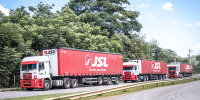
JSL SA
BOVESPA:JSLG3





| US |

|
Johnson & Johnson
NYSE:JNJ
|
Pharmaceuticals
|
| US |

|
Berkshire Hathaway Inc
NYSE:BRK.A
|
Financial Services
|
| US |

|
Bank of America Corp
NYSE:BAC
|
Banking
|
| US |

|
Mastercard Inc
NYSE:MA
|
Technology
|
| US |

|
UnitedHealth Group Inc
NYSE:UNH
|
Health Care
|
| US |

|
Exxon Mobil Corp
NYSE:XOM
|
Energy
|
| US |

|
Pfizer Inc
NYSE:PFE
|
Pharmaceuticals
|
| US |

|
Palantir Technologies Inc
NYSE:PLTR
|
Technology
|
| US |

|
Nike Inc
NYSE:NKE
|
Textiles, Apparel & Luxury Goods
|
| US |

|
Visa Inc
NYSE:V
|
Technology
|
| CN |

|
Alibaba Group Holding Ltd
NYSE:BABA
|
Retail
|
| US |

|
JPMorgan Chase & Co
NYSE:JPM
|
Banking
|
| US |

|
Coca-Cola Co
NYSE:KO
|
Beverages
|
| US |

|
Walmart Inc
NYSE:WMT
|
Retail
|
| US |

|
Verizon Communications Inc
NYSE:VZ
|
Telecommunication
|
| US |

|
Chevron Corp
NYSE:CVX
|
Energy
|

Utilize notes to systematically review your investment decisions. By reflecting on past outcomes, you can discern effective strategies and identify those that underperformed. This continuous feedback loop enables you to adapt and refine your approach, optimizing for future success.
Each note serves as a learning point, offering insights into your decision-making processes. Over time, you'll accumulate a personalized database of knowledge, enhancing your ability to make informed decisions quickly and effectively.
With a comprehensive record of your investment history at your fingertips, you can compare current opportunities against past experiences. This not only bolsters your confidence but also ensures that each decision is grounded in a well-documented rationale.
Do you really want to delete this note?
This action cannot be undone.

| 52 Week Range |
5.05
7.95
|
| Price Target |
|
We'll email you a reminder when the closing price reaches BRL.
Choose the stock you wish to monitor with a price alert.
|
|
Johnson & Johnson
NYSE:JNJ
|
US |
|
|
Berkshire Hathaway Inc
NYSE:BRK.A
|
US |
|
|
Bank of America Corp
NYSE:BAC
|
US |
|
|
Mastercard Inc
NYSE:MA
|
US |
|
|
UnitedHealth Group Inc
NYSE:UNH
|
US |
|
|
Exxon Mobil Corp
NYSE:XOM
|
US |
|
|
Pfizer Inc
NYSE:PFE
|
US |
|
|
Palantir Technologies Inc
NYSE:PLTR
|
US |
|
|
Nike Inc
NYSE:NKE
|
US |
|
|
Visa Inc
NYSE:V
|
US |
|
|
Alibaba Group Holding Ltd
NYSE:BABA
|
CN |
|
|
JPMorgan Chase & Co
NYSE:JPM
|
US |
|
|
Coca-Cola Co
NYSE:KO
|
US |
|
|
Walmart Inc
NYSE:WMT
|
US |
|
|
Verizon Communications Inc
NYSE:VZ
|
US |
|
|
Chevron Corp
NYSE:CVX
|
US |
This alert will be permanently deleted.



Ladies and gentlemen, welcome to JSL's video conference to discuss the earnings for the first quarter 2024. This video conference is being recorded, and the replay can reached on the company's website ri.jsl.com.br. The presentation will also be available for download. [Operator Instructions].
Before moving on, I would like to emphasize that the forward-looking statements are based on the beliefs and assumptions of JSL's management and on the current information available to the company. Statements may involve risks and uncertainties since they relate to future effects and therefore, depend on circumstances that may or may not occur.
Investors, analysts and journalists should bear in mind that events related to the macroeconomic environment in the segment and other factors could cause results to be materially different from those in the forward-looking statements. Today, with us in this video conference are Mr. Ramon Alcaraz, JSL's CEO; and Guilherme Sampaio, the company's Chief Financial Officer and Investor Relations Officer. Now we are going to turn the call to Mr. Alcaraz to start the presentation. You may go on.
Ladies and gentlemen, good morning. It's a pleasure to be here representing the entire JSL team to report on the first quarter '24, we had gross revenue of BRL 2.4 billion, net revenue of BRL 2.1 billion, 32.4% higher than the same quarter last year. EBITDA of BRL 403 million grows very much in line with revenue, maintaining the same margin in the comparison basis. Just as curiosity, this absolute EBITDA figure is the same as the one published a full year at the time of the IPO just over 3 years ago.
Net profit of BRL 49 million, 56.2% higher than the first quarter 2013. And return on invested capital of 16 percentage a 0.8 percentage points higher than the first quarter '23. I'd like to highlight a few points here. Net profit growing considerably more than revenue and even EBITDA confirming our efficiency in allocating capital and reducing the cost of debt.
Consistent growth of 25% year-on-year. In both the models, both asset having and satellite operations, a sustainable return on invested capital at a new level, reinforcing our capacity to grow with profitability, price right and operational efficiency. Moving on to the next page. We have strengthened our managed model, ensuring quality delivery with a consequent cross-selling process. I'd like to highlight some points, incivilities management of each contract, managers with autonomy and agility in decision-making, customized projects developed with and for our customers, adequate pricing, cost controls and operational efficiency.
The next page shows as we did in other quarters, the amount enclosed in new contracts, guaranteeing organic growth, more than BRL 1 billion in this quarter alone. With an average contract term of 40 months in the most wide segments, pulp and paper, automotive, retail, oil and gas, consumer goods and others. In addition to this contract, part of the contracts signed in '23 are being implemented this year.
Just as a reminder, in '23, we closed a total of BRL 3.5 billion in new businesses with an average duration of 42 months. We have 20 implementation underway with BRL 360 million in expansion CapEx over the period. that generated a negative impact "on this quarter's profit of BRL 10 million", quote unquote because it is a temporary negative result. And I always like to repeat our motto. Discipline in pricing ensures sustainable results, guaranteeing the continuity of our investment capacity quality in our services, guaranteeing excellence and satisfaction to our customers.
The reason for our being as well as generating a natural cross-selling. On the next slide, we highlight the main points of our management contracts, focused on individualizing pricing of each contract. Management of current contracts, discipline and agility in contract adjustments and at the limit, even discontinuation of those with an adequate margins. Margins strength of adjustment mechanism with effective parametric formulas to keep the planned profitability.
Constant pursuit of efficiency in costs and resource management, sustaining the company's margins at an appropriate level to the capital invested. Maturity of the companies acquired in the JSL ecosystem, more than 1 percentage point year-on-year. Financial management, issuance of the CRA to extend the debt profile, BRL 1.75 billion with an average cost of CDI plus 0.97% a year. with an average duration of 6 years. Congratulations to Guilherme and your team.
With that, we showed a reduction in the cost of debt with growing free cash flow, growth and scale, unique investment capacity to support growth, growth of over 25% year-on-year with a balance between Asset Light and Asset Heavy operations. Successful consolidations of the acquired companies. Last year, IC and [ IFSJ ]. The next page, we highlight our business strategy based on long-term contracts, diversification of services and segments, which makes our business resilience. You can see that our business in presence throughout the logistics chain includes warehousing, dedicated operations, cargo transportation and urban distribution.
30% of our business does not involve trucks. They are based on people and technology, including management of our own and third-party warehouses, intralogistics and even chartering services in the most varrying sectors of a [ company ], including pulp and paper industry, mining, automotive and retail in general. [ 57% ] of transportation operations with long-term contracts in specialized operations, whether in the international transport up refrigerated and frozen foods, gases, fuels, beverages, food, wood, pulp, brand new vehicles and others. 14% is what we call traded business.
That is the transportation of several cargo from grains to consumer goods, 100% Asset Light with several negotiations throughout the month according to supply and demand. You see that 86% of our revenues come from highly specialized services and essential in our customer supply and sales chains. On the next page, we draw your attention to the transformation of the acquired companies by associating the know-how of each to JSL's scale. All companies with expressive growth since their acquisition.
To give an example, FSJ, the last company acquired grew by more than 50% in less than a year. Our strategy is to make companies independent to continue doing what they do best, each one in their own specialty. On the other hand, within our ecosystem, we have managed to gain synergies in the purchase of assets and inputs, taking advantage of our sites. On average, this has led to cost reductions of around 2% of gross revenue. Another way that we have taken advantage of the ecosystem is through cross-selling between companies and customers. After all, many of the specialties are complementary.
Now I'm going to turn to our CFO, Guilherme Sampaio. Guilherme, go ahead.
Thank you, Ramon. Good morning, everyone. I think Ramon has covered the main points that have brought us so far. Put in the years of work focused on operations, where we also grew in parallel, our contract management model, the culture of JSL and the pillars of customers, people and results. We also put together a model to scale the acquisitions that we have made and will make. The results are a combination of this culture, managed model and the scale that the company has gained.
Moving to the figures. Net revenue closed the quarter at BRL 2.1 billion, 32% higher than the first quarter '23, 47% of the revenue in transportation in dedicated operations within the customer's reduction process, 12 in warehousing operations and seven in urban distribution. In addition to diversification of services, we serve more than 18 sectors of the economy. I'd like to highlight some of them. 26% in food and beverage, 15% pulp and paper, 12% automotive which are historical JSL.
And new sectors that have been growing very fast during our revenue mix such as chemicals, which already accounts for 7% of our revenue and e-commerce and agri business with 6% and 5%. These are sectors that balance each other and give us comfort in our stability and resilience of revenues. Moving to operating results. EBIT closed the quarter with BRL 280 million, 14.1% margin, maintaining the operational level in a seasonally lower quarter and with more than 20 implementations taking place simultaneously.
EBITDA closed the quarter at BRL 403 million, 32% higher than the first quarter '23, in line with the growth in revenue. Remember that we still have the pressure of IC results on this figure, which despite having evolved in those quarters has not reached the level we are looking for. We are advancing negotiations with customers and our focus on ICs cost efficiency to reach the level we are looking for.
Moving on to profit. We already see the results we're talking about. Net profit grew by 56% compared to the first quarter of '23. Even with almost BRL 10 million of impacts of the 20 implementations Imentioned. Taking out the benefit of subsidies that we had last year, ICMS subsidies, I mean, putting profit on an equal footing, the growth would be 130% year-on-year. The growth confirms what we have been saying that we are in a new cycle, taking advantage of the operational work done and focusing now on capital structure, efficiency of our balance sheet that will contribute to reducing the cost of debt by spread or by reducing the CDI.
Our running rate, return on our invested capital rose to 16% in first Q '24, 0.8% higher than '23 and 0.2% compared to the fourth quarter last year. This demonstrates discipline in capital allocation and the company's operational and capital structure management. I think it's worth pointing out that we are a company that is growing 30% a year and has consistently extended returns quarter-on-quarter.
Breaking down figures between Asset Light and Asset Heavy operations, Asset Light, which represents 51% of our revenue, closed the quarter with BRL 1 billion net revenues, 16.6% EBITDA margin due to the impact of the several implementations, mainly at TPC and the seasonality of our business, [ grains ] that I see that we didn't have in the first quarter last year.
Asset Heavy closed the quarter with almost BRL 1 billion, 49% of our consolidated numbers and EBITDA margin of 23%, even with the large employment like the [ Cerrado ] project by Susan. Asset Heavy has benefited from contract to contract management, which has led to the fourth churn of some contracts '23 and starts '24, as [ Jamal ] mentioned before, without contracts where we foresee a force churn due to profitability.
The next slide talks about CapEx. CapEx of BRL 521 million gross CapEx, 70% of it for expansion to support the growth of new contracts, as Ramon mentioned, Subtracting the sale, we reached a net CapEx of BRL 442 million in the quarter. And when we update the figure that cover rates our net debt with the residual of our asset base that are sellable, machinery, trucks and tractors and trailers.
We get to a difference of BRL 50 million from our residual asset base to our net. If we bring this asset base to market level based on the margin that we have reached in recent quarters, we have an asset value of 1.3x our net debt. The next slide shows the cash position that closed the quarter at BRL 3.7 billion, already reflecting the funding we had in the quarter itself and revolving credit lines of BRL 800 million, which amounts to BRL 4.5 billion in cash and cash equivalents, generating 4.9x our for short-term debt.
Net debt stable at BRL 4.9 billion, and the reported leverage of 2.7x net debt EBITDA and 2.4x net debt-EBITDA added our benchmark for covenants. This is the last quarter that we had the effect of the bargain purchase of IC in the last 12 months of EBITDA and therefore, leverage without this effect is at 3.1x, stable compared to the fourth quarter '23 and lower than the first quarter last year. This with BRL 420 million of net CapEx in the quarter.
Cost of net debt closed the quarter at 9% after tax, impacted by the reduction in the CDI rate. and also the reduction of the average spread of the cost of debt. Before returning to Ramon, I'd like to reinforce an important point about the dynamics of our business. We are a company of execution. You have heard us talk about this before. We have made a slide to illustrate the dynamics. JSL turnover in the last 12 months was BRL 9.5 billion combined numbers. But if we look into our debt, our CapEx already realized, which impacts results and leverage, for example, we cannot see the growth that is already contracted. And that we are going to see in the coming quarters in terms of results.
For the debt and CapEx that are read on our balance sheet at the close up quarter, we still do not have part of the revenue and EBITDA of contracts implemented over the course of '23 and the entire CapEx base of the first quarter '24. It's contracted revenue in process of ramping up. We brought the slide to show that even with the results delivered, we still have the weight of growth that would take us to a new level of margins, return on leverage.
This contracted revenue gives us a lot of comfort in terms of execution that will maintain our pace of growth and continue to consolidate the logistics market in Brazil, maintaining levels of return. With that, I turn back to Ramon and will be available for your questions. Thank you. Ramon?
Thank you, Guilherme. And to close, I'd like to make some important points about JSL. We have a very solid business model that is difficult to replicate in the market. And I say this because of the solid foundations we built over the almost 7 decades. JSL stands out for its ability to meet the demands of our customers with customized solutions and a proven track record, the most comprehensive portfolio of logistics services in the country.
Our managed model is based on dedicated people prepared to ensure quality and efficiency in contract management. results of acquired company driven by independent managed model, quality of the company's added to JSL's scale and access to capital, discipline in pricing, operational efficiency and strict cost control ensured a solid balance sheet and suitable profitability. Our strategic plans are based on the diversification of services and sectors, opening multiple opportunities to grow.
Our capital allocation has been proven adequate and correct, coupled with good operational and cost management, providing consistent evolution of net margin and profitability. Our current capital structure supports ongoing implementations and ensures contracted growth with deleveraging. We believe that these are the foundations for a new cycle at JSL.
With that, I will close here thanking you for your attention, and we are here to take your questions. Thank you very much.
[Operator Instructions]. Our first question comes from [ Lucas Cipriano ] from Itau BBA.
Hello everyone. This is [ Luis ] from Itau. Congratulations on your results. I'd like to ask two questions. First about growth, we had contracted CapEx in the first quarter. When analyzing 15% higher than '23. I'd like to confirm if you see a business environment with this trend along the coming quarters if the number will continue around BRL 1 billion, if it's going to be higher, if we had some kind of one-off effect or seasonality in the quarter, just a bit more color about the end of the year of contracted CapEx. I'd like to hear from you.
Second, profitability of new contracts, we are always talking about the IRR of these contracts. We had lots of changes in interest rates, more recent effects, price of assets. So what are you seeing compared to the end of last year, beginning of this year, how the IRR of the contracts is evolving? Or if it's still too little time for us to really see a change there. So again, any color we appreciate.
Luis, thanks for being here and for your question. I'm going to talk about growth. We are in line with the year. We started the quarter well in several segments. We had an improvement. I could say, in retail, food, beverage did well. Automotive, especially trucks did very well as well. others not as good. Tractors went slightly down, although it's not that significant of an area.
But with regards to your specific question, that is CapEx that was quite strong this quarter. That has to do with a large product, the [ Cerrado ] project. We have already talked about that in quarters before. We are the largest logistics operator of [ Cerrado ] Projects. So the CapEx is more related to that. But regardless of that, we are betting on reasonable growth for 2024.
We have several external influences, wars and everything. But in Brazil, so it seems according to the first quarter and even including April, we are very much in line with expectations. As for profitability, the profit this quarter shows that we have been doing what we had said before. We are improving our operational margins, operating margins measured by EBITDA and profit but the factors you yourself mentioned, lower interest rates, renegotiation of some debt with the CRA credit, for instance, at lower rates, which influence profitability.
Selic rates did go down, but not what was expected so far. So we believe that this effect will only improve in the coming quarters. Guilherme, would you like to add?
Well, just to be more straightforward in terms of CapEx lease. So first of all, we see a concentration of CapEx as Ramon mentioned in the first quarter. So our expectation is for CapEx, as we said in the last call to be very close to what we had last year. So there is a concentration because of the implementation of Asset Heavy projects now in the first half of the year, and so the expectation remains the same.
As for the IRR, which was your second question, we still have not felt the need of change expectations in terms of IRR. So far, nothing new in interest rates or overall scenario for us to have a different expectation in terms of IRR. So we keep the same expectation in terms of return.
Okay. Very clear. Just a follow-up for the first point. I think you answered about CapEx to be made. But in terms of contracted CapEx, just for us to compare to the BRL 1 billion announced in the first quarter. Do you think this space is going to be kept along the year?
When we talk about new revenues, if you think of our history, the last 2 years, last year, BRL 3.5 billion this first quarter, BRL 1 billion. If you do the math, it is very close to what we delivered last year. So again, as Ramon mentioned, we are very much encouraged with the year, which wants to come. So we don't see anything dragging numbers down. Obviously, new contracts are only reported after they're signed. I cannot give you a frequency, but the pace of growth, we believe, is going to be kept.
And a strong pipeline. I think that this is what Ramon is saying here. So I think our expectation is that the pace of growth is going to be maintained.
Our next question comes from Lucas Marquiori from BTG Petrol.
Hello, everyone. Thanks for the call. Can you hear me well?
Lucas we can hear you, but there's a lot of background noise.
Okay, I'll try to stay closer to the mic. I have two questions to ask you. The first about Chinese cars, I'd like to have your views on that. in terms of opportunities for Chinese cars. Any contracts that you have of already signed with Great Wall, BYD in logistics, distribution, so if you could give us an overview?
And second, talking about the floods we had in the state of Grade do Sul, we had many interruptions in terms of transportation and supply if I'm not mistaken, [ Marvel ] had high exposure in the region. So if you could give us an update of the overall impact with the floods of Rio Grade do Sul.
Thanks for your question. Okay. First, about the Chinese cars, we are very present in the automotive industry. We have the whole logistic case, inbound operations with parts just in time models in all OEMs, some of them with exclusive services, intralogistics, really supplying assembly lines and out bound with the transportation of brand new cars. So whenever there is a new plant, new production of cars, which is the case of the Chinese cars that are very commercially aggressive, this is good for us somehow.
So we have been negotiating some contracts with these plants, especially the two largest, both for parts, supply in the assembly lines that they're going to put together as the shipment of new cars. We haven't signed any specific contract, but this is in our focus, and we are looking into that with interest. And by the way, that has an indirect effect in other OEMs, in addition to the OEMs, we have provided services to suppliers of OEMs.
And the Chinese plants will be no different. So it's a huge opportunity undoubtedly. Changing gears completely and going to not such a fortunate topic or the floods of the South of Brazil. To tell you the truth, the economic effect is less concerning than you know the people. We are much more concerned about using our logistics to be able to take the notions that are coming throughout Brazil, food, mattresses, blankets, water just for you to have an idea, we got water tanks that were used for wood transportation.
We use to what the roads that we run to be able to take a drinkable water to households. So whenever city administrations make it available, we take water to households. So we are more concerned about that than economic effect. But talking about those, at JSL, we have a specific impact basically with waste transportation in the city of [indiscernible] that has been temporarily discontinued.
We have transportation of timber at a pulp and paper company that decreased movements by about 50%. And at [indiscernible] such effect. Because it is an international transportation. We are running less but it hasn't stopped. So economically speaking, we are not that much affected, but we are very much concerned in doing what we can do logistics-wise for the effects to be the least possible for the Grande do Sul population.
Our next question comes from Victor Mizusaki from Bradesco BBI.
Hello. Good morning. Congratulations on your results. I have two questions. The first about margins, EBITDA margin for Asset Light and Asset Heavy operations. And we look into operations in aggregate. We see a recovery of margins in Asset Heavy after consolidation of IC and FSJ being a bit faster than in the Asset Light segment. If you could talk a bit about this, why the difference in pace I think [indiscernible] did mention the Agribusiness segment? Is it what is impacting the most? So any color is quite appreciated.
And second question, is about Slide 12 that Gene mentioned. Looking in what you have in terms of contracted revenues for '24 and '25, if you could talk a little about -- perhaps related to Luis' question for you to get to that revenue, how much contracted CapEx do you have in place? And does that mean that return on invested capital and leverage should go down with time considering the slides you showed.
Victor, thanks for your question, and thanks for congratulating us on our results. We are very proud of the work we have been doing. EBITDA margin. You are right in Asset Heavy, we have been recovering margins faster because basically, everything is enhanced in terms of pricing, contracts, rates applied and operation management. In Asset Light, things are a bit more complex because you depend on some variables.
First, you have higher variability because you have operations where you have the trailer, but the tractor is by the independent driver and even operations like in the agri business, where you have lower margin. So especially with IC that uses in every business, a more pure Asset Light that is working with third parties, we have a lower margin because we have no CapEx. So that varies a bit.
And another reason is the seasonality of the market that is much more focused on Asset Light. And that's why we have the differences. But I don't think this is a reason for concern, quite the opposite. It is just as our strategic plans. As for CapEx and new contracts, I'm going to turn to Guilherme, I may complement later on.
Thanks for your question, Victor, about CapEx. Perhaps I haven't been clear but Luis' today, when we look at our CapEx in recent quarters, we see BRL 800 million that have not still generated 12 months revenue. And when it takes a snapshot of the company's balance sheet, you have the CapEx already made, the debt connected to the CapEx made and you don't have 12 months of revenue from these contracts that is results in the numbers for you to be able to calculate leverage, return and, et cetera.
So what we see today of CapEx already contracted that has not yet generated a full 12 months, BRL 800 million. Part of it in the last quarter. that has 0 revenues and 0 results so far. So I think this is the number that we look to the future. That is -- if we get the power of revenue growth and show it on our balance sheet, we have better return and lower leverage. We did mention that in previous quarters, when you take a look at JSL's strategic plans, and projections.
We are a cash generation that is enough to support expansion CapEx. And therefore, we can deleverage the company even at the pace of growth. So looking forward, because of JSL scale achieved, we already see a company deleveraging to that the end of the year. And again, benefits from CapEx made and projects that do not involve CapEx that we have implemented. As I mentioned, in Asset Light, more than 12 implementations being ongoing, then they do not have CapEx, trucks, forklifts or anything. So we are going to benefit from this growth in terms of cash generation and deleveraging. I don't know if I answered your question. If not, just come with a follow-up, and we'll try to answer.
Very clear. Just one thing, roughly speaking. Does it make sense then to consider that given the running rate of a 16% return on invested capital?
When you have a CapEx of 1 year below billion. You still have growth, but leverage is going to come down and return on invested capital going up. Is that it?
Yes, that's it.
Our next question comes from Lucas Esteves from Santander.
Good morning, Ramon, Guilherme, congratulations for another quarter of solid deliveries. Going back to growth in CapEx. In the period, you had signed an expressive number of new contracts, almost BRL 1 billion, ensuring growth for the coming quarters. I understand that each contract is a contract. But I would like to understand the average of 50% Asset Light and 50% Asset Heavy and 1 billion contracts. How much CapEx do you want to invest for this volume of revenue? Just for us to try and understand the proportion of revenue that is necessary.
And also after the signing of contracts, how long does it take you to put services in place and start generating revenues? And if you could talk about step by step, how long does thougis take for you to receive assets, train, qualified labor, et cetera. And at the end, I would like to measure the current limit that you would have to implement new contracts in a year considering that capital would not be a restructuring?
Lucas, thanks for your question. The answer is very long to try and explain. But I will try to be as brief as possible and answer all your questions. Well, first of all, the BRL 1 billion worth of contracts is not necessarily Asset Heavy or involves CapEx. I mentioned last quarter that we have really engaged our best commercial efforts to grow in intralogistics, warehousing that does not involve trucks because we understand that this is where we have a huge potential growth because the competition with specialized labor and technology, we really stand out.
But anyway, when you're talking about operations that involve CapEx -- perhaps that was your question. The delay is about 90 days, and those 90 days includes the purchase of assets, preparation of assets, if it's cargo transportation, different from a passenger car, you don't just take it from a dealership shop and have it ready. Sometimes, we need special equipment, adaptations. This is also the period in which we are training and hiring people. There are some projects in which we have a greater challenge.
To mention the [ Cerrado ] project, the largest pulp and paper plant in the world in the Midwest Brazil, and the need for professionals. Just for you to have an idea, we have to hire approximately 1,000 employees to operating operations, transportation of pulp, paper, internal handling. And in the region, we do not have this amount of people that are qualified for the job. Even if all qualified people worked for me, we wouldn't have enough people.
So it is a more complex development of training people. So we have a simulator, for example, that simulate to transportation of timber and that you know that you have trucks with six different trailers we invested more than BRL 2 million in the simulator to train people. And we are doing that with people that did not have any license to drive these trucks. We are hiring women that were not even professional drivers or machine operators. So it takes a little longer in this case. In the 3 months I mentioned go to 4, 4.5 months, but it's just beautiful work. because we are really making a difference in the community for a business this size, really changing the region and society. And it's also part of our job. So it's -- we have been successful.
We have been hiring the right people. We believe that the turnover is going to be even lower than normal. Because we are bringing people closer to the business. I don't know if I answered your question. If not, please just let me know and give me feedback. And I note that the question was quite complex. I'll try to be a bit more straightforward.
What I would like to understand was to measure, what is the current limit of new contracts in terms of future revenues? That is how much could you implement within a year? I don't know, let's get this BRL 1 billion. And imagine it was the fourth quarter last year. Could you implement BRL 4 billion in new revenues within a year?
I think your question is more related to the financial capacity and to let Guilherme answer. But just to add to what I said. In terms of people, technology, in terms of ability to exit I'm not going to say that there are no limits because that would be quite arrogant. But I think we have the capacity that is higher than BRL 1 billion to execute. Financially-wise, I'll let Guilherme answer.
Lucas, if you get the history of last year onwards, just for us to have a reference we are talking about BRL 3.5 billion last year of new contracts, and you're talking about BRL 1 billion in the first quarter. When you get leverage of the first quarter, last year to today, it went down, keeping of growth, 15% to 18% with the implementation of new contracts.
So perhaps an important point would be the following: Today, a company of BRL 10 million growing at the same pace means implementing a much higher volume of projects and revenues than a company of BRL 3 billion, BRL 4 billion, when we went public. So today, what we are saying is that we created a platform that financially speaking, does not pressure our balance sheet because we price right, implement right and also allocate assets, right, when the close -- the cycle closes or is renewed because contract of 5 years, we'll have a time for renewal.
We have to renew assets. So if we do the cycle right we keep controlled leverage. And then we would not have a limit in terms of balance sheet exposure. With good businesses, we are going to go there. That's the point. And then it is what Ramon mentioned. To be sure that we are going to do it, right? We have to ensure that we have a project team, our way that we have the ability to implement and deliver a project with the same level of quality that we have been delivering to customers. We just stay with customers if we provide good service. So it is a combo.
We are very comfortable with the pace of growth that we have today, even knowing that this space will impose a higher volume of implementations because our base is higher. I hope I have answered. If not, let's go to another follow-up.
Our next question comes from Guilherme Mendes from JPMorgan.
I have two related to growth, some follow-ups, perhaps. In terms of growth, we talked a lot about CapEx implemented in the quarter, but trying to think about the profile that you see, not only for the coming quarters but years. Are you considering a more organic growth like in the [ Cerrado ] project that you are growing together with your own customers? Or is it gaining market share, increasing share of wallet with existing customers and removing the smaller players from the industry.
And the second question, I would like to go back to a topic that we talked about last quarter, which was going international. You talked about Africa, Chile, any updates on this front.
Well, what I think is that we can grow in three different ways: organically speaking, you grow together with your customers or together with the segment, as you mentioned, pulp and paper industry grows and you have to be agile to grow together with the segment and with customers. Another way is gaining market share. For example, the automotive sector did not grow in Brazil in the last 2, 3 years, but we doubled size because we gained share. And another way of growing is going to markets we were not present before.
We did that by acquiring companies. As I see, we started working with grains, transportation of fuels, guesses. We were present in the segments, but quite incipient. We increased our portfolio FSJ, we started working with e-commerce in the middle mile that we are not present. So these are three ways that you can grow growing, surfing the wave of your customer increasing share or new markets.
I think we are doing the three things well. So we have a huge pipeline of cross-selling initiatives, different markets. We have a whole management team, and I think we mentioned that about two quarters ago. that is looking into different segments, and we are signing contracts on that. So it's basically that. Those are our bets. We are growing due to our strategy and we continue to do so. As for going international, we continue with the same strategy mentioned before. We are very much interested in having businesses in other currencies and countries like South Africa.
In this project, we have almost closed the deal for a new contract in Africa where we see opportunities and we are open to new deals. You mentioned Chile, it's true. We are looking to businesses in Chile, Mexico, our larger customers are all international. They have headquarters outside of Brazil. So we have been looking into this possibility. But our strategy is not to be adventurous just opening a branch in a country and start having customers. we want contracts beforehand as we did in South Africa. So sometimes it takes longer than expected. But when we go, we know that we are rooted in the country.
And just as an update, this is Guilherme speaking. Within the strategy of going international, using a contract as anchor and working with the contract well and then develop relationships in the country. In South Africa, we almost have 1,000 people already working for us. So when you go back to the beginning of operations of September '21, 2 years later, we have an operation of almost 1,000 people. So we believe that this is a positive way of building relationships and reputation to be able to go to other markets with our customers.
[Operator Instructions]. Our next question comes in writing from Felipe [indiscernible] from Citi. Congratulations on the results. I have just one question. regarding a comment that you made last quarter about the possibility of some kind of exposure in pharmaceuticals, which is a sector with high value added and a primerize logistics. You even talked about ongoing negotiations in the segment. If you give us a bit more color on how things are moving on. The negotiations are moving in other segments for the company's pipeline along the year.
Felipe, thank you for your question. You're right. One of the segments we have been looking into is pharmaceuticals and the whole pharmaceuticals chain inbound handling outbound. We have several deals going on, but we are already growing, for example with SSG in some contracts with customers in this segment. We have other contracts being negotiated with JSL with large industries.
So very soon, we are probably going to have very good news in terms of growth in the segment. And another question is other sectors that we are looking into the future. Okay. As I mentioned, we started working with new segments. I mentioned fuels, gases, and we are to the segments where we were not present before or we had a very incipient presence to 3 years ago. And we are growing in intralogistics. Which we believe has huge potential. So we look into not only economic sectors, but also services in the logistics chain as a whole. Just for you to have an idea in our pipeline, we have more than 100 projects going on with the most diverse services and segments.
JSL's Q&A session is now closed. We are going to turn the call to Mr. Ramon for the company's final remarks.
Well, everyone, I thank you all for your presence, questions. I also thank you for the congratulations on our results. We are always very proud but when congratulations come from the outside, from people as specialized as you, it makes us very happy. We are very encouraged about the year of '24. We started the first quarter strongly. And we believe our plans for the year are very much in line with what is going on. Our results much more than figures themselves, make us happy because of our consistency. And we have been talking about that for quarter after quarter.
Soon after the IPO, Guilherme I have always been disclosing results and we talked about that. results will come with consistency. We have a large ecosystem, more than 30,000 employees in the most diverse sectors. So the most important. It's not only myself and Guilherme believing about in what has to be done. It is to have everybody engaged in the same purpose. And this is what we have been doing successfully. And we said that on JSL Day and we repeat it over and over again, whenever there is the opportunity.
With what we can do in the next 3 years, just thinking of a contract of the last three quarters, we can double, triple size. I know if you were present, we even had a simulation. If we do the next 3 years, what we did in the last 3 years, we can be a company of BRL 16 billion only thinking of organic growth or BRL 21 billion with M&A -- with the same M&As that we had in the last 3 years. What's important in terms of this message, and I always say that is the following. This is not just guessing whether we are going to do or not. It's the likelihood, the capacity of doing. This is what is most interesting about the market, we have still a very small market share. So we believe, we are very well positioned.
We have a market that has giant potential because we are very large compared to the competition, but small compared to the market. We are doing our homework to be financially prepared for this growth. We have the people, as I mentioned, that are dedicated and that believe in doing right to ensure new projects. So we believe that we are quite well prepared for, this avenue of growth. So with that, I will close, I thank you again for your attention. And remember that we are always here from our channels to answer any questions that was unanswered. Guilherme, any comments?
No, I just wanted to mention about what you said, what we can do in 3 years' time. Victor mentioned, Victor from [indiscernible] we are a company, if you think the last 3 years, we are growing 30% a year organic and granually delivering growth and returns. So when we look into the future, thinking of a potential of deleverage and translating that internet margins and everything, we see for the future, a company at a different level from cycle, keeping the level of growth with expanded returns in a positive snowball enjoying efficiencies and structures built in the last 3 years for the next cycle.
So we are very confident that the capacity to execute is in our hands of continuing doing right, what we have been doing and quite optimistic that we can have a new cycle in terms of transformation of size of the company for the coming 3 years. That's it.
Very well then. Thank you all. Have a good week. And I'm certain everyone is very much engaged in helping our friends from Grade do Sul, and you can count on JSL with logistics support, for us to have the minimal impact.
JSL video conference is now closed. We thank you very much for joining and wish you a good day.
[Statements in English on this transcript were spoken by an interpreter present on the live call.]