
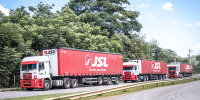
JSL SA
BOVESPA:JSLG3





| US |

|
Johnson & Johnson
NYSE:JNJ
|
Pharmaceuticals
|
| US |

|
Berkshire Hathaway Inc
NYSE:BRK.A
|
Financial Services
|
| US |

|
Bank of America Corp
NYSE:BAC
|
Banking
|
| US |

|
Mastercard Inc
NYSE:MA
|
Technology
|
| US |

|
UnitedHealth Group Inc
NYSE:UNH
|
Health Care
|
| US |

|
Exxon Mobil Corp
NYSE:XOM
|
Energy
|
| US |

|
Pfizer Inc
NYSE:PFE
|
Pharmaceuticals
|
| US |

|
Palantir Technologies Inc
NYSE:PLTR
|
Technology
|
| US |

|
Nike Inc
NYSE:NKE
|
Textiles, Apparel & Luxury Goods
|
| US |

|
Visa Inc
NYSE:V
|
Technology
|
| CN |

|
Alibaba Group Holding Ltd
NYSE:BABA
|
Retail
|
| US |

|
JPMorgan Chase & Co
NYSE:JPM
|
Banking
|
| US |

|
Coca-Cola Co
NYSE:KO
|
Beverages
|
| US |

|
Walmart Inc
NYSE:WMT
|
Retail
|
| US |

|
Verizon Communications Inc
NYSE:VZ
|
Telecommunication
|
| US |

|
Chevron Corp
NYSE:CVX
|
Energy
|

Utilize notes to systematically review your investment decisions. By reflecting on past outcomes, you can discern effective strategies and identify those that underperformed. This continuous feedback loop enables you to adapt and refine your approach, optimizing for future success.
Each note serves as a learning point, offering insights into your decision-making processes. Over time, you'll accumulate a personalized database of knowledge, enhancing your ability to make informed decisions quickly and effectively.
With a comprehensive record of your investment history at your fingertips, you can compare current opportunities against past experiences. This not only bolsters your confidence but also ensures that each decision is grounded in a well-documented rationale.
Do you really want to delete this note?
This action cannot be undone.

| 52 Week Range |
5.05
7.95
|
| Price Target |
|
We'll email you a reminder when the closing price reaches BRL.
Choose the stock you wish to monitor with a price alert.
|
|
Johnson & Johnson
NYSE:JNJ
|
US |
|
|
Berkshire Hathaway Inc
NYSE:BRK.A
|
US |
|
|
Bank of America Corp
NYSE:BAC
|
US |
|
|
Mastercard Inc
NYSE:MA
|
US |
|
|
UnitedHealth Group Inc
NYSE:UNH
|
US |
|
|
Exxon Mobil Corp
NYSE:XOM
|
US |
|
|
Pfizer Inc
NYSE:PFE
|
US |
|
|
Palantir Technologies Inc
NYSE:PLTR
|
US |
|
|
Nike Inc
NYSE:NKE
|
US |
|
|
Visa Inc
NYSE:V
|
US |
|
|
Alibaba Group Holding Ltd
NYSE:BABA
|
CN |
|
|
JPMorgan Chase & Co
NYSE:JPM
|
US |
|
|
Coca-Cola Co
NYSE:KO
|
US |
|
|
Walmart Inc
NYSE:WMT
|
US |
|
|
Verizon Communications Inc
NYSE:VZ
|
US |
|
|
Chevron Corp
NYSE:CVX
|
US |
This alert will be permanently deleted.



Good morning, ladies and gentlemen. Welcome to JSL's conference call to discuss the results for the fourth quarter of 2024. This call is being recorded, and a replay will be available on the company's website, ri.jsl.com.br. The presentation is also available for download.
[Operator Instructions] Before we begin, I'd like to remind you that any forward-looking statements made during this call are based on JSL's management's current beliefs and assumptions as well as information available to the company. These statements may involve risks and uncertainties as they relate to future events, and therefore, depend on circumstances that may or may not occur. Investors, analysts and journalists should be aware that events related to the macroeconomic conditions, the segment and other factors may cause our actual results to differ materially from those in the forward-looking statements.
Joining us today are Mr. Ramon Alcaraz, CEO of JSL; and Guilherme Sampaio, CFO and IR Officer. I will now turn the call over to Mr. Alcaraz for his initial remarks. Mr. Alcaraz?
Good morning, ladies and gentlemen. We are pleased to be here today to present JSL's results for the fourth quarter '24 and the full year. I'd like to begin by highlighting our 2024 results, which reflect our consistent growth, built on solid foundations for continued and sustainable development.
Revenue of BRL 10.7 billion in the year and return on invested capital around 15%, that is scale and profitability above what was projected at the IPO. Revenue up 20% year-over-year, 16% organic, steady pace of growth even at this higher scale.
EBITDA BRL 1.7 billion with margin of 19.4%, a record since the IPO. Asset-light operations reached 54% of revenue in the fourth quarter with 18% year-over-year growth, showing our increased focus on these types of projects. BRL 5.4 billion in new contracts signed throughout 2024, securing future revenue.
Cash flow after growth of BRL 521 million, supporting our deleveraging.
On Page 3, we show the transformation in scale and efficiency. Revenue grew 216% since the IPO, a CAGR of more than 30%. EBITDA, 287%. After 4 years since the IPO we had a threefold increase in revenue and fourfold increase in EBITDA, and we're still growing; in '24, 20% growth; in 4Q, 16% growth; in this case, 100% organic compared to the same periods last year.
That is a BRL 1.7 billion increase in revenue. This number alone isolatedly would already place us among the largest companies in this segment.
On Page 4, we talk about the numbers of the quarter and full year. As I mentioned, gross revenue of BRL 10.7 billion for the year, up 19% -- 19.7% and BRL 2.9 billion in the quarter, up 15%.
On the previous slide, I mentioned 16% in the quarter because I was talking about revenue from services alone. Adjusted EBITDA, BRL 1.7 billion, up 15.8% for the year and in the quarter, BRL 434 million, up 5.6% year-over-year.
EBITDA margin 19.4% for the year, 18% for the quarter. Net profit BRL 190 million for the year and BRL 36 million in the quarter. Here, I'd like to highlight the large volume of project deployment throughout the year, which led to preoperational cost pressure on margins that has directly tied to the volume of contracts we've been announcing since '23 and '24.
As these projects mature over the coming months, we will benefit -- they will benefit our 2025 results. Guilherme will go into more detail on impact on net profit. Return on invested capital 14.6%.
On Page 5, more highlights showing our discipline in capital allocation and management. Organic growth of 16% in '24. Excluding here, IC and FSJ, we were not consolidated for the full 12 months.
EBITDA margin is steady at 20% in '24 even with pressure on costs because of inflation and preoperational costs I mentioned early related to recently implemented projects. CapEx needs have declined even with growth, which helps support deleveraging.
We reduced the average debt spread by 0.5 percentage points compared to '23. With the amortization of ICR bond in May '25, we expect an additional 20 bps reduction. We are focused on additional initiatives aimed at improving results to offset inflation and rising interest rates.
And I'll mention some: Reducing receivable terms, adjusting prices together with our customers, implementing a more robust cost program and projects with ongoing evaluation to decide whether to acquire or lease operational assets.
On Page 6, as done in previous calls, we show how our logistics services portfolio breaks down based on contracts and services that are essential to our customers across the entire supply chain from raw materials through production and distribution of finished products in retail and even to the end consumer.
29% of our revenue comes from specialized dedicated operations that do not involve trucks. They include intra-logistic services for several industries such automotive, consumer goods, pulp and paper, steel and the management of dedicated multi-customer warehouses and even charter services.
63% comes from operations involving our own or third-party trucks. Here, we have transportation services for all types of goods: Food, beverage, consumer goods, vehicle, gases, fuel, refrigerated cargo, pulp, minerals, grains and more. And this is for every Brazilian state and other 6 South American countries, plus 2 African countries.
We also provide urban distribution services, supplying retail and last mile deliveries to end consumers. 8% comes from general cargo. These are basically 100% asset-light freight operations that are agile and flexible, ideal for handling demand fluctuations.
On the next page, we show our management model with scale, geographic reach and diversification, which continually enhances our expertise, client relationships and new businesses. Each client and contract is managed individually.
We codevelop customized projects with customers using the right price, cost controls and operational efficiency. Our managers have autonomy and agility in decision-making. Our business is fully focused on meeting each customer needs. Once a contract is signed, we execute the project with excellence, which helps us build long-term relationships and creates opportunities for growth. We also acquired well-managed companies with complementary services and industry exposure. This is how we operate.
Page 8 show the results of what I just mentioned in the previous page, quality and efficiency leads to new business opportunities and expand services. We had BRL 5.4 billion in new contracts signed during the year of '24, with an average term of 59 months. Out of this, 20 are new customers, additional to our portfolio, that's worth noting.
We saw growth across a wide range of sectors. In Q1, for example, we had more contracts in pulp and paper and automotive. In Q2, it was basically food, beverage and consumer goods. Q3 was led by chemicals and retail; and Q4, we again saw chemicals and pulp and paper. This shows our ability to grow in a diversified way with factors that are essential for our economy.
On Page 9, we show growth by company, a true transformation of scale. We've grown at an impressive CAGR of 36% a year. And if we consider only organic growth, we are talking about 18% a year. All companies have shown double-digit organic growth on average with expressive growth since their acquisition, some have doubled or tripled size.
This performance is driven by our management model. The quality and expertise of our companies combined with access to capital fuels accelerated growth. This is our formula for acquisitions. The JSL ecosystem enables cost reductions in the purchase of assets, in the procurement of inputs and services generating an average synergy of 2% on net revenue, which naturally improves our margins. We also use cross-selling potential to expand our customer base, which also helps on growth.
Now I'll hand it over to my friend and partner, Guilherme Sampaio, to give you more colors on our numbers. Guilherme?
Thanks, Ramon. First of all, good morning, everyone. Going straight to the numbers. Net revenue in '24 reached BRL 9 billion, up 20% year-over-year. The figure includes the consolidation of IC Transportes, which was integrated into JSL in May '23 and FSJ Logística consolidated started in September '23. Even with lower revenue from IC and the growth of FSJ, as we mentioned in previous calls, we still saw 16% growth in the year, which is in line with 4Q's growth 16.4% versus 4Q '23.
This level of growth reinforces our ability to continue growing organically even at our current scale. 47% of total revenue comes from cargo transportation, both general and dedicated, as Ramon mentioned, 32% from dedicated operations, 13% warehousing and 8% urban distribution.
EBIT closed the year at BRL 1.2 billion in '24 already excluding the reversal of the social contribution provision in the quarter and EBITDA to BRL 286 million with a 12% margin.
A few important points that are important to EBITDA and net profit. Ramon mentioned the deployments of almost BRL 3 billion in new projects between the third and fourth quarter. Here, we are talking about BRL 15 million in preoperational costs that have a mismatch by corresponding revenue, yet an impact to our results.
Other important factors are asset sales, negative impact of BRL 5 million and the recognition of a provision for bad debt of BRL 9 million due to the long-standing agribusiness from IC Transportes in judicial recovery.
EBITDA for the year, BRL 1.7 billion. The reported number was BRL 1.85 billion, if we include the reversal of the social contribution provision, as I mentioned. Q4, we closed with BRL 434 million, up 16% versus fourth quarter '23.
Adjusted net profit, BRL 190 million. Reported net profit was BRL 207 million. In Q4, BRL 36 million. This number we didn't adjust for the provision of bad debt or preoperational costs. But remember, in the release, we always detail all adjustments.
One more note. This is something we've discussed a lot in previous calls, [ Q1 ] and Q2, JSL in '23 had the benefit of income tax credits to investment incentives. BRL 73 million in '23, we didn't have the benefit in '24. In the quarter, the difference was BRL 21 million in net profit.
I'm saying this just for you to have the same basis of comparison, but it's part of our business. ROIC closed the year at 14.6%, a healthy level and in line with the actions we have discussed.
On Slide 11, we break down our operations asset light and asset heavy. Asset light accounted for 54% of revenue all with the impact of new signed contracts. Revenue, BRL 1.3 billion, up 18% year-over-year, and EBITDA, BRL 209 million with margin of 16.1%. Light represents already a large part of our revenue with the contract signed. Revenue stays at BRL 1.1 billion and EBITDA at 16% margin.
Here is when we include the provision of bad debt of IC Transportes, which is a 100% asset-light operation. Asset-heavy operations ended the quarter with BRL 1.1 billion, 14% of consolidated revenue, 14% year-over-year.
EBITDA, 20%, margin, already following the pressures of cost we had in the quarter. Ramon already mentioned, but it's important to reinforce that we are monitoring our contracts from close. This allows us to engage in price adjustments when necessary, and this is already happening.
On Slide 12, we have the CapEx for the period, in line with our plans, closing the year with BRL 800 million in net CapEx; in the quarter, BRL 190 million, 80% of which went towards expanding new projects.
CapEx also impacts our numbers. But as we always emphasize, it will generate future revenue supporting our growth for the coming quarters. In the slide below, we have 3 real life cases of recent projects showing the creation of revenues versus the capital invested.
Moving to the capital structure on Slide 13, we show our cash availability of BRL 2.6 billion, BRL 700 million in undrawn credit lines and BRL 1.9 billion in cash. Average maturity is 5 years. Net debt stood at BRL 5.5 billion in a year with leverage at 3.04x consider net debt-to-EBITDA ratio and 2.63x net debt to adjusted EBITDA, which is our internal covenant reference.
One point I want to emphasize, especially in a high interest rate is that all the work done has already reduced our average debt spread by 50 basis points. And once we pay the CRA bonds maturing in the second quarter '25, we have an additional benefit of reduction of 20 bps in our average debt cost.
Before handing back to Ramon, I'd like to highlight the focus of '25. Beyond continuing to drive gross margin, as Ramon mentioned, we'll focus on having a leaner balance sheet in working capital, asset inventory and even possibly a lower CapEx level while still maintaining our growth. We can talk more about these initiatives during the Q&A.
Now, Ramon, back to you.
Thanks, Guilherme. On Slide 14, we highlight our actions and recognitions in ESG during '24. I could here mention several initiatives, but I will mention two that we are particularly proud of. The Women Behind the Wheel program aimed at training and power women in the logistics sectors. We have 7 editions this year alone with 13 editions since the product launched in '21 with brand new formats, Women in Maintenance, Women in Mining, women in Charter Services.
In addition to promoting gender diversity also doubles our talent pipeline in recruitment, also connecting frontiers. The first edition focus on inclusion, employability and socioeconomic integration for immigrants and refugees.
Also to highlight are some of the recognitions we received during the year. First year in the B3 Corporate Sustainability Index for public-traded companies, recognized for commitments with sustainability. Gold Seal in the Brazilian GHG Protocol Program for the fifth consecutive year. B from CDP, which is above the global average for the transportation and logistics sector.
We are listed among the 5 (sic) [ 500 ] largest companies in fastest growth by Time Magazine. We are named Best Company of the Year in the transportation and logistics sector. And here, with all models, air, rail, of course, road by Exame Magazine.
We are also recognized by our customers in health and safety. Some of the companies that acknowledge our services, I mentioned several, Vale, Suzano, Unilever, [ InBev ], Gerdau, among many others.
On Slide 15, we reinforce our unique management model and irreplicable ecosystem. We are undisputed leader in the sector for over 24 consecutive years. With a market share of 2%, our growth potential is enormous. The companies we acquired are independent and are focused on their core business.
We are present in over 8 countries with essential sectors of the economy more than 16 different sectors with a diversified customer and service portfolio, proven DNA of services based on cross-selling and long-term contracts. We have more than 35,000 employees, 250 managers, who have been with us for over 10 years, which reinforces and preserves our culture.
Ladies and gentlemen, to close, I would like to reinforce our takeaway messages. Our business model ensures resilience regardless of market cycles with strong growth potential. We are fast to adjust prices where necessary because of cost increases. That's because we manage each contract individually with technical and operational oversight and have building adjustment mechanism.
We focus on operational efficiency and continue reducing costs to continue competitive in a highly fragmented market. We optimize capital allocation to improve working capital and maintaining a leaner balance sheet.
On the tech front, we believe this is more and more the path to efficiency and agility. Our JSL digital platform, for instance, has already completed over 1,000 fully digital travels. Our track record shows that in market environments like the current one, we find major growth opportunities, driven by the trust we have with our customers, and they want to keep quality and reliability.
Ladies and gentlemen, I thank you for your attention. And now Guilherme and myself are going to be here for your questions. Thank you very much.
[Operator Instructions]. Our first question comes from Andre Ferreira from Bradesco BBI.
I would like to address two topics. First, you talk about the possibility of renting assets or leasing assets or deleveraging. I would like to know how advanced the idea is and if we could see an increase in leases in the first quarter?
And also, if you could give us a bit more color about the provision for bad debts this quarter?
Andre, thanks for your questions. About asset lease. Indeed, we are looking into this possibility. In the end of the way you have to do the math and consider economic issues. We've done that in previous quarter. And this quarter, as you asked, we do have leases but always with a balance.
Again, you have to do the math. You have to compare our costs and lease costs. Many times, we go for lease because of the opportunities. So an asset in a rental lease company, VAMOS, who are our competitor, and by the way, we have leases from several of VAMOS' competitor.
So whenever there is a lease in inventory of the lease, this is an opportunity, and this is what we take into consideration. So this is part of our analysis. And yes, we might continue to have that and even increase the percentage along the year. It is a strategy.
Provision for bad debt, I will leave it to Guilherme.
Okay. Provision for bad debt, two former customers in agribusiness for cargo transportation of IC, these two customers are in judicial recovery now in the fourth quarter. So with that, we had to have a complementation of our provision for bad debt of 100% of receivables and the recovery plan, if approved, depending on the negotiation, part of this will return to the company.
But even considering accounting rules, when you have a judicial recovery, you have to provision 100% of the loss. Remember, we have not adjusted the number in asset-light results where the operations concentrate or in the consolidated results.
Our next question comes from Gabriel Rezende from Itaú BBA.
I'd like just to try and understand the dynamics of better profitability along the quarter vis-a-vis the several variables that we see impacting your customer portfolio and costs. If you could talk a bit about the fuel prices in February, if that generates vulnerability in profitability, if you can fully pass through costs, that would be very interesting to us.
And also understand the leverage dynamics of the company throughout the year. How do you see it behaving? And what do you expect for the first and second quarters of this year given the peak up interest rates that we should see in the coming months?
At the end of last year and the beginning of the year, all companies in Brazil are suffering because of the increase in prices, and each one for their own reasons. I'll mention some. We had increase in the prices of parts, tires because of the dollar fluctuation, the exchange rate fluctuation. Diesel, as you mentioned, did increase, not much, but between 4% to 5% in February and also the payroll, that increased at about 5% a year, getting up to 20% starting this year.
Well, fuels and payroll, this is something that is basically automatic. It is establishing contract. It's not a click. Of course, you have to negotiate with customers, but it is already in contract. Other costs, as a reminder, IPCA is already at a very high level, that affects our business.
And as we did in '21-'22, we are having a very strict campaign of renegotiating contracts, not only with what we already have in contract, but also increase of other costs that, as I mentioned, are affected by the exchange rate fluctuation and others.
This is not a fast process. we have a very extensive customer portfolio, each one with their own characteristics. But we should complete this process along the first, second quarter of '25 when we go back to probably the same level operating margins than the previous quarter.
As for leverage, I'll leave it to Guilherme.
Okay. We talked a bit about what we are considering in the presentation, but I'd like to reinforce some points just to show the how. First, in '24, JSL thinking of free cash flow already delivered BRL 520 million operating cash flow, that is after growth, which gives me the possibility of showing that the growth of our EBITDA and cash generation is becoming stronger year after year; therefore, giving me more capacity to serve overall debt and therefore, deleverage.
We also announced something important. We always have a very strong second half of the year in terms of growth of revenues, EBITDA because of the maturity of some contracts. The volume of some industries that is higher in the second half of the year, so the trend is to have a stronger, faster deleveraging in the second half of the year.
Again, keeping the trends that each year, we're going to deleverage some. Some actions that we have adopted, we mentioned some. Undoubtedly this strategy of leasing assets that can be an option, a lever to deleverage. Obviously, cash generation is a very important factor.
So operational results, better operational results, the result of customer renegotiations help me in the process. And we also have been working a lot to improve the company's working capital. So we are talking about payment terms for customers along the years, and historically, and Ramon does mention that the service industry extended payment terms to receive from customers due to several initiatives, including commercial initiatives.
And now accounts receivable is weighing a lot in the company's balance sheet. So we are negotiating with our customers to balance our contracts and reduce payment terms and also working on inefficiencies that we might have in the process of collection, issuance of invoices and collecting from customers.
So all this together operational growing. Net debt being less impacted by CapEx investments and initiatives to improve working capital lead us to deleveraging year-over-year. I hope I have answered your question.
Our next question comes from [ João Silva ] from XP.
I have one question about the volume of new contracts. You did have a strong growth in '24. What is the ramp-up of these new projects like and what is expected for '25?
And the second question, any specific sector you want to increase your exposure in the next years?
Thanks for your question. Well, as we mentioned, we closed BRL 5.4 billion of new contracts in 2024. And I think the best thing is not only the amount but the segments. As I mentioned, we grew in different segments, pulp and paper, chemicals, beverages, e-commerce, so the most varied sectors, and this is precisely our core is to grow in several industries, to have operations in several areas and enjoy the benefits of each one of these segments and have a hedge if the economy strikes one segment over the other.
And we have been doing that not only this year, but in '23, we had BRL 4 billion; in '22, if I'm not mistaken, something close to BRL 4 billion as well and so on. So in 2025, it's the same thing. We have closed very good contracts and we are going to disclose that in the close of the third quarter and the volume of contracts with the same line, the same as '24 or even higher.
As for sectors, we don't have a silver bullet, okay, this is the sector we are going to address, no. What we try is some -- to see if we have some characteristics. Is it essential service? Am I going to be part of the customers' supply chain? Do I have an effect on their business?
If I do, I become essential and I generate value to my business. It's not for a chance that in '22, '23 and '24, mostly '23-'24, we grew in intra-logistics and warehousing because we precisely believe that these are essential sectors. They are inside the plants of our customers, for example, and we have less competition.
So this is a sector that we like a lot, and we have invested in that. But not only that, in '24, we grew a lot in chemicals. And it's interesting that this is a sector that has not grow itself, but we did grow market share in the sector. And why is that? Again, because it is an essential service.
We carry oxygen to hospitals, for example. So certainly, even diversifying sectors, what we see is essentiality, differentiation. We grew in mining as well. E-commerce, that was a sector we were not even operating in '23, but along '24, we grew a lot. Just for you to have an idea, if you get to the main players of e-commerce, they are already our largest customers, and they were not customers until 2022.
So we bet on diversity, but essential sectors where we can make a difference. General cargo that is more of a traded sector that it does have its appeal, and that's where the company started and perhaps most know us upfront because of the trailers that are all around Brazil, today accounts for only 8%.
Well, I hope I have answered your question.
I have a comment, Guilherme here. Talking about e-commerce, and I think this is the beauty of diversifying our portfolio. Ramon did mention that in '23 one of the main e-commerce players was not our customer then. We had the acquisition of FSJ. It was a relevant customer. And after the acquisition, because of the portfolio of services, the other company groups offers we expanded. Today, we have contracts on transportation, chartering at JSL, urban distribution with Fadel, that is specialty and last mile.
So in addition to what FSJ already had, and it did grow a lot with the customer because of the capacity of investment it has within the JSL system. So this type of situation today are customer based on -- sometimes we are very relevant at the service, but because we create expertise in other business lines and services to be provided, we can have cross-selling very strongly.
So this is a specific case, this is a customer that was not a customer of the company 1 year again and today is one of our top 10 customers, and we believe there is still a lot to be done. So just an example, a specific case that I think is an interesting case.
Our next question comes from Julia Orsi from JPMorgan.
I have two questions on my side. Preoperational costs of contracts, does it make sense to assume that costs are going to be back to normal in the coming quarters? And second, operations abroad, Ghana was announced last year, South Africa, how are these operations evolving vis-a-vis the expected, first? In the last call, we did talk about potential new contracts countries, Mexico, any news on this front?
Julia, thanks for your questions. Talking about preoperational costs, it is what we mentioned. We closed a large volume of contracts, and these contracts generate requirements, hiring people, training. So for some time, you have to hire, train and then start performing, the same with vehicles. You have to buy the assets, then you have to deploy the asset, that takes approximately 2 months between acquisition and the start-up operations.
Perhaps, we do have an advantage in lease because you can get part of that. You only pay the lease when you are starting operating. Just going back to one of the questions that was asked before. So just to give you an example, in 2024, in the third quarter, fourth quarter, I had BRL 3 billion in new contracts, contracts that are being implemented between the fourth quarter '24 and the first quarter '25.
These are operational costs that affect us, but they are part of our business, and they are going to be offset a long time. Just to give you an example, this year, we grew BRL 1.8 billion in new revenues. Obviously, to grow, you had operational costs along the year, and it does affect the margin, but it's a lot cheaper than any other -- than starting a company. So this is part of the company's strategy.
So the answer is yes, you are going to see the improvement along the coming quarters. But it can happen that we have new contracts again that overlap. But yes, if we were to decrease the pace of growth, you would see the results immediately. But we don't think it makes sense. Quite the opposite, we see the market with a huge opportunity of growth.
You're talking about a company of BRL 10 billion that grew BRL 1.8 billion year-over-year, just this BRL 1.8 billion would already place us between the 10 largest companies in the sector, but we are still with a 3% market share. So the opportunity for growth is still huge. We are not even close to its end. So that is what we are betting on.
About going international, we have the countries where we have the transportation from Brazil to neighboring countries. And we have countries that are independent from Brazil. We have independent operations. Paraguay, South Africa and Ghana, more recently.
We're doing well. Ghana is a country that we don't know well. I myself did not know much of the country, but it's doing very well. We did have some difficulties in terms of safety culture, and this is again an opportunity for us. Ghana, you have 250 million inhabitants.
So Africa is always a huge opportunity. You have to be cautious to know what is worth it, what's not, but this is a continent with huge population, acquisition power going up and a consumer average -- consumption average that is low. So we have a trend of exponential growth.
And talking about more developed countries like Europe and the U.S., Mexico, because it's close to the U.S., we continue to look into opportunities where recently, we did have an opportunity in a country from Europe, so we are always looking into opportunities or opportunity in the markets are moving on with the customer.
So as we mentioned, our strategy of going international continues. One day, we would like to have 30% of our revenues in other currencies. But this is a journey and the journey has to be taken cautiously.
I hope I have answered your question, and thank you for your questions, by the way.
Our next question comes from Ricardo Pucci from UNA Capital.
[Operator Instructions] We'll now start the questions in writing. Mr. Guilherme?
Okay. The first question we got from [ Lorenzo Lima ], our shareholder. What is your expectations in terms of recovering operating margin along 2025? Ramon?
Lorenzo, thanks for your question. Well, part of it has already been answered in the previous questions. But just to reinforce that, what we believe is adjusting prices. We have a very strong strategy, customer by customers, analyzing the characteristics of each contract, each customer. So we have a strategy that we started in January and we have already reached half of our challenge that we have decided to go for.
So when I'm talking about price adjustments, not only with things that were provided in contracts, even extra additional things, which is not easy, but with good augmentation being coherent, it's always what I say: We don't have -- want to spoil our relationship with the customer, but it's necessary to adjust prices and also reduce costs. We did have the largest cost reduction plan encompassing several things, optimizing resources, reducing costs and et cetera. So that's the idea.
And in parallel to that, we have operational costs, which is materially increasing costs, but somehow do impact our margin, but that's naturally as contracts are deployed, this is diluted. So basically, the strategy is this: Adjust prices whenever we have room for that and mainly seeking efficiency by reducing costs or by doing more with less, that's it.
I'm going to go to the second question. The second question comes from shareholder, I'm going to read it in Portuguese, and this is going to be translated into English. There are three points in the question. The first is the same question that Lorenzo asked, that is how we expect to recover margins over the next couple of months. So I think Ramon answered that.
Second, initiatives to improve working capital and probably deleveraging the company. And the third question about our expectations in terms of a return on invested capital run rate. Now it is at 14.6%, what's our expectations for the end of '25?
Ramon, if you want to talk a bit more about price adjustments and then I'm going to talk about return on invested capital and working capital.
No, I think margins, I have already answered the question. I think you should focus on the others.
Okay, I think I did mention briefly on the previous question about the main actions in terms of working capital and capital expenditures. So just as a reminder, we are talking about improving our working capital to reduce the term of receivables from customers, reduce accounts receivable to have a faster turnover to receive as fast as possible and, therefore, improve the performance of sales, of inventory available for sale, that is assets that have been retired and are available for sale.
So we increased our sales force recently to be able to have a larger volume, again for a company of BRL 10 billion. This consequently, we have expectations of this number to rise along the next quarters. And therefore, we are going to have a leaner balance sheet, collaborating to this strategy to reduce working capital and being a leader in terms of balance sheet.
As for return on invested capital, the main comments I already mentioned. Undoubtedly, we cannot give guidance for a specific number for the end of the year, but we want it to go back to recent levels for return on invested capital. So expanded lighter balance sheet, better operational results. And therefore, going back to this level of return of invested capital that we had recently, an expansion of 14.6%, although 14.6% is healthy, considering our cost of capital and everything else. Sorry not to be specific, but again, we don't give guidance for the year-end in terms of return on invested capital.
One more question, Ramon. If you could talk a bit more about the average age of your assets in operation versus previous periods? This is from [ Antonio from Inter ].
Well, average age has not changed much. It's about the 4 to 4-point-some years, and that's connected to our contracts. We have lots of assets in forestry, in mining and the contract already establishes renewal after 3, 4 years. And that's why the average is down, especially compared to Brazil.
Other segments in which we are growing like chemicals are lighter operations. So we should have changes after 6 months. So we might have change of this average in the coming months, but that's very much connected to the type of business and the type of contract that we have.
And two follow-ups on the same topic, Antonio is asking: What would be the ideal asset average and what is the average cost of a leased asset vis-a-vis your own asset?
Well, there is a calculation for the optimal average -- age average, and it has to do with the cost of depreciation, the financial cost of depreciation vis-a-vis the maintenance cost. Maintenance cost is broken down into the cost per se but also the nonavailability of the asset, which really hurts the business.
So you have a chart cocreated both and where the two curves meet, you have the optimal part. So in sectors that are more aggressive like forestry and mining, 3 to 4 years, sectors where assets only drive on roads, 10,000, 12,000, it goes to 5 years.
And in even lighter operations, urban distribution for beverage, you can have an average age of 10 years because the mileage is very low. So it varies. The correlation is important. Financial cost versus maintenance versus availability.
Well, with that, we go back to the operator. Thank you.
JSL Q&A session is now closed. We will now hand it back to Mr. Alcaraz for his closing remarks.
Well, first, ladies and gentlemen, I'd like to thank for you to be here with us today. Your attention that honors us and gives us fuel to continue working. I'd like to draw your attention about a few points. I did talk a lot in my opening remarks and in the Q&A, I'd like to draw your attention about our capacity to grow even at a very high level.
We are absolute leader for 24 consecutive years. I've been in the segment for 40 years. I have been following the ranking of specialized magazine for 35 years since the first ranking, the first -- the only company that has been leader year after year is JSL alone. And still we are growing at a very fast level, 20% a year.
Growth year-over-year, as I mentioned, would already mean a company among the 10 largest in the market. And we have been exploring markets that were not in our DNA like a decade, again, ago, like inter-logistics and warehousing. And again, these sectors already show us the largest players, factors that were not present before.
We are exploring segments, e-commerce, that we did not have a few years ago and now we are already leading the business. Chemicals, again, not a sector in which we were present 2, 3 years ago, and again, we have substantial operations now. So our capacity to grow and grow in relevant segments and gain scale is a very strong potential of our company and that's always diversifying, 16 sectors, primary, secondary industries, retail, you name it, automotive, chemical, e-commerce, beverage, food, mining, forestry, always providing excellent services proven by our cross-selling capacities.
Then why don't we lose ourselves? Because of our management controls. We have our executive managers. We have our contract owners that are going to oversee contracts as if they were the only ones. So our customers like the size of the company because that gives them a capacity to invest. But in terms of execution, they want to sell for themselves as if they were our only customers. This is the view of the business owner that we have with the customer.
And our capacity to grow. Just to give you an example, we talked about BRL 5.4 billion last year, but that's something that we did not mention much. Out of this, we have important cross-selling. And we also have 28 new customers, 28 new customers that started with small contracts but because of our cross-selling capacity, they will become relevant in the coming years. This is our strategy.
We are a company for the long term. We are going to have disturbances, some periods. Price increases, dollar or exchange rate fluctuations, interest rates, we are used to that in Brazil. There is nothing new. We bet on mid- and long term, and this is what you should expect.
Thank you very much for your attention. Guilherme?
No, I think that's it, you said it all. I think the management model that we are able to develop along the years at JSL where we have a specific contract owner, a specific operations manager, we are inside the customers, we look into opportunities, we understand their challenges and therefore, we develop products together and that makes us able to grow looking into contract by contract.
That is for the customer, we operate as a small company, trying to be better and better. And with that, we are qualified for new opportunities and therefore, grow inside our customers. So I think the management model that we created, business owners, the owners of companies that we acquire that continue in the company to being dependent and be agile make us not to get lost in our size. So we work as a small company but benefit from the scale of a company of more than BRL 10 billion revenue. So I think that's it.
Yes. If you want to make an analogy, when you think of margins, costs, this is the analogy I have with my customers when I'm trying to sell a contract. I say we are a service company. I'm not going to promise to you, customer, that I'm not going to have problems, that I'm going to be the fastest to solve problems.
And that's true for brands. We cannot avoid headwinds in countries -- in a country like ours, but we are going to be the fastest in the sector to solve our problems.
Well, with that, I wish you all a very good day. And that's it. See you next time.
JSL conference call is now closed. We thank you very much for joining us, and wish you a good day.