

Great Panther Mining Ltd
TSX:GPR
Great Panther Mining Ltd
TSX:GPR
Price:
1.09
CAD
Market Closed
Market Cap:
CA$18.4m



Add Note
Add Target
Capture your thoughts and set a target
Decide at what price you'd be comfortable buying and we'll help you stay ready.
Based on
Margin of Safety
0%
10%
20%
30%
40%
50%
Your Price Target
Linked to
current price
· In Buy Zone
Loading
Note attached
Choose the stock you wish to monitor with a price target
Popular Picks

|
Johnson & Johnson
NYSE:JNJ
|
US |

|
Berkshire Hathaway Inc
NYSE:BRK.A
|
US |

|
Bank of America Corp
NYSE:BAC
|
US |

|
Mastercard Inc
NYSE:MA
|
US |

|
UnitedHealth Group Inc
NYSE:UNH
|
US |

|
Exxon Mobil Corp
NYSE:XOM
|
US |

|
Pfizer Inc
NYSE:PFE
|
US |

|
Nike Inc
NYSE:NKE
|
US |

|
Visa Inc
NYSE:V
|
US |

|
Alibaba Group Holding Ltd
NYSE:BABA
|
CN |

|
JPMorgan Chase & Co
NYSE:JPM
|
US |

|
Coca-Cola Co
NYSE:KO
|
US |

|
Verizon Communications Inc
NYSE:VZ
|
US |

|
Chevron Corp
NYSE:CVX
|
US |

|
Walt Disney Co
NYSE:DIS
|
US |

|
PayPal Holdings Inc
NASDAQ:PYPL
|
US |

Thank you for standing by. This is the conference operator. Welcome to Great Panther Mining's Third Quarter 2021 Financial Results Conference Call. [Operator Instructions] I would now like to turn the conference over to Fiona Grant Leydier, Vice President, Investor Relations. Please go ahead.
Thank you, operator. Good morning, everyone. I'm Fiona Grant Leydier. Thank you for participating in our call today. Before we begin, please note that we will be making forward-looking statements during the presentation. You should be cautioned that actual results and future events may differ from those noted today. The commentary also refers to various non-GAAP measures, definitions and reconciliations that are included in the company's MD&A for the 3 and 9 months ended September 30, 2021. All dollar amounts expressed in this presentation and the associated financial statements and MD&A are in U.S. dollars unless otherwise noted. For reference during the call, AISC refers to all-in sustaining costs. Detailed cautionary statements can be found at the end of the presentation. For today's call, please refer to the Q3 2021 financial results news release issued yesterday and the accompanying financial statements and MD&A, which are posted on our website and have been filed on SEDAR and EDGAR. This conference call is being recorded and will be available for replay later today. Replay information and the presentation slides accompanying this conference call and webcast will be available on our website. On the call this morning, we have Rob Henderson, President and CEO; Sandra Daycock, Chief Financial Officer; and Fernando Cornejo, Chief Operating Officer.
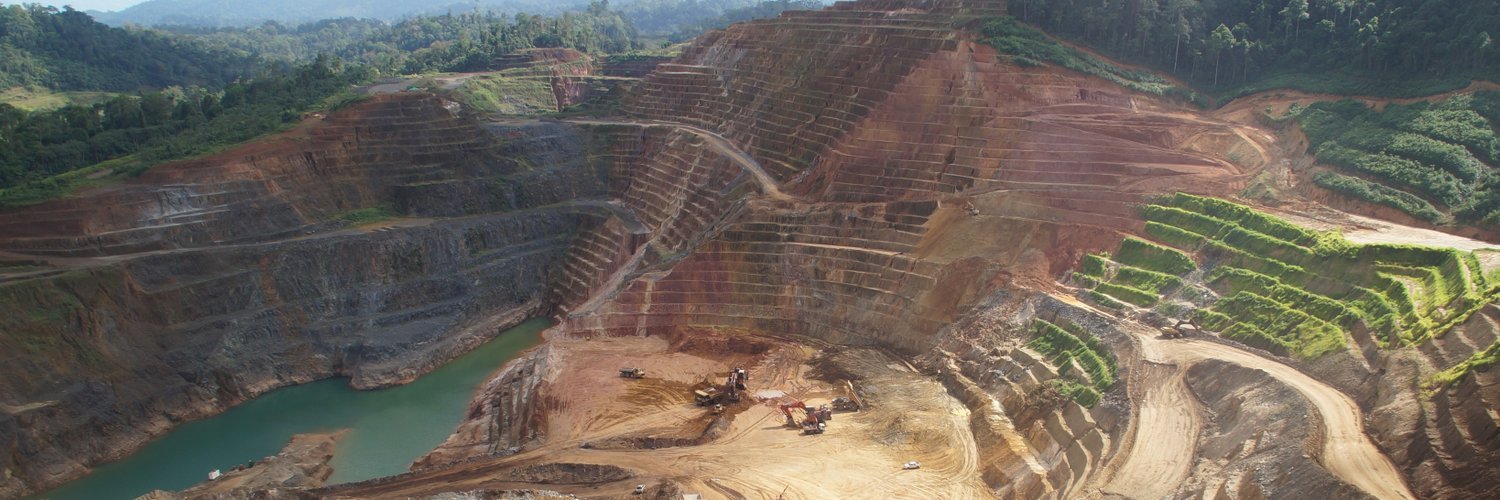
Thank you, Fiona, and thank you, everyone, for dialing in today. On today's call, we will walk you through our third quarter production and financial results as well as spend some time discussing our plans to address the challenges we have in our operations. We'll provide some revised 2021 guidance and some preliminary forward-looking guidance for 2022 to give you a clear picture of the company's outlook. Our Tucano Gold Mine in Brazil has optionality that affords us the opportunity to shift gears and source production from multiple other open pits plus a high-grade underground reserve. A high geological prospectivity of the region also underpins the long-term value of Tucano as we continue to invest in the regional exploration targets. The land package and the potential for a second or even third mine is where the long-term value exists for Great Panther and shareholders. Q3 was undoubtedly a challenging quarter. At Tucano, poor mine fleet availability related to maintenance and supply issues led to lower tonnage being mined and a delay in the completion of the Urucum Central South or UCS pit's pushback activities. In Mexico, the implementation of new labor laws led to temporary staff shortages, resulting in delays in the tonnage mined. In addition, production at the GMC mine was primarily from historically mined areas and actual tonnages available were lower than estimated. And as a result, our consolidated metal production was 22,444 gold equivalent ounces, which included 18,423 ounces of gold and 280,245 ounces of silver. As we reported in the second quarter, the UCS pushback activities were expected to continue into the third quarter. Therefore, lower grade ore was mined from the Oracle North pit and it was supplemented by stockpile, resulting in lower average grades in the mill, and this resulted in an increase in our unit costs. Lower metal sales volumes and lower prices for all metals resulted in a revenue of $38.4 million, a mine operating loss of $7.1 million, and a net loss of $18 million. We ended the quarter with $35.9 million in cash and cash equivalents. Turning our focus now to subsequent to quarter end, we made the difficult decision to put the Guanajuato mine and the Cata processing plant on care and maintenance at the end of November. This course of action was necessary given the uncertainty related to the permitting required to expand the tailings storage facilities at our Cata plant. We intend to operate the higher-grade San Ignacio mine, and we are exploring alternative arrangements for the mine, including third-party processing of ore. In mid-October, following a review of ongoing monitoring of the UCS pit, we're advised by Tucano's geotechnical committee that additional remediation work would be required to improve safety factors. And we have decided to postpone this work to mid-2022, so that this remediation can be done more effectively following the rainy season. And now we turn our attention to optimize the mine plan to manage cash flow and safeguard strong production for next year. Limited mining of ore has been authorized in the southern portion of the UCS pit, so we will continue mining there until the end of this year. It's important to note that UCS is just 1 of many pits at Tucano. The contained ounces are relatively low and is not the driver of future of growth for the mine. We have a total of 7 pits at Tucano, including TAP AB, which accounts for the majority of our current reserves. We're doing the work to adapt the mine plan looking at how much we will be able to mine from UCS, how soon we can deploy the fleet to TAP AB, and how to make the best use of our resources to optimize production next year. Initial engineering designs indicate that our production will be weighted to the back half of 2022. The first half will see production continue from Urucum North and TAP C, while we invest in the stripping of TAP AB. And we're looking at how that stripping can be accelerated to bring TAP AB onstream sooner. In the first half of 2022, we plan to complete the work necessary to accelerate our plans to bring on the Urucum North underground project into production, where we have roughly 288,000 ounces of reserves. With approval expected in Q2, production could come onstream as early as Q4 next year. We also plan to continue investing to secure future production from Tucano by continued regional exploration. Our Tucano exploration budget for 2022 is planned to be roughly in the same order of magnitude as it was this year. However, we'll be undertaking the majority of this work in the second half of 2022, when we expect stronger operating cash flow. I'll now pass it over to Fernando Cornejo, our Chief Operating Officer, to discuss results from our operations.
Thank you, Rob, and good morning, everyone. Focusing first on Tucano. Gold production for the quarter was 16,325 ounces compared to the 31,803 ounces in Q3 2020. Average gold recovery was 88.8% as a consequence of lower gold rates at 0.64 grams per tonne. The decrease in production was mostly related to low ounces mined in the Urucum Central South pit, which was affected by low fleet availability, geotechnical restrictions due to wall movement, and higher than anticipated rain levels. Low fleet availability also affected mining rates in other pits such as TAP AB and Urucum North. During the quarter, lower grade ore from stockpiles supplemented fresh run from the Urucum Central South and Urucum North pit. Despite the high planned throughput, lower feed grades and lower metal recoveries resulted in an increased AISC with an average of $2,051 per ounce compared with $1,061 per ounce in Q3 2020. As Rob mentioned earlier, the Tucano Geotechnical Committee advised that an additional pushback will be required to improve safety factors in the north central portion of the pit. At the same time, the committee, after a site visit and evaluation of the overall situation from the ground, authorized the company to continue mining in the southern portion of the pit, which remains stable as per rate of monitoring. The company has decided to defer additional pushback activities until mid-2022, right after the rainy season, this to ensure safe conditions for our workers and also to ramp down mining activities in the southern portion of the pit by the end of December. As a reference, the rainy season in that part of Brazil typically runs from January for about 6 months. The geotechnical analysis and modeling is still ongoing. Therefore, we do not know yet the size of this pushback. More information will be provided once we know more. On the exploration front, we saw some very promising results in Q3. We completed a total of 15,000 meters of drilling, both in the open pits and the underground. The underground drilling program, which was started in late 2020, continued throughout Q3. We are fast tracking studies for this development to support the start-up decision in late 2022. The project is ambitioned at a 40,000 to 50,000 ounces per year underground mine planned to extract ore from below the current Urucum North open pit. Moving on to TAP C. The resource replacement and expansion drilling conducted in this pit has demonstrated continuity of mineralization. In regards to the regional exploration of our nearly 2,000 square kilometer land package, this year we have started with extensive soil sampling campaign in a mapping program over high potential exploration corridors, which were defined last year. As results are received, drill targets are being defined within these corridors. The regional exploration program focuses on the identification and fast tracking of gold targets within a 20-kilometer radius of the mine that could be exploited by open pit methods and processed by the Tucano plant. The Mutum trend is the first of 8 high-priority exploration targets being evaluated with multielement soil geochemistry. Q3 exploration results have shown that Mutum has a continuous 3.8 kilometer long elevated gold trench. Drill testing is planned to commence this month and continue into 2022. At the Guanajuato complex in Mexico, a total of 278,000 silver equivalent ounces were produced with silver recoveries averaging 87.1% and average silver grades of around 240 grams per tonne. Gold recoveries were 86.4% and average gold grades were 1.64 grams per tonne. Production was decreased by around 17% due to lower throughput and lower silver grades. The lower throughput was mainly related to the implementation of new labor laws in Mexico, which led to labor shortages at the mine. This was also paired with lower than estimated production from historically mined areas. As a result of this lower production, the AISC was $46.9 per ounce of silver compared to the $18.8 in Q3 2020. As Rob noted earlier, the company has made a difficult decision to put the Guanajuato Mine and the Cata processing plant on care and maintenance at the end of this month. At Topia, total production was 242,000 silver equivalent ounces, a decrease of 37%, mostly related to lower throughput and lower grades in gold, lead and zinc. The lower throughput was related to the implementation of new labor laws in Mexico very similar to GMC. The average grades in Q3 were around 373 grams per tonne silver, 0.64 grams per tonne gold, along with byproducts of lead and zinc. Metal recoveries were 93.7% silver, 72.2% for gold. At Coricancha in Peru, a 5,000 meter drill program commenced in July, focusing on the Escondida, Wellington and Constancia veins. The drilling program was completed in late October with final [indiscernible] to be received by the end of this year. I will now turn the call to Sandra Daycock, CFO, to discuss our financial results.
Thank you, Fernando. In the third quarter, revenue was $38.4 million, a decrease of 50% over Q3 2020, due to lower metal sales volumes and lower metal prices of $1,780 per ounce for gold and $22.79 per ounce for silver. The mine operating loss before noncash items was $7.1 million versus mine operating earnings of $31.9 million in Q3 2020. Consolidated AISC per gold ounce sold, excluding corporate G&A, was $2,247, compared with $1,023, primarily due to lower production attributed to lower grades and recoveries, which resulted in an increase in cost per gold ounce sold. As of July 1, 2021, the company ceased the capitalization of mining costs for the Urucum open pits, as all mining costs, including the pushback, will be expense for the remainder of the pit life. Please note that this will result in higher cash costs reported for those pits going forward. The net loss in Q3 2021 was $18 million, compared with net income of $18.6 million in Q3 2020. Adjusted EBITDA was negative $8.8 million compared with $34.9 million and cash flow from operating activities before changes in noncash working capital was negative $8.7 million compared with $26.2 million in Q3 2020. This decrease is due primarily to lower gold ounces sold, lower realized gold and silver prices and higher cash costs stemming from the factors described previously. We ended the quarter with cash and cash equivalents of $35.9 million, net working capital of $3.8 million and $33.7 million of current borrowings. We secured new 18-month credit facilities with Asahi and Samsung and reestablished a $25 million at-the-market facility to underpin the company's working capital position and to execute on growth objectives. Due to the Q3 production disruptions in Tucano, we have revised our 2021 production guidance for Tucano to between 74,000 and 84,000 gold ounces and consolidated production guidance to a range of 94,000 to 109,000 gold equivalent ounces. Please note that there was an inconsistency in the text of our news release that stated Tucano guidance as ranging from 70,000 to 80,000 gold ounces, although the table provided contained the correct information, as does the company's MD&A. Consolidated AISC guidance for 2021 has been increased to a range of $1,950 to $2,050 per gold ounce sold. Looking forward to next year, our preliminary mine plans for 2022 include production of up to 100,000 ounces from Tucano, approximately 75% of which would be delivered in the second half of the year when the TAP AB pit accelerates mining of ore. As we head into 2022, we are cognizant of the need to judiciously manage the capital, and we are reviewing a number of potential avenues to set ourselves up for growth in the new year. We have necessary development costs in the first half of the year that will underpin strong cash flow in the second half, and we are managing capital accordingly. We are also executing on global cost-cutting initiatives, managing controllable costs and prioritizing capital programs. Overall, we expect production to be healthy in 2022. Thank you. That's all we have for formal remarks. I will now turn it back to the operator for Q&A.
[Operator Instructions] The first question comes from Jake Sekelsky with Alliance Global Partners.
Just starting with UCS, I mean I know you talked about deferring some of the pushback activities to the middle of next year. Are you able to provide any additional color on the number of ounces remaining there? I guess I'm just wondering if there's been any thought given to fully transitioning away from UCS altogether and moving on to the other pits?
Certainly. In our 43-101, we don't give a detailed breakup, but we do give some analysis of what the pits look like. And there's probably about 6 months of production left in UCS. So in the order of 50,000 ounces. So UCS, it's high grade. We are mining it right now. But it's not the future of Tucano. TAP AB has over 100,000 ounces, for instance. So we do need to move on from UCS and start extracting the gold from the multiple other pits that are available to us.
Okay. That's helpful. And then in that vein with TAP AB, I mean, obviously, it's going to account for the majority of production in the second half of the next year. It might be a bit early, but do you guys have any indications on sort of the development and stripping costs that we might see there in the first half next year?
Yes, we're still doing our budgets, but Fernando, maybe you can give a bit more color on the nature of TAP AB and the stripping requirements.
Absolutely. Tap AB is conventionally known as cheaper mining because there's soft material, easy mining, almost free digging, and it's much, much closer to the plant, the crushing portion of the plant. So in terms of costs, we're anticipating that AB will be much cheaper than obviously Urucum, which is located 6.5 kilometers away from the plant.
Okay. That's helpful. And then just lastly, on the underground scenario. You may have said on this, but I missed it, I apologize. Should we still expect a formal study there over the next quarter or so? Because I know you guys kind of mentioned you might make a development decision later in the year on that front.
Yes. So we're doing work on that study as we speak. We're continuing to drill a zone to extend it and to confirm the continuity of the higher-grade portion. So yes, we would look at getting that result out in the middle of next year. We would then go to the Board for approval to spend the capital, which is in the order of $10 million to $15 million. And the mineralization, it's vertical band of iron zone formation that continues just right on from the bottom of the Urucum North pit. So we'd be into the mineralization pretty quickly. So if we get a Q2 decision, we could see gold coming into the plant as early as the end of next year.
The next question comes from Heiko Ihle with H.C. Wainwright.
With the tailings standpoint at Guanajuato, can you provide some color about the terms, trucking distances and just more clarity with the associated cost for the alternative arrangements that you're currently looking into?
Yes. So as you know, our tailings facility is reaching capacity. So without a permit for our mill, we're looking at our 2 neighboring mines to see if they had capacity, and they've indicated they have. So the San Ignacio mine is right next door to the Guanajuato. I mean trucking distance is very short. On the other side of town, with the El Cubo mine, the trucking distance is in the order of 15 kilometers. So it's something that we're doing right now. We're trucking our San Ignacio ore to the Cata plant. And it's an established process. So we're pretty confident that San Ignacio has good grades, and we can come to some agreements with our neighboring mines for ore processing agreement.
Okay. And then just thinking out loud here, your outlook for the second half of next year of Tucano is actually pretty good, again for the second half, to the lower we had the mine model previously for the full year given the issues that you've faced in the first half of the year. Building on all that, extrapolating out to 75% at 100,000 ounces to the second half, you're looking at an average 37,500 per quarter, and we're back on track to, at least for our model, with spending. With all that, there are 2 questions. Should we model out the second half of 2022 and just sort of keep that figure constant going forward thereafter? And also, I assume the answer is yes, but I just want to double check. Given that TAP AB is -- is that a gradual ramp-up? Or should we expect Q1 and Q2 to be more or less the same before it jumps up as this is all done.
Yes. All very good questions. Yes, so TAP AB, it's a pretty big pitch. It's been previously mined. We're currently doing a pushback on the next phase right now. So we do get a steady release of gold, and that release does occur in Q1 and Q2, we do get some production from TAP AB, but it accelerates in Q3 and carries on into Q4 and indeed on to 2023. So we do see that Tucano is a 100,000 ounce a year open pit producer. That's what we're looking at next year, and that's what we're looking at 2023. But yes, we've got to get into TAP AB and remove a bunch of that soft waste material before we get into the richer ore benches, which release the gold into the mill. So yes, TAP AB is a steady ramp-up into Q3, and then it's sustained into 2023.
The next question comes from Joseph Reagor with ROTH Capital Partners.
Following a bit on one of Heiko's questions, GMC. What can we expect on a throughput basis from saying that if you do sign one of these offtake agreements or toll milling agreements?
Obviously, it's going to be contingent on what the neighboring mills can receive. I think right now, the San Ignacio mine is the main contributor to our production at GMC. So we would expect that to continue. The Cata mine has not provided much ore to the mill in this last year. So GMC's production this year has predominantly been from San Ignacio. So that level we would hope to continue that next year, obviously, dependent on the ability of the ore processing agreement. So that's still TBD.
Okay. Fair enough. And then just kind of following on a bit of the other guy's questions on Tucano. Just trying to model this out from a cash flow standpoint. Do you think you're going to need some form of additional capital in order to fund everything given the low production rates in the first half of next year? And would your preference be another forward gold sale, some kind of debt facility, or equity, if you had to do something?
I think our balance sheet right now, we've got $36 million in cash, $44 million in debt. And Sandra is obviously looking at some financing alternatives to us. So maybe she can give us some more color on that?
Sure. And I'd say, yes, I mean we recently -- we have cash on hand, as I just mentioned. We recently reestablished our $25 million ATM facility, which we can look to use to supplement our working capital needs. We are looking at all options. We haven't made a decision at this point on any future financing, so we don't have a preference to answer your question. But we do have a number of opportunities we're exploring.
Okay. And then maybe bigger picture, Rob, the thought with Tucano is that there's a lot of potential not only in the existing pits, and in the underground, but also in the region. Is there any opportunity to bring in a neighboring project to kind of accelerate your movement away from UCS?
Yes. Our tenement at Tucano is big. It's 90 kilometers by 30 kilometers. So it's a massive, massive area. To the south of us, we do have an iron ore mine that's looking at being reactivated. So the old iron ore mine might come under production again in a few years. But I think our intention right now is to drill the greenstone anomalies that we have in the region. So we've identified 3 or 4 very high prospective targets. We've done over 500 kilometer of soil sampling. We've identified Mutum as the highest priority project and we're drilling that as we speak. And we have 2 others to the north of the mine, which are all within trucking distance of the mill. So the thinking is that this district does have additional potential and we do need to get into the region. The underground, of course, is also a high priority. So underground, we've got the identified underground at Urucum North, and we're pushing hard on that one. But Again, this is a banded iron formation vertical and there are underground opportunities below all of our pits. So we've got to examine those as well.
[Operator Instructions] The next question comes from Matthew O'Keefe with Cantor Fitzgerald.
Just a question here going back to Tucano. So I understand you source from several pits. How much now is coming from various pits. And TAP AB seems to be kind of on deck to be the big provider next year. What's the cost of the pushback there? And what kind of grades are you expecting to get out of TAB AB?
So yes, TAP AB is kind of our second highest grade. The highest grade we have right now is Urucum Central South. TAP AB is the next highest and it runs at around about 1.7 grams a tonne. In terms of quantity, material, Fernando, you've got some color on that?
Yes, absolutely. For next year, we're anticipating around 8 million to 9 million tons coming from AB1 as we start digging into ore. So this is why it's taking around 4 to 5 months to get that stripping done.
Okay. And what's the cost of the stripping there? You mentioned it was pretty soft material. So...
It's softer material. So with the rates we manage right now is probably below BRL 10 per tonne.
Okay. But I don't know how many tonnes we're going to move. So like I'm just kind of trying to understand what kind of money has to be invested here or capitalized here to get into it.
That's what I said, between 8 million to 9 million tons that we need to strip where we can start with this.
Okay. Great. And is that going to be -- that's not your sole source of it, right? It sounds like you're still taking some from UCS and from other pits, but the majority is...
Yes. We are scheduling ore coming from Urucum North still. We have TAP C going live in Q1, Q2. And we are basically moving ourselves to start with the stripping in Urucum Central South by late June next year. And in parallel, we will do stripping on AB1.
Okay. Okay. And when I look at the guidance for next year for Tucano, obviously, like you say, it's heavily weighted to the second half. So that suggests that we're looking at similar to lower grades being produced in the first half than we saw this quarter, I think it was 0.64 grams per tonne to the mill, I think. So are we going to be seeing similar to lower grades in the first half? And does that also suggest your stockpile is largely done?
Lower grades will continue in Q1. As we move into Q2, they are going to start improving because of TAP C and some initial ore coming from maybe one in Urucum North. But in terms of the stockpiles, yes, we're starting to run a little bit lower on those. But this portion of the Central South that we're still mining, which is the southern portion of the pit, is going to help us to preserve some stockpile for Q1 and Q2.
Okay. Okay. And then just if I can ask 1 more question. Thanks for your patience. On the exploration front, so there's been a lot of drilling, a lot going on. We know there's several pits here that we've been mining over the year. When do we expect a resource update? I forget when you normally do that, but when should we expect a resource update? And what kind of granularity will we see in it? Will we get kind of update pit by pit or just sort of a global type number?
I think the update is probably going to happen early next year. And the update will be very similar to the 1 we released a year ago. So it does give details for all the pits. It gives all the analysis there, and it will be an update of what we currently have right now. But yes, it's probably going to come out in early next year.
Right. But it should include some of the results from the extensive drilling you've done this year, too, correct?
Absolutely, yes.
This concludes the question-and-answer session. I would like to turn the conference back over to Rob Henderson for any closing remarks.
Thank you, operator. We know it's been a difficult year, and we're fortunate to be able to adapt through resequencing of the Tucano mine design in order to tap into gold production from our numerous other pits and our underground opportunities. We are expecting a good year in 2022 from a total production perspective, production that will be back-end weighted. And therefore, we have to be prudent about our capital spending to navigate through the first half of the year. And we are doing just that through a number of initiatives aimed at preserving capital, efficiently deploying resources, and securing financing.I am a gold bull and I believe in the strength of the gold price moving forward. It's why I joined Great Panther and why I believe we have a solid future. We are fully leveraged to the gold price, which given inflationary pressures across the globe, should result in value creation for all stakeholders. We have a large land package with district sales potential, a differentiating factor that offers us significant upside. And we have the team to execute on our growth objectives with the acquisitions as an integral part of our strategy to grow into an intermediate gold producer. On parts of everyone here at Great Panther, we thank you for your support and look forward to sharing our progress with you in the next quarter. Thank you for your time today.
This concludes today's conference call. You may disconnect your lines. Thank you for participating, and have a pleasant day.