
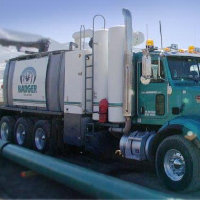
Badger Infrastructure Solutions Ltd
TSX:BDGI





| US |

|
Johnson & Johnson
NYSE:JNJ
|
Pharmaceuticals
|
| US |

|
Berkshire Hathaway Inc
NYSE:BRK.A
|
Financial Services
|
| US |

|
Bank of America Corp
NYSE:BAC
|
Banking
|
| US |

|
Mastercard Inc
NYSE:MA
|
Technology
|
| US |

|
UnitedHealth Group Inc
NYSE:UNH
|
Health Care
|
| US |

|
Exxon Mobil Corp
NYSE:XOM
|
Energy
|
| US |

|
Pfizer Inc
NYSE:PFE
|
Pharmaceuticals
|
| US |

|
Palantir Technologies Inc
NYSE:PLTR
|
Technology
|
| US |

|
Nike Inc
NYSE:NKE
|
Textiles, Apparel & Luxury Goods
|
| US |

|
Visa Inc
NYSE:V
|
Technology
|
| CN |

|
Alibaba Group Holding Ltd
NYSE:BABA
|
Retail
|
| US |

|
JPMorgan Chase & Co
NYSE:JPM
|
Banking
|
| US |

|
Coca-Cola Co
NYSE:KO
|
Beverages
|
| US |

|
Walmart Inc
NYSE:WMT
|
Retail
|
| US |

|
Verizon Communications Inc
NYSE:VZ
|
Telecommunication
|
| US |

|
Chevron Corp
NYSE:CVX
|
Energy
|

Utilize notes to systematically review your investment decisions. By reflecting on past outcomes, you can discern effective strategies and identify those that underperformed. This continuous feedback loop enables you to adapt and refine your approach, optimizing for future success.
Each note serves as a learning point, offering insights into your decision-making processes. Over time, you'll accumulate a personalized database of knowledge, enhancing your ability to make informed decisions quickly and effectively.
With a comprehensive record of your investment history at your fingertips, you can compare current opportunities against past experiences. This not only bolsters your confidence but also ensures that each decision is grounded in a well-documented rationale.
Do you really want to delete this note?
This action cannot be undone.

| 52 Week Range |
34.82
78.37
|
| Price Target |
|
We'll email you a reminder when the closing price reaches CAD.
Choose the stock you wish to monitor with a price alert.
|
|
Johnson & Johnson
NYSE:JNJ
|
US |
|
|
Berkshire Hathaway Inc
NYSE:BRK.A
|
US |
|
|
Bank of America Corp
NYSE:BAC
|
US |
|
|
Mastercard Inc
NYSE:MA
|
US |
|
|
UnitedHealth Group Inc
NYSE:UNH
|
US |
|
|
Exxon Mobil Corp
NYSE:XOM
|
US |
|
|
Pfizer Inc
NYSE:PFE
|
US |
|
|
Palantir Technologies Inc
NYSE:PLTR
|
US |
|
|
Nike Inc
NYSE:NKE
|
US |
|
|
Visa Inc
NYSE:V
|
US |
|
|
Alibaba Group Holding Ltd
NYSE:BABA
|
CN |
|
|
JPMorgan Chase & Co
NYSE:JPM
|
US |
|
|
Coca-Cola Co
NYSE:KO
|
US |
|
|
Walmart Inc
NYSE:WMT
|
US |
|
|
Verizon Communications Inc
NYSE:VZ
|
US |
|
|
Chevron Corp
NYSE:CVX
|
US |
This alert will be permanently deleted.



Good day, ladies and gentlemen, and welcome to the Badger Daylighting 2018 Second Quarter Results Call. [Operator Instructions] As a reminder, this call is being recorded.I would now like to turn the call over to Paul Vanderberg. You may begin.
Thank you, Michelle. Good morning, everyone, and thanks for joining Badger's 2018 Second Quarter Investor Call. With me this morning is our CFO, Jerry Schiefelbein; and Jay Bachman, our VP of Financial Operations and Investor Relations.Badger's Q2 earnings and disclosure documents were released earlier this morning and can be found on the investor section of our website or on SEDAR.Before we start, we are required to note that some of the statements made on today's call may contain forward-looking information. In fact, all statements made today, which are not statements of historical fact, are to be considered to be forward-looking statements. We'll make these forward-looking statements based on certain assumptions that we consider to be reasonable. However, forward-looking statements are always subject to certain risks and uncertainties and undue reliance should not be placed on them as actual results may differ materially from those expressed or implied. For more information about material assumptions, risks and uncertainties that may be relevant to such forward-looking statements, please refer to our 2018 second quarter MD&A or our 2017 annual information form.Further, such statements speak only as of today's date and Badger does not undertake to update any such forward-looking statements.So let's jump into the quarter. We're very pleased with the continued strength in our business that has been demonstrated so far in 2018 from both an operational and a financial results perspective. Consolidated Q2 2018 revenue was $147.6 million, up 19% from the prior year. Our Q2 revenue was 28% higher and our U.S. operations net is in U.S. dollars, while revenue in Canada was 8% higher than the prior year.We continue to see revenue growth across our broad range of end-use market segments during the quarter. We are seeing increased activity levels across the majority of markets with pricing -- our pricing generally consistent to modestly higher than the prior year quarter. Revenue growth in the U.S. was particularly impressive, given the strong growth we had in Q2 last year, which made it a tough comparative.As with the majority of companies currently operating in the U.S., the strong economy has provided great macroeconomic fundamentals but it has also created challenges related to labor. In light of the strong U.S. employment levels, we have been very, very focused on recruiting and training operators to support our growth opportunities. As I mentioned a minute ago, our U.S. market opportunity -- our U.S. sales grew 28%, but the market opportunity that we had in front of us was in excess of that 28% growth. And as such, we continue to bring additional recruiting resources to build out our training -- and to build out our training capabilities and meet the needs for the additional operators that we need to capture the market opportunity that is there and the opportunity is there.We continue to see positive momentum in the business, and we're encouraged by our revenue run rate as we exited the quarter. Improved activity levels can be attributed to ongoing adoption of hydrovac, general market demand driven by the economic activity and year-over-year improvement in oil and gas markets.In addition, Badger continues to see revenue growth due to our business development efforts, which is a key differentiator of our business model.For the quarter, the U.S. operations contributed approximately 75% of revenue versus 25% from our Canadian business. Q2 adjusted EBITDA was $38.5 million, 20% up from the prior year quarter. Q2 adjusted EBITDA margin was 26.1%, which was modestly higher than our margin in Q2 last year. The improvement in margin was driven by lower direct costs, and particularly direct labor, combined with the benefits of continued volume growth. Lower direct costs were partially overstepped by higher G&A expenses. The increase in G&A is primarily due to staff additions made throughout the back half of 2017, higher incentive planned costs versus Q2 of last year and general costs associated with our strategic initiatives.We anticipate that our annualized 2018 G&A as a percent of revenue will be higher than our long-term target of 4%, as we continue to make strategic investments in the business to ensure we are well positioned to capture the significant growth opportunities that are in front of us.Net earnings for the second quarter up $10.6 million was $4.1 million lower than the prior year. This is due to a net change of $8.5 million in stock-based compensation expense as a result in the appreciation of our shares throughout the second quarter combined with higher income tax expense, and I'll touch on that in a couple of minutes.The operations team continues to successfully manage growth and fleet utilization. Q2 revenue per truck per month, or RPT, was $30,300, up 4% from RPT of $29,141 last year. In Q2, we added 36 net hydrovacs to the fleet, having built 55 units and retired 19, with 1,190 units in the fleet at the end of the quarter.For 2018, there is presently no change to our anticipated build rate or retirements from what we communicated at the end of the last quarter. We continue to anticipate building between 160 to 200 new units with retirements expected to be between 60 and 80 units. We monitor the need for new units along with retirements continually and are also mindful of seasonality where demand for new units peaks in Q2 and Q3 and slows down especially midway through Q4 as winter weather begins to impact outside construction.Our Q2 results continue to include the benefit of the updated U.S. tax legislation, which we had previously disclosed. As a result of the updated U.S. tax legislation, which includes the benefit of the U.S. federal rate reduction to 21% combined with the very positive impact of bonus -- the new bonus depreciation provisions, Badger's Q2 current tax expense does not require a provision for U.S. federal income taxes. We will continue to benefit from these changes throughout the rest of the year and beyond.We would like to highlight that our Q2 tax provision does reflect finalization of the very favorable review and negotiation between the Canadian and U.S. taxation authorities called the competent authorities. This is related to our cross-border pricing and shipment of trucks across the border. As a result of this finalization, our Q2 tax provision includes a one-time expense of $3.6 million in the quarter. As the negotiation between these authorities is now final, there will be no material impact on future period net earnings. This turned out to be a very, very positive process for us and we're very pleased with the outcome.Our balance sheet continues to provide the necessary financial flexibility to facilitate growth opportunities, while also strategically managing our capital allocation. And at June 30, 2018, total debt less cash was $61.5 million or 0.5x trailing 12-months compliance EBITDA. A normal course issuer bid was announced this past May under which the company has the option to repurchase shares for cancellation. Under the NCIB, we may acquire up to 2 million common shares during the period from May 15 of 2018 to May 14, 2019, or at an earlier date if Badger completes the purchases of shares under the program or if Badger terminates the program as option. In Q2, Badger did not purchase any shares under this program.We'd next like to comment on Badger's Common Business Platform project. During the second quarter, we launched a process to standardize business processes and modernize our legacy IT systems into a single ERP system. And we refer to this collectively as Badger's common business platform project. The objectives of the project are to implement improvements to our operational and administrative processes, provide better business tools for John and the operations team to drive results, especially by driving results by managing what we measure, and to ensure that we have the necessary IT infrastructure in place to support ongoing growth. We anticipate that the project will be implemented over the next 2 years with an estimated cost of $20 million to $25 million, of which approximately 85% is expected to be capitalized and 15% expensed based on accounting standards. The costs are expected to be incurred generally about 25% through the remainder of this year, 60% in 2019 with the remaining 50% -- 15% to be incurred in 2020.I would now like to make a very short comment regarding recent actions taken by the Alberta Securities Commission. And I make this just so our shareholders who are on the call are aware of the recent activity that hit the press last week. As shareholders may be aware, on August 9, the Alberta Securities Commission announced that it issued a notice of application against Marc Cohodes, seeking an interim order that Mr. Cohodes cease trading and securities of Badger and be prohibited from disseminating to the public, statements related to Badger that he knows or reasonably ought to know are misleading or untrue. Given the matter is currently in front of the ASC, we have no additional comments at this time, but I wanted to make sure everyone on the call was aware of the activity by the regulators.Lastly, I would like to spend a minute on our outlook for the back half of the year. Throughout 2017 and the first half of this year, we grew revenue as a result of increased market activity and ongoing growth in the adoption of hydrovac, particularly in our U.S. markets. We anticipate this trend to continue throughout the rest of the year. The operational and financial improvements that Badger realized so far this year, and building on the improvements we realized last year, are a testament to the strength of our business model. We expect that the macroeconomic environment in both the U.S. and Canada is anticipated to support ongoing infrastructure, construction and oil and gas activity levels for the remainder of the year. Our revenue run rate, as we exited the second quarter, was solid.Badger's business model is about focusing on organic growth opportunities, particularly in our U.S. markets. As I mentioned earlier, the market opportunity is there, the growth opportunity is there, and we are very focused on executing in our operations to capture that opportunity.In closing, I would like to review the significant progress we continue to make toward our strategic milestones. With completion of another strong quarter, following the excellent progress we realized last year and so far in Q1 this year, we continue to progress in meeting the strategic milestones we established for the company back at the end of 2016. The 28% increase in our U.S. business, in U.S. dollars, that we realized in Q2 on top of 29% growth in the U.S. in Q1 sets the table for a very solid fiscal 2018. So to review, our strategic milestones are: one, to double the U.S. business from fiscal 2016 levels over the succeeding 3 to 5 years; two, grow adjusted EBITDA margin -- EBITDA by a minimum of 15% per year; three, target adjusted EBITDA margins of 28% to 29%; and four, drive fleet utilization with revenue per truck per month above $30,000.We appreciate the support from our shareholders, our customers and the hard work and dedication from all of our Badger employees.And I'd like now to turn the call back over to Michelle to open it up for questions.
[Operator Instructions] Our first question comes from Yuri Lynk of Canaccord Genuity.
Paul, I was pretty impressed with the gross margin in the quarter. You mentioned in your prepared remarks lower labor costs having a bit to do with that, but any other detail you can provide on gross margin, where you think it can go from here? And if the lower labor costs were reflective of progress on improving operator turnover?
Yes, no, good question, Yuri, on margin. As you've said, we are very pleased with the progress on gross margin. And the primary driver was managing our labor cost, and John and the operations team have been very focused going into 2018 on managing labor. We have also had, as we mentioned in our disclosure and in our prepared remarks, consistent to modest improvement in pricing and that's helped too. And then that's a positive thing and it's a positive trend that we've had now for the last year. And we are seeing market's strong, demand for service is strong and so that seems to be going in the right direction also. So those would be the 2 major drivers that we would see, Yuri, and the 2 major trends.
The pricing, is that coming from more oil and gas regions that were previously depressed? Or you're seeing it in non-oil and gas as well? Just some color on the pricing?
Yes, we're seeing it across the range of markets, not necessarily focused on O&G versus non-O&G.
Okay. Second and final one for me. Can you lay out the steps that you're taking to ensure a smooth ERP transition? I'm thinking, are you familiar with the software vendor? Has anyone at Badger implemented such a big system before, outside consultants? Anything like that, that you can share with us on the plan to implement this over the next 2 years.
Yes, no, that's something I think about day and night, Yuri. So it's a great question. We've been working on the strategy on this since early spring 2017. And we have 2 leaders within Badger who have stepped up to lead the process. And a group of operational leaders have stepped up to lead the process for us. But Wade Wilson, who was our VP of Operations for Canada has stepped up to be the overall lead for the project. And Wade led a very similar implementation successfully at a very similar sized building-products distribution company with a similar size budget, actually, the last 2 years at his former company before he joined us. So great experience and he brings a lot of that to the table. And we have also recently adding -- added a new acting Chief Information Officer, Cheryl Moody, who has joined us just in the last month to lead our IT operations through this process, and we're very pleased to have her onboard. So we've really increased our leadership in that area. So some great experience. Cheryl's had also implementation experience. And we're also using several consultants with extensive implementation experience. And we're in the process of finalizing arrangements with consultants who would be the main implementer of our chosen software partner process, and they have extensive experience in that too. So the most important thing is that our approach relies on the operators at Badger to lead the process and it's really a two-part process. The first is to standardize and streamline our operating practices and to have our bidding standardized across North America. There's good opportunities there for improvements. And then the second part is the actual ERP implementation. So streamline first, standardize first and then implement the new standardized processes and a the new ERP system. And that's the track we're on.
Our next question comes from Jonathan Lamers of BMO Capital Markets.
On the new ERP system, over how many years will you amortize the capitalized portion?
10.
10 on the intangibles there, Jonathan.
And Paul, when you talk about streamlining and standardizing operations, I know that's a precursor to the ERP. But like what functions will be covered by the ERP system? Is this your ticketing and invoicing? Is it to support the financial reporting? And can you just discuss the benefits that there will be for your operations and financial reporting once the system's up and running?
Yes, that's a -- we probably could have a whole different meeting just on that subject. But we're pretty excited about the potential, Jonathan. And the way the project is focused is -- the big one is field operations. We also have a focus on our HRIS, our Human Resource Information Systems. We have another focus on our business development, sales and marketing. We have another focus on our fleet and manufacturing and another focus on our HSE, our health safety and environmental part of the business. That are -- those are our major groups that we're looking at. And as you can well imagine, the skeleton that holds the hold Badger system together is our financial operations which touches every single part of the rest of the company. So that's the way we're going at the streamlining processes. And we actually call it blueprinting, and we're going through the blueprinting process right now. We're full on in the middle of that with some pretty nice opportunities coming out. We don't intend to provide a lot of detail on projected improvement opportunities and the potential financial impact, but we will certainly, probably provide a lot more granularity at our upcoming November 15 Investor Day about the project overall. And we'll talk more about the process then.
Okay. And on revenue per truck, Paul, you mentioned that activity levels were solid as you exited the quarter. I think in past years, we kind of consistently saw RPT improvement from Q2 to Q3 of about 18% as the construction season was picking up. Can you comment as to what effect you would expect seasonality to have this year in the context of the strong customer demand you saw in Q2?
Yes. Well, I mean, we don't give specific guidance as you know, Jonathan. But we see a similar seasonal pattern playing out in 2018 that we did in '17 where Q3 would be a higher revenue quarter than Q2. And then the beginning of Q4, a lot of people are trying to pile projects in before year-end and as budgets are used up. And then as winter weather hits at the end of Q4, we expect seasonal decline. So we see a very similar pattern there with Q3 being our strongest quarter.
Our next question comes from Dimitry Khmelnitsky of Veritas.
I have two questions. One related to the ERP, that my colleagues already touched on. Just want to clarify some additional things, if I may. And then on the other revenues. So for the ERP, if I may start with that. Who is the vendor, if you can mention, like who would it be SAP, would it be some other company?
Yes, good question, Dimitry. And I appreciate your questions today. We are working with Oracle.
Oracle. And who will be doing implementation? Would it also be Oracle?
We are in negotiations with an implementation consultant at present, which are not yet finalized.
So it's likely going to somebody other than Oracle?
That's possible. Yes, sir.
I see. Okay. And then what -- if you can elaborate and you already started doing that. On what modules and processes are you putting in that you don't already have, especially related to financial reporting?
Yes, don't expect a lot of major change on the financial reporting side, Dimitry. The modules that are new, that Badger does not have existing systems for in our current processes, that we're very excited about are the customer relationship management, or CRM, sales and management and also the HRIS, the Human Resource Information System. And those are two that Badger does not have existing systems for, so you can imagine our anticipation in getting those tools in our hands.
I see. So the new system does not -- will not replace your existing billing system? It's not in addition to your existing billing systems and accounting systems, is that right?
No, the new Oracle system will replace our existing systems in billing and accounting.
I see. Okay. And then, could you please reconcile and walk me through between the $20 million to $25 million total ERP cost and the $7 million in the commitment note, which relates to third-party providers for ERP-related services?
Yes, very simple. The commitment note is the Oracle contract.
And so the difference between, let say, $25 million and $7 million, so whatever it is, let's call it $17 million or $18 million. That will be essentially -- like what accounts for the difference?
All the cost, all the consulting, all of our internal people's cost to conclude the blueprinting and to do all the implementation of putting the system in.
I see. Okay. So then a significant part of the intangible that will be capitalized will be internal people's cost?
A portion of that will be capitalized and a portion will be expensed based on the accounting standard's requirements.
I understand. Okay. Fair enough. And then on the -- if I may switch to the other revenue. Was the revenue from Benko, was it consistent this quarter compared to prior year Q2?
Well, we really don't break out revenue for Benko, Dimitry. But I can say that the major changes in other revenue year-over-year were related to increases in our Hydrovac business, and that's the major driver in increases in other revenue. Secondarily, we have an oilfield service business in Western Canada called, Fieldtek, which was up year-over-year. Those 2 factors would be the overwhelming majority of change year-over-year in other revenue.
I see. So because -- just so that I understand it properly, Hydrovac revenues increased year-over-year more or less in line with the fleet growth, other revenue increased substantially above the fleet growth. I'm just trying to understand, what -- why would the hydrovac-related ancillary services grow so much in excess of the normal hydrovac RPT?
Yes, the other revenue in the way the segmentation is done historically includes third-party charges and things like fuel surcharges that would not be included in the base hydrovac revenue. It's just the way it's been tracked historically, and those are the main factors.
Oh, yes, yes, I agree. So it means that those have increased significantly on a per truck basis year-over-year?
Yes, I mean -- I think the hydrovac revenue was up, let's see here, approximately, yes, about 18%. And the other services revenue was up approximately 16% that I'm looking at here.
The other services revenue?
So just one second, sorry. No, as the percent of hydrovac revenue, 18% this year; 16% last year, other services. So a kind of a slight change in the overall mix. That's what I'm talking about.
Sorry, other services revenues report that increased 40% year-over-year and then hydrovac service revenue increased 16% year-over-year, which was consistent with growth in hydrovac units, which increased 13%.
Yes, Dimitry, I haven't looked at it that way. I've just looked at the -- last year other service revenue was 16% of hydrovac and this year it was almost 19%, 18.5%. So I don't see a whole lot of change there. There's just changes in regionality and third party and those trends. So that's the way I look at it.
So 16% is what? Just to make sure I understand other services related to hydrovacs, that increased 16% year-over-year?
No, last year, the way I look at it, other service revenue was 16% of hydrovac and this year it was about 18.5%.
Our next question comes from Brian Pow of Acumen.
Most of my questions were answered. Just looking at your fleet summary, your Canadian units were down quarter-over-quarter from Q1 to Q2. Was that just sort of coincidental with your retirements or maybe you could just speak to the movement of fleet in the quarter?
Yes, just timing on retirements and additions. We have not moved many units from Canada to the U.S. in recent quarters. I think you've hit on it.
Our next question comes from John Segrich of Luminus.
Just wanted to get a little bit more [indiscernible]. In the past, you guys have split out hydrovac revenue between the U.S. and Canada, I'm wondering maybe could you help us with that for 2017? And maybe kind of what it looked like this quarter just so we could kind of understand the various businesses?
Yes, Jerry, I don't recall us doing that in the past by hydrovac...
Given in '16, '15, '14 kind of every year on an annual basis you stopped last year.
On an annual basis.
Yes. On an annual basis, we do, yes.
Okay. Can you give it for '17 then on an annual basis?
I don't have '17 in front of us.
Yes, I don't have it right in front of us.
Okay. We can take it off-line.
Yes, I would be happy to take that on off-line, John.
And then, just maybe to Dimitry's question kind of the other services. If you kind of think about -- I know how are you thinking about it kind of like an attach rate. Even if you calculate it like that. It still just looks like it's a really big growth number and you've got a slower-growing business in there. So maybe kind of is there anything kind of different that's driving out of that? I assume most of that growth is coming out of the U.S., is that correct?
It's driven by U.S. growth, and as we talked about with Dimitry, the third-party charges are part of that. We've had good success in passing those through and we are working very hard to make sure we pay us all those through as we're looking to tighten up our blueprinting and looking at our billing processes. So we're looking to make sure we don't miss anything that we shouldn't be billing through. And also I mentioned field surcharge, okay. And I also mentioned Fieldtek, when I answered Dimitry. And if you think about where that was last year. It was declining year-over-year, and this year, it's growing year-over-year. So it went from a negative delta to a positive delta.
Okay. And then just last one. You said that pricing was up on a year-on-year basis. But if I take the hydrovac corporate revenue and divide it by your average corporate hydrovacs to kind of calculate a stated RPT. I know you don't calculate it that way. But if I just kind of look at the actual Canadian dollar, RPT effectively, looks like it's actually down year-on-year. So were volumes down year-on-year or what accounts for that differential?
Yes. Well, part would be regional mix overall and part would be things like fuel surcharge, which are included in other revenue.
But I'm just thinking about the hydrovac number. RPT is just hydrovac, right?
Yes, it is. But as I mentioned earlier, the fuel -- things like fuel surcharge and third-party charges are not included in the hydrovac revenue number, they're included in other revenue.
Right. So really the hydrovac is more kind of a true price times hours worked kind of time struck, right?
It would be an hourly rate times our work. But it would not include -- and this is our historical way of reporting it. It would not include trends and third-party charges. Trends and things like fuel and other surcharges, so those would be outside of that.
Got it. So it's really kind of a clean representation of what you're seeing in the hydrovac business?
Yes, assuming that it's apples to apples with hourly rates, and other pricing factors like billing through more third-party charges and being better at that administratively and implementing things like fuel surcharges are in addition to that, and they're included in other revenue.
Our next question comes from Elias Foscolos of Industrial Alliance.
I've got a couple of questions. The first one will focus on the net truck build rate. I think net truck build rate, if I calculate it right, was supposed to be about $110 million sort of plus or minus $20 million. That's your net -- your total new trucks minus your retirements. I think year-to-date, we're at about 81. it seems to me like you might exceed that number. Would you comment on that? And just as a little side note, would you be exceeding it, because you might be delaying retirements in the U.S. because of strength in the market there?
Yes, as you know, our truck build rate and our retirements are something we manage very closely. And John and the team look at that on a constant basis. We have had a strong start to the year. And that's very positive. We're watching our build rate. We haven't bumped the range there, but we're watching it very closely, and we'll provide an update along with Q3. And we're also thinking very, very closely about our RPT management and utilization. And we don't want to overcapitalize. And we're also thinking about whether we have too many completed hydrovacs on the fence going into the winter. We don't want to have too many additional hydrovacs built. And so we're going to be watching how Q3 unfolds, and watching how we see the market going into Q4. And as I mentioned earlier, the way the cold weather hits and exterior constriction slows down going into the end of the year. So we don't want to have too many Badgers on the fence, new Badgers on the fence, prematurely. So that's one piece on the gross build rate. On the retirements, we had a few more in Q2. But we -- our overall annual retirement range, we're going to be well within that. So we're pretty comfortable about that.
Great. Moving on to the ERP system. $20 million to $25 million, clearly, you're doing this because it's going to enhance economics, which we would hope would translate through margin. Do you see that as sort of being -- looking forward, do you see that as a net addition or will that be a net addition that might be offset by potentially higher cost in the future or -- like higher labor costs, specifically is what I'm thinking about or should we think about an add?
Yes, that's a great question. As we roll forward, our budgeting for 2019 and beyond we'll certainly be looking at that a lot closer. My view is -- and it has been my view. I think a lot of folks on this call have heard my view. There are a lot of internal improvement opportunities available to us at Badger. And there is an awful lot of opportunity to give our people in the field better tools. And I'm a big philosophy in managing what we measure. And our historical systems have not been robust in being able to track things and managing what we measure. So Badger's culture is one that we focus on something. And we talk to everyone and everyone understands the objectives, and we measure success. We have extraordinary success in implementing change and implementing new processes for improvement. So I'm very excited about the potential in the ERP system, and especially the standardization of the business processes and procedures and standardizing things between the U.S. and the Canadian business, which has grown up separately in a very decentralized way over many, many years, and over many years of very, very good growth. So it's time to do this. There will be some higher costs in systems. For example, our contract with Oracle will be higher cost than our existing legacy systems, but it brings with it a lot higher functionality and a lot higher performance and allows us to include things like CRM and HRIS that we don't have systems for now. So it's not necessarily apples to apples because we're improving and increasing the range that the ERP system can effect the operations. And it really is a true ERP system that pulls the whole enterprise together. So a different approach than we have right now.
Okay. I have one more question. And you reiterated your 4 objectives earlier, and one of them was to grow U.S. revenue or double U.S. revenue from 2016 levels in the 3 to 5 years. It looks to me like you're trending, I mean, you've have gone up 50%, if my calculations are close in U.S. dollars over the last 1.5 years. I tend to think that you're trending towards the low end of the range -- low end of that time period. Would you tend to agree with that?
I'd love to. I have the same conclusion with you on that. I think you're analytically correct, Elias. And the way I look at this, when we hit that, then we're going to talk with John and the operations team and Jerry and our financial team and we're going to set some more stretched targets and we're going to go hard after them.
Our next question is a follow up from Jonathan Lamers of BMO Capital Markets.
There was this comment in the MD&A about growth in the business and lower labor cost regions more than offsetting the impact of general wage inflation. Could you elaborate on that? I mean, has Badger been growing in new markets in the U.S. South? And if so -- well, could you comment on that first, please?
Yes. Well, we are -- overall we're about half union half nonunion. And if you look at some of our newer markets, we've had some of the best growth opportunities there. We're very early stage in the market understanding the benefits and features of hydrovac. And our customer relationship and our sales and marketing programs have had great success in driving excellent growth there. So it just so happens some of those are in nonunion areas. So the Southern belt from coast-to-coast in the U.S. and down through the Gulf has been a good growth area for us. And it helps our overall mix for sure.
Just a high-level question on that. I think historically, some people had a view that the U.S. might only get to 5x the size of the Canadian market, because hand digging was so competitive in some of these markets. Like in the context of what you're seeing like how would you think about that now? Like you continue to see good growth opportunities in these lower labor cost nonunion markets?
Yes. Well, we've seen -- we continue to see great growth opportunities in the U.S. in both nonunion and union areas. And it's not necessarily all about the low labor, but there's regional differentials in pricing. In higher-labor areas we generally would have higher rates. So it's all about managing margin and that spread. But we have had very good growth in areas that happen to be lower labor cost areas. And we're driving really hard to accelerate that.
Okay. And I know there's a lot of new hires this quarter, which may be paid an hour -- a lower hourly rate than they would get once they're kind of a matured operator. Was there anything unusual in the labor cost as a percent of revenue this quarter, or would you sort of consider it normal?
No, it's -- Q2 was busy. We're going from the spring into the summer. And you're in the peak of the season. So it's all hands on deck. And -- so our efficiencies are good with the volumes, and everyone's busy. Our people in the branches are happy with driving utilization. And our guys on the trucks are getting a lot of hours and they're getting big paychecks so they are happy too. So Q2 and Q3 is good season. Things are humming.
Right. And just on pricing, I know in Eastern Canada, you indicated that there was a price increase year-over-year. Can you comment on how price has trended in Western Canada this quarter?
Yes, well, we don't really give disclosure on the regionality, but we have been pleased with the recovery in oil and gas even if it's slight in Western Canada. And we have seen some -- depending on which market consistent to modestly improving prices, and we're pleased with that in the West.
I guess just more broadly, like can you provide us with a sense of how far below prior peak levels, activity levels and pricing might be in your oil and gas markets both in the U.S. and in Western Canada? Like I heard some comments from frustrated-industry operators last year that rates in Alberta had come down as much as 30% in their markets from pre-downturn levels. Is that -- can you kind of comment on what you are seeing and how far your markets might be below prior peak?
Yes, I mean, I'd hesitate to give a precise number. I have to go back and look at historical rates, Jonathan. But when you go back to the '13 and '14, I mean, those were really blowout conditions. And the mix was very heavily in Western Canada toward facility work, and -- rather than work where the trucks are moving around a lot, so in those kind of conditions, I mean, you could have a truck parked at a facility working for months at a time. You can create a lot of revenue there very efficiently with not a lot of cost. I could see people saying the rates might be down 30%, but you have to take a look at the folks you're talking to. What kind of work they were doing. And if it was someone who would had 3 trucks parked at a facility, and that's all they did for a year before it came to an end, yes, I could see numbers like that.
And just in terms of activity levels though. Like if we were to use say a baseball analogy, I mean, and your U.S. oil and gas markets would be kind of in the sixth inning of a return to activity levels at prior peak? Or I don't know, can you make any comment that way?
Yes, we continue to see good improvement. But what the peak might look like, I mean, like some of you guys that follow the oil and gas market probably know more than we would. But it's very welcomed improvement. It looks like the U.S. has a pretty good run ahead of it. And we're going to work hard to get our share of that. We're -- we think we're probably in the mid-innings there. And this U.S. trend towards self-sufficiency and producing very efficiently is -- I think, it's here to stay.
If I could ask one more question. Just on the truck build guidance. There's quite a strong number of new trucks introduced this quarter. Would you say that you're sort of trending toward the higher end of that guidance for 2018?
We're going to -- as we talked about with Elias, we're going to continue to take a look at this. We monitor it very closely. We'll provide an update along with Q3. And the factors I mentioned earlier, where -- Q2 and Q3 or when we see the major draw for new units to grow the business. And then with the seasonality in the cold weather hitting in Q4, we see the demand fall off as you enter the slow period. And also, we want to be very mindful that we don't build too many Badgers and have them sit till next spring. So we're going to make there aren't too many on the fence. So those are the factors we'll be following. And we'll provide an update along with our Q3.
[Operator Instructions] Our next question comes from Jeff Fetterly of Peters & Co.
In terms of built cost, I know you mentioned in the press release that you've seen no material inflation associated with trade tariffs. But what about the chassis side. With North American cost of sales hitting record in recent months. How much of an inflation have you seen in chassis cost and lead times for chassis as well?
Yes, well, that's a great question. And we've seen the lead times accelerate beginning in the end of '16 all the way through '17. Our lead times are in the 8-month range. They would have been in the 5-month range at the end of last year. And the manufacturers are busy. And we've had -- we have had some price increases and they've been strategic about it. But it looks like they're going to be busy for a while. So we've seen some modest price increases there but very manageable. On the other materials related to tariffs, our supply chain people, earlier this year, made a lot of pretty good deals and locked in materials pretty much through the end of the year, as we talked about in our disclosure. So we'll deal with changes in that as that portion of the supply chain rolls over and new materials come in. But we think we're in pretty good shape through the end of this year.
Does the change in the chassis dynamic impact your preordering or stockpiling of chassis going next year?
Mostly on the preordering side, we just have longer lead times to deal with, and you have to manage that. So it's a very important factor that our people are ahead and have the supply chain with the right number of chassis to arrive at the right time, so we don't have any disruptions at the plant. But the guys have done a great job on that. And like I said, we're ordering out about 8 months right now.
So when we think about capital spending for 2018, should we be expecting, on a per unit basis, you guys to see some inflation both from a stockpiling standpoint but also with some of the input cost changes?
I wouldn't see as anything material at this point for 2018.
Okay. Just a housekeeping question. In terms of the U.S. tax settlement, is there -- when do you expect to realize proceeds from that?
Let me handle that.
Yes, go ahead, Jerry. I've been doing too much talking here.
No. You've been doing good. Jeff, it's Jerry. We need to file our 2017 taxes, which are due -- the deadline is September 15. We have the tax forms filled out. Doing a little due diligence on them yet. I need to sign them, and we'll submit them, and that should be relatively shortly thereafter. But I can't make any promises for the U.S. federal government.
Okay. And then from a current tax standpoint in the balance of the years, you expect only minimal U.S. taxes to be incurred on a current basis?
Yes, mostly state taxes.
Okay. So if we take the Q2 rate excluding the expense associated with the transfer pricing benefit, that's a fair characterization of how you think your U.S. taxability position looks for the rest of the year?
Yes, the rest of the year won't be very different from the first half of the year on the U.S. federal tax side.
Okay. And last question. Just to follow on to the ERP discussion. When you sit back and look at the cost of the ERP system and the functionality element it adds. How do you think about payback of that investment? Or how long the payback on that investment might be?
Yes, well, that's a big factor in the overall business decision, Jeff. And we've done -- we're in the blueprinting, and we're doing what the consultants call value stream analysis. We see significant opportunities to improve our efficiencies, reduce errors, improve employee satisfaction, improve customer satisfaction. And a lot of those are qualitative, but they have a big impact on the business. And we also see a very long list of actual cost reduction opportunities in -- especially in our ticketing systems and everything related to our onboard truck computers that we can take to the next level not only with a different focus system but also being able to take advantage of new technologies -- on mobile technologies as we go forward. So we're using mobile technology, which is 8 or 10 years old when we implemented this current system. And we see significant opportunities there, things like reduction of operator time, things like entering a quote in the system, initial customer quote that tracks all the way through to payment as opposed to multiple, multiple entering of that quote and then entering a ticket, et cetera, going all the way through the system, so lots and lots of time savings and efficiencies there. We're pretty excited about it.
And when you go through the process of implementation, do you expect to start to realize some of these benefits prior to 2020? Or is it largely going to be when you bring the entire system online in 2020?
We expect to start seeing benefits as we go live with different sections of the program. And that will take place mostly in the back half of next year.
Our next question is a follow up from Brian Pow of Acumen.
I've got two follow-up questions. First one, Paul, can you just talk to the environment in Eastern Canada? When you look at the new regulatory environment that the Ontario Ministry of Transportation put in there, has the market behaved the way you expected it to? Is it better than you thought it would be? Maybe you can just talk about sort of the competitive environment today versus prior to these regulations.
Yes. Well, the competitive environment has certainly improved. We've seen some smaller players exit the business just because those big heavy oil field trucks just are not economic to operate. We've seen other competitors buying lighter-weight tandems. Smaller trucks all around from the blower to the tank to the water capacity, and put those in place for the metro markets. And that's required a very, very significant capital expenditure on behalf of those competitors. And that forces everyone to raise the bar and think about return on investment rather than starting with discounted used equipment. So we've seen like we say some consistent-to-modest pricing improvements there across our Canadian business and it's been a welcome trend for us in Eastern Canada too.
And when you look at -- you make a comment about improved customer demand. Is that a combination of market growth and market share win as well?
Yes, a little bit of both. I don't have a precise way to measure both of those with our current systems. But our sense is, you kind of look at the projects won and lost, and you also look at what's happening in the market. I mean it's busy, there's a lot on the go there. And we've seen some nice work year-over-year.
Okay. And my second question was sort of just on the ERP. I know you want to give us more at the Analyst Day on that. But is this a custom system or is this, I'm going to say, an off-the-shelf system that you can customize to your business?
Well, that question is near and dear to my heart. My objective -- I do think I get to make the decision at the end of the day, but the objective is to use this Oracle system off-the-shelf without customization. Now within a system like this -- and many, many companies use this and we've looked at other companies running big fleets and having computers in their trucks and doing billing and a lot of similarities. Within these systems, there is a lot of opportunity for a configuration of the Oracle system. But we are going to avoid at all possible costs doing customization. As soon as you do that, you unhook from automatic updates and things like that and it becomes pretty unwieldy. So as I sit here today, it's no, we're not going to do any customizations.
Our next question is a follow up from John Segrich of Luminus.
Paul, maybe just kind of one following on the ERP. The installation, is it mostly happening in the U.S. or is it in Canada?
Well, it's going to be across all of our operations. And this is a hosted -- this Oracle system is a hosted system. So it's a cloud-based hosted system. So we're basically hooking all of our North American operations into our cloud-based hosted system.
Okay, but the primary installation partner is going to be coming out of U.S. or Canada?
Well, we're trying to finalize negotiations with a Canadian-based consultant as we speak.
Okay, okay. And so it's a hosted system, so basically you're billed an annual charge for running that system whatever the cost may be across all the seats?
Yes, that's correct. Yes, you buy seats and -- yes.
So it's an OpEx on an ongoing basis?
After the initial.
Yes, after the initial implementation, it's an OpEx.
Right. Okay. And the annual cost of that, that's what we see in commitment $7 million -- the $7 million commitment in note 15. That's what that is, it's about CAD 1.7 million a year?
Yes, that would be the software component. You always have your IT group and people that are there to support that. So that would just be the software contract commitment portion that would be in that note.
Right, right. Okay. But you've got an existing IT group and so they'll continue to do that. You'll maybe hire some people in transition, but that's sort of the incremental OpEx that's going to be coming on. And then obviously, you'll probably take out some OpEx as you finally implement it.
Yes. And the other thing that I'm very mindful of and I encourage everyone to think about is, we're growing 28%, 29% while this is all going on in the U.S., right? So we've had to increase our admin support for our existing operations. And I would imagine that that trend will continue, and we're planning on that trend continuing as this goes on.
There are no further questions. I'd like to turn the call back over to Paul Vanderberg for any closing remarks.
Okay. Thanks, Michelle. We've had a -- we're very pleased with the quarter. We're very pleased with our year-to-date results and looking forward to a strong finish to the year. We thank everyone today for their interest in Badger and participation in our call. So Michelle, back to you. Thanks, everybody.
Thank you, ladies and gentlemen. Thank you for participating in today's conference. This does conclude the program, and you may all disconnect. Everyone, have a great day.