





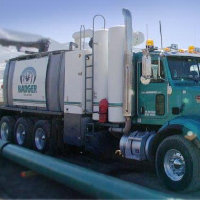
Badger Infrastructure Solutions Ltd
TSX:BDGI





| US |

|
Johnson & Johnson
NYSE:JNJ
|
Pharmaceuticals
|
| US |

|
Berkshire Hathaway Inc
NYSE:BRK.A
|
Financial Services
|
| US |

|
Bank of America Corp
NYSE:BAC
|
Banking
|
| US |

|
Mastercard Inc
NYSE:MA
|
Technology
|
| US |

|
UnitedHealth Group Inc
NYSE:UNH
|
Health Care
|
| US |

|
Exxon Mobil Corp
NYSE:XOM
|
Energy
|
| US |

|
Pfizer Inc
NYSE:PFE
|
Pharmaceuticals
|
| US |

|
Palantir Technologies Inc
NYSE:PLTR
|
Technology
|
| US |

|
Nike Inc
NYSE:NKE
|
Textiles, Apparel & Luxury Goods
|
| US |

|
Visa Inc
NYSE:V
|
Technology
|
| CN |

|
Alibaba Group Holding Ltd
NYSE:BABA
|
Retail
|
| US |

|
JPMorgan Chase & Co
NYSE:JPM
|
Banking
|
| US |

|
Coca-Cola Co
NYSE:KO
|
Beverages
|
| US |

|
Walmart Inc
NYSE:WMT
|
Retail
|
| US |

|
Verizon Communications Inc
NYSE:VZ
|
Telecommunication
|
| US |

|
Chevron Corp
NYSE:CVX
|
Energy
|

Utilize notes to systematically review your investment decisions. By reflecting on past outcomes, you can discern effective strategies and identify those that underperformed. This continuous feedback loop enables you to adapt and refine your approach, optimizing for future success.
Each note serves as a learning point, offering insights into your decision-making processes. Over time, you'll accumulate a personalized database of knowledge, enhancing your ability to make informed decisions quickly and effectively.
With a comprehensive record of your investment history at your fingertips, you can compare current opportunities against past experiences. This not only bolsters your confidence but also ensures that each decision is grounded in a well-documented rationale.
Do you really want to delete this note?
This action cannot be undone.

| 52 Week Range |
34.82
78.38
|
| Price Target |
|
We'll email you a reminder when the closing price reaches CAD.
Choose the stock you wish to monitor with a price alert.
|
|
Johnson & Johnson
NYSE:JNJ
|
US |
|
|
Berkshire Hathaway Inc
NYSE:BRK.A
|
US |
|
|
Bank of America Corp
NYSE:BAC
|
US |
|
|
Mastercard Inc
NYSE:MA
|
US |
|
|
UnitedHealth Group Inc
NYSE:UNH
|
US |
|
|
Exxon Mobil Corp
NYSE:XOM
|
US |
|
|
Pfizer Inc
NYSE:PFE
|
US |
|
|
Palantir Technologies Inc
NYSE:PLTR
|
US |
|
|
Nike Inc
NYSE:NKE
|
US |
|
|
Visa Inc
NYSE:V
|
US |
|
|
Alibaba Group Holding Ltd
NYSE:BABA
|
CN |
|
|
JPMorgan Chase & Co
NYSE:JPM
|
US |
|
|
Coca-Cola Co
NYSE:KO
|
US |
|
|
Walmart Inc
NYSE:WMT
|
US |
|
|
Verizon Communications Inc
NYSE:VZ
|
US |
|
|
Chevron Corp
NYSE:CVX
|
US |
This alert will be permanently deleted.



Ladies and gentlemen, thank you for standing by. Welcome to the Badger Daylighting Limited 2020 Fourth Quarter Results Conference Call. [Operator Instructions] I would now like to introduce your host for today's conference call, Pramod Bhatia, you may begin.
Thank you, Kevin. Good morning, everyone. My name is Pramod Bhatia. I'm the VP of Strategic Planning and Investor Relations for Badger Daylighting. Welcome to Badger's Fourth Quarter 2020 Earnings Call. On the call this morning are Badger's Chief Executive Officer, Paul Vanderberg; and Darren Yaworsky, Badger's Chief Financial Officer. Badger's 2020 annual and fourth quarter earnings release, MD&A and financial statements were released after market close yesterday and are available on the Investors section of Badger's website and on SEDAR. We are required to note that some of the statements made today, which may contain forward-looking information. In fact, all statements made today, which are not statements of historical fact are considered to be forward-looking statements. We make these forward-looking statements based on certain assumptions that we consider to be reasonable. However, forward-looking statements are always subject to certain risks and uncertainties, and undue reliance should not be placed on them as actual results may differ materially from those expressed or implied. For more information about material assumptions, risks and uncertainties that may be relevant to such forward-looking statements, please refer to Badger's Q4 press release, 2020 MD&A, along with the annual information form. Further such statements speak only as of today's date, and Badger does not undertake to update any such forward-looking statements. And with that, it's my pleasure to turn over the call to Paul Vanderberg. Paul?
Thanks, Pramod. Before we review the quarter and the 2020 financial results, I'd like to take a minute on health and safety. Safety is core. It's a core value at Badger. We're proud of our 2020 response to COVID, and it really reflects the fact that Badger is an essential services provider. And our ability to safely service our customers under all operating conditions was a real testament to the hard work and dedication of the entire team. We maintain procedures to address any situation that could come up and continue to adjust these procedures based on changes in local circumstances, regulations and various health orders. Even though we are now looking past this pandemic and positioning the company for market recovery, we continue to focus on maintaining safe working procedures for our employees and our customers. Darren will talk in a minute about our financial results. But I would like to touch on what I believe are the most significant accomplishments the company achieved in 2020. We're pleased with our 2020 results, which reinforce the resiliency of Badger's strong business model, maintaining solid margins and a solid financial position throughout the year. We successfully completed our multiyear ERP implementation in Q1, which now provides much better insight into our business and allows us to adjust to market conditions and opportunities in a much more proactive way than we could with our legacy systems. When COVID hit North America, we were very proactive and recalibrated our expense structure early in Q1 -- or Q2 and continued that lower cost structure throughout Q2 and into Q3. In Q4, we began to position Badger for market recovery. This involved hiring and training operators, which can take 2 to 3 months; hiring sales and also operation staff. There's a lag between staff additions and their impact on revenue, but the additions are required in order for us to be ready for a stronger 2021 that we widely expect. In Badger's business, we always want to have a truck when a customer calls. This is critical to our service delivery model. We've continued this process in Q1 and in addition to preparing for an expected strong market recovery, we're also preparing for the traditional summer construction season. Now a couple of comments about the fourth quarter. Revenue in the quarter was in line with our expectations at $130.6 million or about 81% of the fourth quarter in 2019. And for the full year, revenue was $558.6 million or about 85% and of the revenue realized last year. While 2020 revenue was lower than last year, we believe this was a good result given that North America went through the most severe economic contraction in more than 80 years. In fact, it's my view that it was more like a wide-scale natural disaster than a traditional economic recession. A couple of comments on the business updates and the business outlook. We started off Q1 2021 slow due to the extended job site holiday shutdowns. Business really didn't get going until the week of January 11 this year. We also saw severe winter storms that blanketed the Southern U.S., unprecedented storms. As the quarter progressed, though, we started to see signs of market recovery and especially an increase in bidding activity, which is very positive, and we expect that will benefit future months. This year's storm activity in the winter has highlighted the potential future opportunity for the company, which could result in the need to strengthen North America's critical infrastructure. We continue to build our company to capture the growing opportunity and to support our customers' infrastructure maintenance and renewal. It's our core business. We were excited to share in our December Investor Day, the growth we see long-term for our market, a 7 to 9x multiple from where we stand today for nondestructive excavation. There are multiple avenues to growth for Badger that we are capitalizing on. Growth in new markets, growth from increased fleet utilization and also growth in fleet size as required. In 2020, we continue to invest in growth right through the market downturn. We opened 21 new areas last year. We continue to position Badger to capture the long-term growth we believe that's there. There are many markets in the U.S. where use of nondestructive excavation is in its very early stages. As we've previously discussed, we're actively recruiting for a head of sales and marketing to further augment our commercial leadership and to help execute on our strategy for market growth. Last year, we built 85 new hydrovacs and retired 57, ending the year with 1,392 units for a net increase of 28 units from 2019. As we previously discussed at our December Investor Day, our current fleet sites can support revenue of over $700 million. We continue to focus in the short-term to drive fleet utilization to drive return on invested capital, which, of course, is a real good long-term shareholder objective. We'll add new units when and if required. Because of the near-term focus on utilization, we currently expect to build between 20 and 30 units this year and retire 60 to 70 units. We've kept our base level of production at the Red Deer plant through the pandemic in order to retain key staff. This maintains our ability to scale up production as required to respond to growth in the market conditions. We're confident in our ability to ramp up production when it's required. Regarding the plant, we're very pleased with the work that the manufacturing team has done during the production slowdown. We've taken advantage of the slowdown to reconfigure process flows and upgrade parts storage and warehousing at the plant. This increases our capacity to at least 350 units per year. The 350 compares to our historical peak production of 220 units in 2014. So for the foreseeable future, we'll have enough capacity in Red Deer to adjust to market demand as needed. We also see ESG as a critical success factor in the years ahead. Nondestructive excavation is closely linked to ESG objectives. We made good progress on our ESG initiatives in 2020, aligning these initiatives with our business and corporate strategy. We will be sharing our inaugural ESG report with investors in the near future. As discussed in previous quarters, we continue to review all aspects of the business to drive further enhancements in operating and financial performance. We continue to focus on providing shareholders with sustainable and balanced returns Badger always manages for the long term. During 2020, we increased our dividend by 5%. Given the growth we expect in the business for 2021 and beyond, we're pleased to announce that the Board approved a 5% increase in our dividend, effective with the March 2021 payment. This increase marks the sixth year that we've increased the dividend, and highlights the strong cash flow generation and the continued growth that we see servicing the nondestructive excavation sector. The Board also approved a new NCIB program. Badger is seeking approval from the TSX to repurchase up to 1.5 million shares. We expect the program will be approved in the normal course, and we'll issue a press release when it's completed. As a reminder, our previous NCIB program expired last May, and we didn't renew it at the time due to the market uncertainty. Our view is that the NCIB has a value in Badger's long-term capital allocation strategy and we're pleased to have another program in place. Since we started our initial NCIB back in 2018, Badger has repurchased and canceled approximately 6% of the float. And now I'll turn things over to Darren to talk about financial results.
Thanks, Paul. In light of COVID-19, we continue to see revenues and customer activity levels vary regionally across Badger's network in Canada and the United States. As Paul noted, our revenues for full year 2020 came in at 85% of the level achieved in 2019. But given the economic contraction due to the pandemic, we believe this is a good result. RPT in the fourth quarter was approximately $24,000 compared to $31,000 in Q4 2019 and $28,000 in Q3 2020. For the trucks that operated in the quarter, RPT was approximately $30,000 versus $33,000 in Q3 2020. We look at RPT for trucks operating as it provides insight into operating efficiency, which shows that we have more room to grow the business through utilization of the existing fleet. Gross margin for the quarter was 24.1% or approximately 520 basis points lower than the prior period -- prior year. Gross profit margin was impacted by slower activity levels due to COVID-19, as previously mentioned, and higher labor costs. After successfully managing costs in Q2 and Q3, we began recruiting and training operators, sales and operations staff to ensure that our business is well positioned going into the 2021 construction season, and to take full advantage of what we expect to be a strong market recovery. We're a service business, and we view these additional costs as an important investment to ensure that Badger always has a truck and operator available when a customer requires it. As we've discussed in previous quarters, our financial results are now reflecting the lower G&A run rates that we talked about early in 2020. G&A expenses were approximately $2.2 million lower than prior year, even after excluding approximately $100,000 in government-related assistance. As confirmed in our fourth quarter press release and consistent with our disclosure in 2020, we continue to anticipate our 2021 G&A expenses to be approximately $40 million. Of course, we always review any cost efficiency opportunities as they appear. Adjusted EBITDA for the fourth quarter was $22 million compared to $35.8 million in the previous year. Adjusted EBITDA margin was 16.8% compared to 22%. Again, expenses and EBITDA margin reflect our investment in direct cost position for expected market recovery, and the strategic initiatives to support long-term growth and shareholder value creation. Badger maintains a focus on ensuring the strength of our balance sheet and financial flexibility. We've continued to make meaningful progress in accounts receivable. Since Q3 2020, we have reduced our outstanding receivables in the over 120-day bucket by approximately $8 million, and subsequent to quarter end, reduced it by another $4.5 million. Overall, as of this past Monday, we reduced our receivable portfolio to about $110 million or a DSO of less than 80 days. Effective October 1, we signed an agreement with Export Development Canada, which is the government of Canada Crown corporation to ensure our trade receivable balances. This insurance will supplement the improvements we have made in our internal process and reduce overall collection risk. Finally, we had in excess of $340 million in total liquidity through a combination of cash on hand and our committed credit facilities at the end of the year. Our debt-to-EBITDA ratio was 1.2x, well within the credit facility covenant of 4x. I'd like to turn the call back to Paul for final comments. Paul?
Thanks, Darren. Just a couple of comments before we open it up for questions. We anticipate that the economic feature -- picture is going to become much more clear as the vaccination process is progressing very rapidly. We're encouraged by this process and by the improvement in market activity that we've seen as Q1 has progressed, a very different situation at the back half of the quarter than early in the quarter. Our view of the significant U.S. and Canadian long-term opportunity for nondestructive excavation and Badger's long-term growth prospects didn't change at all during 2020. When we believe that the heightened societal safety awareness focus on the integrity of infrastructure and focus on ESG supports further demand for nondisruptive excavation. We saw the impact to infrastructure from last month's storms. We stand ready to help strengthen and maintain that infrastructure to mitigate the impact of that -- those kind of events in the future. So even though 2020 created a bit of a pause here in the journey of Badger's growth, we continue to focus on health and safety, looking forward to sharing our inaugural ESG report with you soon. We continue to invest in our organization to capture future growth, again, managing for the long term. And these goals include doubling our U.S. operations revenue from fiscal 2020 levels over the next 3 to 5 years, growth in our adjusted EBITDA margin to 28% or 29%, that range over the next 3 to 5 years, and continuing to target revenue per truck per month to be over 30,000 over time. And we continue to focus on overall shareholder returns, increasing the dividend by 5% and renewing the NCIB program. Badger's proven business model, our operating scale and flexibility, diversification of end-use in geographic markets, combined with our strong operating track record that was tested and found very successful in 2020 and managing across all stages of the economic cycle, support achieving our long-term growth aspirations. So with those comments, let's turn it back to Kevin to open it up for questions.
[Operator Instructions] Our first question comes from Yuri Lynk with Canaccord Genuity.
Paul, I thought all the hiring was going to be in the first quarter. So did the change -- was there a change of plans in terms of the onboarding of operators to do it a little bit earlier than normal? And secondly, maybe just drill down a little bit on what the demand indicators are that you're seeing to start onboarding and training well ahead of the construction season? I think it's a little bit earlier, but you can correct me if I'm wrong.
Yes. Well, this is a unique year, Yuri. There's the traditional summer construction season, but there's also the recovery from this pandemic. And those 2 factors aligning as we see going into the spring and summer this year is really the factor that drove us to start earlier. And we continue to invest for our long-term growth opportunities. We've done a lot of work on market segmentation. We went through that at the December Investor Day, and we continue to invest in those initiatives. And again, these are all for the long term. So there's not just a traditional summer construction season, but we're also looking at the recovery and also longer-term. On the indicator side, we've seen very good uptick in our bidding, especially as we've gone into Q1. And that's very, very positive. Those -- that activity will benefit in future months. And the other thing we've seen is a pretty dramatic change in what was happening with COVID. And just to give you a little bit of background on statistics. And these are some statistics just from our population of people. I don't know if Badger is a good proxy for U.S. and Canada. But from the end of March through early December, just within Badger, the employee population, we are running about 6 cases a month. So when we hit the beginning of December through the end of February, that jumped to 40 cases a month. So when you look at the impact we had in Q4, that's a pretty big jump. March so far, 0 cases. So we've seen a real dramatic change and very, very positive. But it was a rough COVID quarter when we ended up Q4 and the holiday shutdowns were extended because of that. But I just wanted to share -- those are just our statistics and it provides some color behind the type of shutdowns we saw around the holidays this year.
Okay. Okay. Anything you can help us with as we think about the first quarter? It sounds like it started off pretty slow. It's typically the slowest quarter of the year. So am I right in anticipating the -- it's going to look pretty similar to Q4? Any color you could give us would be helpful.
Yes. Well, we're not planning to do revenue guidance quarter-by-quarter this year. We did it last year because the downturn in COVID was so unprecedented. And the reason we're not doing it this year is because we had such fluctuation last year. The year-over-year comparables, really aren't that relevant. But the activity has picked up very significantly in March from where we started in January coming out of the holidays. That's probably the best color we can provide today.
Our next question comes from Maggie MacDougall with Stifel.
I noticed in your commentary in the MD&A that you talked a bit about maintenance that you've done in Q4. And I know previously when you've sort of staffed up ahead of -- during a soft period ahead of better activity. Oftentimes, you put those people to work kind of cleaning things out, making sure all the equipment is in good order. I'm wondering if that's the case in Q4? And then if so, where you're at in terms of maintenance? You must be ahead of where you normally would be this time of year, if that is the case?
Yes. The maintenance is really important, as you know, and Darren provided some statistics a couple of minutes ago about overall RPT and then RPT of units that we work. And it's good insight into operating leverage and labor productivity. But we want to make sure that trucks -- even trucks that are not being used are continued to be maintained. So the ratio versus revenue was higher in Q4. We just wanted to call that out. But again, we always manage for the long-term. And hydrovac units have pumps and water and systems that need to be maintained. They do a lot better if they're running, they're sitting. So we want to make sure the fleet is ready for a busy spring and summer. So we continue to do the work that's required.
Okay. Great. Then also wondering about your plans and what's in progress in terms of increasing the throughput capacity at the Red Deer manufacturing facility. Can you give some overview of the types of things that you've done in order to increase the capacity there, a bit of detail. And then when you expect that will be completed? If there's any additional costs we should be thinking of in the next couple of quarters? And ultimately, how you feel this positions you for your long-term growth strategy?
Yes. Great question. As we'd indicated in the MD&A, we're very pleased with the progress the team at Red Deer has made. This is work that we could not have tackled if we were building 15 or 18 Badgers a month. So we had slow time and we've taken full advantage of it. But we've gone to a multiline process with a multiline throughput as opposed to one line. And we've also set up one of those lines that can do multiple types of equipment, hydrovacs, flusher unit specialty equipment. We're adding a new MRP system, Materials Requirements Planning system. And I think investors will recall that we did not attack the MRP system for manufacturing as part of the Oracle implementation because we wanted to have our new manufacturing leader on board. And he's tackled that along with our IT staff in the slow time, and we expect to have that up and running by year-end. We're actually going to use Oracle functionality, which we'd already purchased. So that's going to be a very modest implementation. And for ERP implementations and using the word modest, it's a pretty pleasing outcome for me. And then longer term, we're saying we think these changes will take us at least 350 units. I think we can do -- we'll probably do better than that. We just need a chance to test it. And as the market recovery comes, we'll have a chance to test it. And then a final comment on longer-term strategy, to your question, Maggie, is this progress we've made gives Badger a lot of optionality on our long-term strategy. So we can take a look at where we really want to be long-term, and we can actually study those factor costs and what the long-term best costing location to be building is. But this additional progress we've made gives us lots of optionality on timing and future substantial capital commitments could be deferred significantly. So very, very positive work that's been done during this downturn.
One final question for me. I guess it's a 2-part question, it's just on cost. So we've seen a lot of raw material costs elevation across a bunch of different commodities. Wondering if that is starting to be reflected in terms of inflation in your manufacturing costs? And then also, perhaps tied to this is just how should we think about working capital? You've made some significant changes in terms of improving efficiency in that category, which has generated a lot of free cash flow for you. Should we be expecting an increase in working capital intensity as activity ramps up?
I'll cover the cost comment, and I'll let Darren talk about working capital. His team has had wonderful progress made in the last couple of quarters. So I think he needs to talk about that one. On the cost side, the cost that we've seen in 2020 have mostly been volume related. So it's fixed cost allocation. And as everyone knows, we maintained essential staff at the plant, and we maintained a base level of build to keep those positions. But it's not as efficient, nowhere near as efficient as if we were running. We're managing for the long-term and these are our key production leaders and supervisors. Our ability to ramp up is greatly enhanced because we've retained them. So the cost in '20 really reflect that, but it's really more an investment for the long-term. It's the right decision, and it's worked out really well for us. On the factor costs -- the cost factors that go into Badgers, we've seen some modest increases in things like metals and modest increases in chassis. But nothing that's been -- would be considered material. And the other thing we're doing with the new manufacturing leader on board is, we're actually reaching out to suppliers and doing a lot more traditional supply chain activities, RFPs, expanding our supplier network, expanding our network beyond Alberta across the U.S. and even to Asia. So we're in the early days on that, but I'm pretty optimistic, we're going to have some good success going forward on the supply chain side also. It's early days, but encouraging. Darren, on working capital.
Maggie, I'm reminded of some previous quarter discussions with you and maybe made some commitments, and I'm glad to say that we're actually hitting those commitments. So like I said in my earlier comments, we're running sub-80-day DSOs right now. We anticipate whatever scenario that materializes itself hopefully to the upside, we'll be able to continue to run at that 80-day DSOs for your modeling purposes. Why do I have that confident? When you start looking at our below 120-day buckets in our disclosure, you can see that we've cleaned them out. And we've cleaned them out not because we were harvesting the receivables, it's because we fundamentally fixed the processes. So Pramod Bhatia, who opened up this call, also covers double duty on the collection side and credit, as does Kim Kiggins who joined the company about a year ago, have fundamentally changed that process. So we've closed the front door on allowing receivables to age out through our portfolio. The other piece that also gives me comfort in saying that we'll be able to really start to manage the working capital thoughtfully in 2021 is that we still have a fair amount of receivables sitting in the 120-day plus bucket. And we've made tremendous progress in that bucket over the last number of months. We've evaluated all of the collectability, and we still think that all of that is collectible. So that is working capital that gets -- it's really a latent capital that was carried over from previous periods that we're going to be able to release in 2021. So all in all, I'm really confident that our working capital position will easily be able to manage any kind of recovery in the business. And by -- the other piece is that we've really underscored it by our liquidity, having over $300 million in liquidity provides development suspenders to make sure that we can respond to any kind of market activity.
[Operator Instructions] Our next question comes from Jonathan Lamers with BMO Capital Markets.
On the Q4 direct costs, is there any portion you can point to that will not be recurring in Q1 and further out? It sounds like recruitment costs would have been very high, and there would have been some downtime for all those COVID cases?
Yes. Jonathan, the categories of hiring and training, bringing operators back, I mean that will be continuing in Q1 because we are getting ready for the spring season. And the COVID-related costs, we don't see recurring. I gave some statistics earlier about how the cases have spiked and dropped off. But you're going to see typical costs that we're incurring to get ready for the summer. And the main thing is, the way I look at it is, the cost dollars are there. But as the revenue increases, that operating leverage really drives the percentage of direct cost down. And there's a variable and a semi-variable and a semi-fixed and a fixed component of Badger's operating leverage within the direct cost category. And that volume really works very, very well once the volume kicks in. So on a percentage basis, I think as we get into the Q2 and Q3 periods, I think we're going to see a lot of leverage as the volume materializes.
And the press release mentions that the fleet of trucks could support $700 million in revenue. Are you able to provide any sense of how the number of operators now has returned toward pre-COVID or a level that would support that type of revenue?
Yes. Well, that's the charm is managing the operators in the seats. The trucks are the easy part. Maggie asked about maintenance, and we've made the maintenance investments required to be ready. It's all about timing for the operators. And as you know, Badger's business model includes labor as variable a cost as we can make it. So it's a real balancing act to have the right operators when they're needed. So that's the balancing act you're going to see us continue with. Once things get busy, then it becomes more of a steady state operation. But right now, where we are in Q1, we're continuing that balancing act.And it's like that every spring. But this year, it's really unique because we're not only seeing the spring upturn, but we're also seeing major customers return to doing work. These are customers that had really stopped doing work, a lot of maintenance and traditional things because of the downturn to conserve cash. So we're actually seeing new customer names back that were major customers that had dramatic slowdowns last year because of COVID. So there's really multiple factors we're taking into account for when we're balancing the labor going into the spring.
And people are curious about recovering oil and gas end markets and any potential benefits from the Texas storms? I know the press release just mentioned that that's more of a longer-term opportunity. Do you have any thoughts on potential demand creation from either of those 2 newsy items?
Yes. Well, in our oil and gas markets, I mean, we are very well positioned for recovery. Our team there in Western Canada, in the Rocky Mountain region, did a wonderful job in managing costs, with the double whammy downturn that they had in 2020, given the commodity cycle and also COVID. So we're very well positioned there. And operating leverage will be pretty nice to see once we can put some volume back with recovery in the commodity segment.And regarding the other activity, in general activity, we're generally very, very well positioned.
Our next question comes from Elias Foscolos with Industrial Alliance.
Great, I have a couple of questions to ask. I'm trying to get a handle on gross profit margin. So I want to first focus annually. Would it be kind of fair to think of 2021 gross profit margin straddling, excluding COVID, 2020 and 2019?
What do you mean by straddling? Elias, can you...
To be blunt, somewhere between 28.4% and 30.7%.
Okay. Okay. No, I kind of thought that's where your question was. I -- we can't really comment on that. I can say, though, that if you want to look on an annual basis, you have the slower Q1 and the traditional summer pattern of Q2 and Q3, again, we have the double spring and summer ramp up and the recovery from COVID going on this year. So I can tell you, even internally and at our Board meeting, we're really taking a look at what the range might be depending on the activity. And then, of course, in Q4, you generally see things slow down again. And we expect that margin will follow that pattern for all the reasons I talked about with Jonathan earlier on operating leverage, and it has a big impact on gross margin.So the good news is Badger always manages that cycle. And we have a good business model to control our biggest cost, which is direct labor. So you'll see a similar pattern this year, seasonally.
Yes. I wasn't focused as much on the quarterly, but the annual. I do know there's seasonality. So I mean, I can sort of move beyond that. Moving to quarterly, and again, noting that there is seasonality. I guess, when I think back at 2020, I was a little surprised at how -- how weak Q1 and Q4 were relative to 2019. And how strong Q2 and Q3 were, again, relative to 2019, and also given COVID. So in the question I asked, so I started with the annual margin because it should be more stable, but now focusing on quarterly, is it possible that your ERP system is -- because it's new, not giving you some data that's timely all the time?
Paul, do you mind if I...
No. Go ahead, Darren.
I'll start by saying that our ERP system is providing us with much better information than we've ever had, and I think that probably gave us the ability to respond the way we did in Q2 and Q3. So if I -- I'm going to try and blend a response to your previous question and this question on unpacking Q2 and Q3. I think when you look at Q2 and Q3, that is us testing out the art of the possible for the company. And so we've managed to make sure that we can run the company to be able to hit our strategic milestones. One of those strategic milestones is the EBITDA margin of 28% to 29%. And that's the basis, which you may want to use to start doing the math on your initial question. So we've got the 28% to 29% target EBITDA margin, then we've largely fixed our G&A costs, which will give you an implied range of where we probably want to be from a gross margin perspective.Some of the strategic initiatives that we talked about in the December Investor Day, we're investing in to lock that in. So the value that we saw in Q2 and Q3 of 2020, we're investing to make sure that we lock in that goodness in future periods. And that means that we're going to have to invest some money upfront to be able to lock that value in. But that's the way I would look at your map on an annualized basis is that we've been able to fix as much as we can on the G&A cost, so it's not variable. There are some fixed cost and semi-fixed cost in our direct cost, and I won't get into that in great detail, that we're really trying to drive a lot more efficiencies in. And like I said, that's what we've been investing in, in Q4, and we'll continue to invest in, in Q1 to try and lock in that value, all of which gives to Paul's point, is you get an inflection point where our operating leverage starts outstripping revenue growth. That's -- we demonstrated that ability in Q2 and Q3. And like I said, we want to lock in that value proposition in the outer years.Paul, I don't know if you want to add anything to that.
No. I mean, it's -- I think those are relevant comments. And 2020 was an absolutely unprecedented year, and we flexed on the downside, and we're very pleased with the results we came up with. It just happened to be on the heels of the ERP implementation. And I can tell you the KPIs and the dashboards, our people have today, Elias, are dramatically different than they were 12 months ago. So weekly P&Ls and daily looks at labor. I mean, we didn't even have any of that a year ago. So very, very excited about that from the ERP. But it's early days on using that information. And -- but the way I look at it, it's going to help dramatically over time.
And I'm not showing any further questions at this time. I'd like to turn the call back to Paul for any closing remarks.
Okay. Thanks, Kevin, and thanks to everyone that participated today. On behalf of all of us at Badger, we thank our customers, employees, our suppliers and shareholders for your ongoing support that really makes Badger successful. So Kevin, please end the call.
Ladies and gentlemen, this does conclude today's presentation. You may now disconnect, and have a wonderful day.