



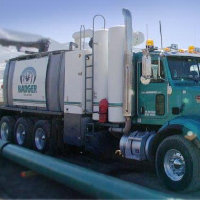
Badger Infrastructure Solutions Ltd
TSX:BDGI





| US |

|
Johnson & Johnson
NYSE:JNJ
|
Pharmaceuticals
|
| US |

|
Berkshire Hathaway Inc
NYSE:BRK.A
|
Financial Services
|
| US |

|
Bank of America Corp
NYSE:BAC
|
Banking
|
| US |

|
Mastercard Inc
NYSE:MA
|
Technology
|
| US |

|
UnitedHealth Group Inc
NYSE:UNH
|
Health Care
|
| US |

|
Exxon Mobil Corp
NYSE:XOM
|
Energy
|
| US |

|
Pfizer Inc
NYSE:PFE
|
Pharmaceuticals
|
| US |

|
Palantir Technologies Inc
NYSE:PLTR
|
Technology
|
| US |

|
Nike Inc
NYSE:NKE
|
Textiles, Apparel & Luxury Goods
|
| US |

|
Visa Inc
NYSE:V
|
Technology
|
| CN |

|
Alibaba Group Holding Ltd
NYSE:BABA
|
Retail
|
| US |

|
JPMorgan Chase & Co
NYSE:JPM
|
Banking
|
| US |

|
Coca-Cola Co
NYSE:KO
|
Beverages
|
| US |

|
Walmart Inc
NYSE:WMT
|
Retail
|
| US |

|
Verizon Communications Inc
NYSE:VZ
|
Telecommunication
|
| US |

|
Chevron Corp
NYSE:CVX
|
Energy
|

Utilize notes to systematically review your investment decisions. By reflecting on past outcomes, you can discern effective strategies and identify those that underperformed. This continuous feedback loop enables you to adapt and refine your approach, optimizing for future success.
Each note serves as a learning point, offering insights into your decision-making processes. Over time, you'll accumulate a personalized database of knowledge, enhancing your ability to make informed decisions quickly and effectively.
With a comprehensive record of your investment history at your fingertips, you can compare current opportunities against past experiences. This not only bolsters your confidence but also ensures that each decision is grounded in a well-documented rationale.
Do you really want to delete this note?
This action cannot be undone.

| 52 Week Range |
34.82
78.78
|
| Price Target |
|
We'll email you a reminder when the closing price reaches CAD.
Choose the stock you wish to monitor with a price alert.
|
|
Johnson & Johnson
NYSE:JNJ
|
US |
|
|
Berkshire Hathaway Inc
NYSE:BRK.A
|
US |
|
|
Bank of America Corp
NYSE:BAC
|
US |
|
|
Mastercard Inc
NYSE:MA
|
US |
|
|
UnitedHealth Group Inc
NYSE:UNH
|
US |
|
|
Exxon Mobil Corp
NYSE:XOM
|
US |
|
|
Pfizer Inc
NYSE:PFE
|
US |
|
|
Palantir Technologies Inc
NYSE:PLTR
|
US |
|
|
Nike Inc
NYSE:NKE
|
US |
|
|
Visa Inc
NYSE:V
|
US |
|
|
Alibaba Group Holding Ltd
NYSE:BABA
|
CN |
|
|
JPMorgan Chase & Co
NYSE:JPM
|
US |
|
|
Coca-Cola Co
NYSE:KO
|
US |
|
|
Walmart Inc
NYSE:WMT
|
US |
|
|
Verizon Communications Inc
NYSE:VZ
|
US |
|
|
Chevron Corp
NYSE:CVX
|
US |
This alert will be permanently deleted.



Good day and thank you for standing by. Welcome to the Badger Daylighting Ltd. 2021 First Quarter Results. [Operator Instructions] I would now like to hand the conference over to your speaker today Pramod Bhatia of Badger Daylighting. Please go ahead.
Good morning. My name is Pramod Bhatia, VP of Strategic Planning and Investor Relations for Badger Daylighting and welcome to Badger's First Quarter 2021 Earnings Call. On the call this morning are Badger's Chief Executive Officer, Paul Vanderberg and Darren Yaworsky, Badger's CFO. Badger's 2021 first quarter earnings release, MD&A and financial statements were released after market close yesterday and are available on the Investors section of Badger's website and on SEDAR. We are required to note that some of the statements made today may contain forward-looking information. In fact, all statements made today which are not a statement of historical fact are considered to be forward-looking statements. We make these forward-looking statements based on certain assumptions that we consider to be reasonable.However, forward-looking statements are always subject to certain risks and uncertainties and undue reliance should not be placed on them as actual results may differ materially from those expressed or implied. For more information about material assumptions, risks and uncertainties that may be relevant to such forward-looking statements, please refer to Badger's 2020 MD&A along with the 2020 Annual Information Form. Further, such statements speak only as of today's date and Badger does not undertake to update any such forward-looking statements.I will now turn the call over to Paul Vanderberg. Paul?
Thanks, Pramod and good morning everyone. Before we get into the quarter, let's take a minute to talk about health and safety. We've managed very well through COVID and we're really proud of our response, especially to focus on keeping our customers and employees safe. Badger is an essential services provider and we continue to safely service our customers under any operating conditions we find. We're now looking past the pandemic and positioning the Company for market recovery. And we continue to focus on maintaining safe working procedures for everyone. ESG is a critical success factor in the years ahead. Our ESG initiatives align well with our business and Corporate Strategy. And we're pleased to announce our inaugural ESG report is available on the Company website in the Investor Relations section.Now, let's get into the quarter. As we discussed on our Q4 call, market activity in quarter one 2021 started off slowly due to extended holiday job site shutdowns in January and severe weather across many of our markets, in fact, almost all of our markets in February. Activity levels significantly improved during March. And as a result, the revenue run-rate at the end of the quarter was up very much from the beginning of the quarter. We've seen an increase in bidding activity and that indicates we should expect an increase in activity and we're planning for it in the coming months. We're beginning to see the real benefits of the U.S. accelerated vaccination process as March U.S. revenues in U.S. dollar terms were higher than March of 2020 and we're beginning to approach the pandemic -- pre-pandemic March 2019 revenue levels.We continue to experience weakness in our energy-focused regions specifically in Western Canada during the quarter. This weakness combined with February weather shutdowns and the polar vortex really impacted us all the way up through Northern Alberta and the slower vaccine rollout that we've seen in Canada, that all contributed to a slower quarter in our Canadian business. But we've continued to add operators, sales and support staff to get ready for the summer season and the overall market recovery that from COVID that we're beginning to see, we're planning for a busy summer. We're seeing the early signs of the U.S. market recovery and our revenue run-rate entering Q2 is again approaching in the U.S. our 2019 pre-pandemic levels in a number of our markets. We continue to position for growth this year.The other aspect of this severe Q1 winter weather was that we saw how it impacts at a wide range of critical infrastructure and this to us really highlights the potential need for work on these facilities and system upgrades. This needed work, along with increased focus on upgrading and expanding Americas infrastructure, that's a significant focus now with the economic recovery plan in the U.S., represent significant long-term opportunity for Badger and how we provision -- provide non-destructive excavation services to these end use markets.In addition, increased focus on sustainability and infrastructure is another positive trend. And we think additional work will be required on the sustainability side for these facilities, especially in the Energy segment. And this, also, we expect to provide additional opportunity for non-destructive excavation. And as we've communicated in the past, there continues to be many markets in the U.S., where use of non-destructive excavation is still in its fairly early stages.As we discussed at our investor update in April, we continue to invest to strengthen our organization, improve our technology and in key initiatives to position the company to service the opportunity we see coming. We're aligning our company structure with our operating model by changing our branding, our ticker and legal entities. We talked about that last week in our Investor Update.The name Badger Infrastructure Solutions Limited more accurately describes the work we do in our business opportunities, as North America's leader in non-destructive excavation and related services. We provided an update to that as I mentioned last week. The background on that from last week's presentation is also available on our website.Now, just a couple of comments on the fleet side of the operations. During the quarter, we built eight new hydrovacs and retired 20. So we ended the quarter with 1,380 units, down 12 units since year-end. We currently expect and continue to expect to build between 20 and 30 units this year and retire 60 to 70. As we've communicated previously, we're focusing on driving fleet utilization. We have the new tools from our new ERP system, which gives us much better visibility into the fleet. And in the near-term, we remain focused on driving utilization with the intent to drive higher returns on invested capital. And we will of course add new units when required.At the plant, we've kept a base level of production in order to retain key staff. This has worked out very well during the COVID downturn. We have the ability to scale up production as required to respond to growth as market activity improves. We are confident in our ability to ramp up production when required. We took real advantage of the slowdown in 2020 to reconfigure our process flows in Red Deer and related parts storage and warehousing. And as we previously communicated, our manufacturing capacity today is at least 350 units a year. This compares to our historical peak production of 220 units in 2014. So for the foreseeable future, we're in good shape with our capacity at Red Deer to meet market demand.So I'd like to turn things over to Darren to talk a little bit about our financial results.
Thanks, Paul and good morning everybody. Our revenue in the quarter was $108.5 million or approximately 83% of the first quarter of 2020 when normalized for FX. On an FX adjusted basis, revenue in January and February was roughly 75% of revenue achieved in 2020 and revenue in March was equal or modestly better than revenue levels experienced in 2020 and roughly 86% of the revenue levels experienced in 2019. For April, revenue levels are notably higher than 2020 and approaching levels experienced in 2019. Our RPT in the quarter was approximately $20,000 compared to $25,000 in Q1 of 2020.Gross margin was 15.7% or 650 basis points lower than prior year. Gross margin was impacted by slower activity levels due to COVID-19 and extreme weather events in the Southern U.S. as Paul previously mentioned.With the increasing volume in our business, we expect margins to return back to normal as we start to flex our operating leverage that Badger has historically proven over the summer construction season.In late Q4 and into Q1, we began recruiting and training operators, sales and operation staff to ensure our business is well positioned going into the construction season and to take full advantage of what is expected to be a strong market recovery.We are a service business and we view these additional costs as an important investment to ensure that Badger always has a truck and operator available when a customer requires one.The unpredictability of COVID-19 and extreme weather in the quarter presented short term variability. But recent trends that are approaching more typical ramp-up volumes for the construction season seems to support our expenditure decisions. G&A expense was $11.5 million, which includes approximately $1.9 million in one-time cost related to our strategic initiatives to enhance our organizational design and management structure.We continue to anticipate our G&A run-rate for 2021 to be approximately $40 million, excluding one-time costs related to these initiatives. Of course, we always review costs for additional efficiency opportunities.Adjusted EBITDA for the quarter was $5.5 million compared to $18.1 million in the prior year. Adjusted EBITDA margin was 5.1% compared to 13.3%. Again expenses and EBITDA margins reflect our investment in direct costs to position our expected market recovery and strategic initiatives to support long-term growth and shareholder value creation.Now onto the balance sheet. Badger maintains a focus on ensuring the strength of its balance sheet and the financial flexibility. We have continued to make meaningful progress in accounts receivable and working capital management, collecting over $28 million in receivables since Q4, further improving our DSO and overall liquidity of the company. Finally, we had in excess of $300 million in total liquidity through a combination of cash-on-hand and committed credit facilities as at the end of the quarter and our debt to EBITDA ratio was 1.2 times well within our financial covenants.We also renewed our $100 million credit facility for additional year, providing us a total of $400 million in committed credit facilities.I'd like to now turn it back to Paul for some final comments. Paul?
Yes. Thanks, Darren. Just a couple of final comments before we open it up for the Q&A. We're very encouraged with the improved activity levels we've seen in March and especially into Q2. We are continuing to anticipate a strong market recovery and a strong construction season for 2021. Our view of the significant U.S. and Canadian long-term opportunity for non-destructive excavation and Badger's growth prospects remains unchanged. Nothing we saw in the last year with COVID has changed our view on that. The increased focus on infrastructure in the U.S. and recent stimulus announcements and continued discussion about further infrastructure bills further supports demand for non-destructive excavation over the long term.We stand ready and our business model is ideally positioned to help strengthen and maintain that infrastructure and we stand ready to supply our services. The Badger proven business model, operating scale and flexibility, our diversification of end-use and geographic markets combined with our strong operating track record across all stages of the economic cycle -- and we've just come through a very interesting one -- all support achieving Badger's long-term growth aspirations.So let's turn it back to the moderator for questions.
[Operator Instructions] First question, Maggie MacDougall from Stifel.
So I think we were all anticipating a soft Q1. I think the margin weakness is particularly surprising. And so I guess there's two questions that I have coming from this. The first would be, what level of activity are you currently staffed up for in terms of a recovery, is it back to pre-pandemic levels or is it also in anticipation of growth? And then, the second question I have is your commentary highlighted improved activity. Wondering if we are in fact seeing a consistent recovery in both the U.S. -- and all across U.S. markets with regards to getting back to pre-pandemic level?
As far as our staffing levels for different levels of activity in comparing to pre-pandemic, we're still a little bit below the staffing levels we would have been at, at this time in 2019. We were actually just looking at that this week. And but however, we have more operators in the recruitment process, almost double the operators in the recruitment process in early May 2021 than we did at the same time in 2019. So we're continuing to ramp up. And the other part to your question is what position are we in to service demand? We're very confident that we're going to have the operators -- have the operators and will have the operators to service demand as the summer season rolls out and that's part of what the cost was in Q1, quite frankly, is we always want to have operators and trucks available. And the last thing we want to do is turn a customer away or say, we can't get there until next week. So that's part of what the cost were as you have to have those folks on board.The second part of your question on activity levels and were they consistent across our regions in Q1. We continue to see a range of activity. Our softest area right now and from Q1 into Q2 would be Ontario. It's very much impacted by the COVID shutdowns. And what we've seen is especially the larger projects have just been delayed in starting this summer season because of COVID. So it's quite a wait and see. And other than that really that's probably the softest area, still a little softness in some of our oil and gas markets. But we anticipate that recovering as we get it through that break-up in Western Canada, that's just getting started and into the summer season. But other than that, some of our older more mature regions in the U.S. are the ones that actually are the most positive versus not only this time last year, but also versus pre-pandemic levels in 2019. So that bodes very well for a strong summer season for us.
As you go through the next couple of months, how should we be thinking about the cadence of margin improvement as activity increases in the U.S. Especially considering that -- I mean, I'm sitting in Toronto and it doesn't feel like things are really opening up much at present. So we're probably going to continue to have a weak Canadian market for a little while. Is this a situation, where you're going to be able to trend back to a pre-pandemic margin through Q2 on a sort of like-for-like basis, given the seasonality? Or is it a situation where we may be sort of waiting for that to happen for a while?
Yes. I would expect that to happen just about everywhere as the summer plays out, Maggie, other than Ontario. And you're better positioned to understand what's happening there, but it's really going to be dependent on volume in Ontario. Ontario's about 15%, 10% to 15% of the company, so, it's a bit of a drag, but it is what it is. We'll manage through it, just like we managed through the last 16 or 18 months. We're well positioned in Ontario. Our cost structure is the best it's ever been in my time at Badger. So we're very well positioned there. But I see improved volume, driving improved operating leverage and improved margin. I am highly confident in Badger's operating leverage and it will flex up just like it's flexed on the downside. Q1 was really an anomaly in my mind. And when you get a week or two wiped out with weather in February and you lose a week or 10 days with just slow recovery because of COVID from the holidays and a slow start-up, you lose three weeks in a quarter, that's a tough one, especially when you're staffed up to service the customers, which is our business model.So we managed through these things. And we're managing for this summer in the long term and beyond. I'm very confident in the margin ramp up as volumes improve.
Next question, we have Jonathan Lamers from BMO Capital.
Maggie touched on the topics I wanted to cover. I'm curious how did activity levels in Q1 compare to your internal expectations following the staffing increases you made in late 2020?
Yes. well, that's a great question Jonathan. Good morning. Actually the -- as far as our 2021 budget, we were behind in January and February and significantly ahead in March.
And is the bulk of the increase in direct costs related to paying permanent staff? Like how much -- is there any way to break out the portion that's related to recruitment that will kind of roll-off next year?
Yes, that's a great question. It's -- recruitment is there in Q1, it's always there in Q1. As I mentioned, we have double the activity going on with recruitment this year than we did at the same time in 2019. So that's there. But the most significant factor is always that direct labor and the operators. And you have to call people in. You have jobs canceled. You have that expense when you have people called in. In our union areas, there are minimum hours for call-outs whether you work or not. So if we call people in, you could pay people for a half for a day, half a day or a day. So that's always there when you have choppy demand in the short term.And also, you want to make sure you keep operators there. So you do maintenance on the trucks. You do things around the branches and that's just smart good smart business to make sure the operators are there and they get some hours. Those are individual branch decisions and we support that. I mean our local area managers just have to run their business and it's tough when you have the kind of choppy demand we saw in January and February. But it's short term, it's transitory. And there is really nothing structural that's a concern of mine. As the volumes come, the operating leverage will kick in and we'll see that margin. So it's -- the Q1 is behind us and it is what it is. I mean, we are in a contracting business. We dig holes outside. And when you get the big weather impact, everything shuts down in outside construction and that's just the way it is and you manage your way through it.
And Paul, I believe, you mentioned at the Investor Day last week that there has been no real change to the business model. Badger still believes in paying operators for hours worked and incentivizing local area managers based on local profit. It sounds like any shifts have been kind of just due to this abnormal period of disruption as you're rapidly rehiring?
No. In fact, I mean, I could almost make comments on our business model, not so much based on short-term transitory factors in Q1. But really the downturn, we went through last year with the COVID downturn. And I think we all saw the ability to flex the business model, very successfully in a long-term protracted downturn. That to me was the real test, Jonathan, and we were extremely successful in that. We didn't even know how it would work going into it. But we were really pleased with how the business model flexed. And that's really a reflection of the operator pay structure, which is, if they don't get called in, they don't get paid. And also, that's -- the majority of that direct labor is a variable cost. And that's a real strength of our business model. You have challenges on the rebuild side, because ideally, you'd love to keep all those operators. But the costs add up very dramatically, it's just not -- unsustainable to keep operators on with a long-term downturn like we saw last year. So we're paying a little bit of the price right now. But when you look at the success we had last year and the margin and earnings generation and the cash flow generation in a very challenging time, that to me really speaks to the strength of the model. And then, the second part of your question on our incentive plans is -- for everyone on the call, the area managers have a bonus pool, which is a percentage of pre-tax earnings after a capital charge. That really works and encourages them to manage everything from the top to the bottom of the income statement and also their capital employed. It to me is a real strength and is part of Badger's secret sauce of an entrepreneurial leadership team. So I wouldn't see that changing. And it's a real plus for our business model.
And quick -- two just quick follow-ups on as just to circle it up. In the annual information form, it lists the number of operators. And those were down 16% year-over-year as of December 31. Are you able to tell us like how much that was down at the end of Q1 and how much that's down in May, I know you said slightly.
Yes. I'd have to refer to the quarterly numbers. Did we disclose those, Darren? No, we don't disclose those quarterly. But I can say, as I mentioned a minute ago, that actually our operators that are in the recruitment process right now are about 2 times what they were the same time pre-pandemic. And it gives you a little bit of color on the build back. So it's twice what we would have had pre-pandemic and pre-pandemic would have been a normal seasonal summer build. So it's about a 2x factor on that.
And just a quick one on manufacturing. I would assume some of the direct costs are there to maintain truck assembly capacity. Does that have a material impact on gross margins? I know it's fairly small.
No, that would not be in gross margins at all, that would go into the cost of the Badger's. So you'll see the cost per unit in Badger is higher than it has been historically and that's just the allocation. So we're really pleased with the decisions we took in that area and our ability to ramp up. And we're starting to look at what's all required to ramp up, but our ability to ramp up is very robust. And so, we're really pleased with the decisions we took there. But no, none of that would go into margin, just into the cost of the Badger's.
Next question, we have Daryl Young with TD Securities.
So Badger's managed through a lot of volatility historically. And we've been able to take the margin or keep the margins slightly more stable I would say. Now, obviously COVID is a very unique situation for managing business. But just trying to understand if there's been any changes to how your pay structure, your thinking of how quickly you let people go or bring them back versus prior maybe oil and gas downturns that would really change how the margin profile is reacting to some of these changes in activity levels?
Yes. Great question, Daryl. We don't really see anything in the business model that's different from past downturns. And in fact, we were talking in a couple of weeks ago that Q1 2021 has a lot of similarities to Q1 of '17. And for those that followed Badger in 2017, we were coming out of the '15 and '16 oil and gas downturn. And we were -- the market was basically looking for a bottom in Q1 and it just pretty much bottomed during that quarter. But we were doing a lot of the same things which is trying to gauge the size of the market opportunity for the year and the recovery and making sure also we had the operators in place. So that was about the last time we had some similarities. It was much amplified this year versus 2017, because of the COVID uncertainties. And Maggie had commented in that we talked about Ontario earlier, which is pretty unprecedented, when you think about it compared to normal economic or seasonal cycles. So we don't really see anything different there. We're going to manage through all of this, highly confident we'll manage through it. And highly confident that as the volumes kick in, we'll see the margins recover and that operating leverage is very much intact in my mind, Daryl.
And then, just one more follow-up question. When you look at the new go-to-market strategy and how I think you mentioned at some of the Investor Day as how you're going to attack some of the major markets? Would you anticipate more cost to come ahead of revenue in those markets as you deploy that strategy or how should we think about the margin profile of entering some of these major markets under the new approach?
We've always had an organic growth model. And so, what the market segmentation does is it really puts that on steroids. And it actually helps us focus better, so we can capture more of the market and actually achieve higher penetration than our historical smaller add-on type of branch locations strategy. So we are basically doing the same thing. It's organic growth. But it's taking a very targeted and segmented approach. And in these large metro markets, it's actually an acceleration of the entry and putting the infrastructure in place to go bigger in those markets.So it's kind of a small, medium, large approach. Darren would say it in a more sophisticated way from a marketing strategy side. But that's the way I think about it. And so, there are going to be costs ahead and built ahead. But it's really no different than our historical organic growth model, where you add one truck and one operator and one area manager at a time.Historically, those costs have always had to be put in ahead. So to the extent the costs are accelerated on the upfront side, we fully expect that the benefits will be accelerated due to larger-sized markets and improve penetration.
Next question, we have Maggie MacDougall with Stifel.
Just one follow-up question I had. The first was, I'm wondering if you can quantify for us the impact of weather on the Q1 results in terms of revenue and EBITDA?
Yes. I commented a little bit earlier. I mean, from my view, we probably lost about 3 working weeks across the network in the quarter.
Are you able to quantify it in terms of your financial results or just that's the extent of what you're comfortable providing?
Yes. No, that's the way I look at it, Maggie. We haven't done the detailed analysis on it. But I mean the revenue numbers are there. And -- but we basically lost about 3 working weeks because of weather and the slow start-up from the holiday and the COVID shutdowns.
And Maggie, I think the way you can look at it is that Paul's comments impact top-line revenue, but don't necessarily impact expenses. So if you extrapolate that out, that will probably give you the answer you're looking for.
I guess I'm just not clear if it's 3 working weeks relative to U.S. revenue, consolidated revenue. Like there is a bunch of different ways to sort of pull the numbers apart. So perhaps I'll follow up offline.
Yes. And my comments were on a consolidated basis Maggie. Yes, that's about what we saw.
[Operator Instructions] Our last question, we have, Jeff Fetterly with Peters and Co.
Couple of random questions for you. Last year, Paul, you referenced pre-COVID in Q1 hiring or bringing on about 250 new operators. How did that number compare in the first quarter of 2021?
Very similar.
And the 2x that you've referenced earlier from a magnitude standpoint, how would that compare to that 250?
Yes. The two acts I referenced would have been 2019, the early May of this year versus early May in 2019.
So should we be thinking about sort of the number of operators in your training program in that 250 range or higher or lower than that?
No, training -- operators in training would be in addition to that. This would just be in the stages of -- various stages of recruiting and onboarding.
So sorry, so the reference of the two acts that's across the spectrum of people you're hiring?
In the hiring process, people and training would be in addition to that, yes.
The comment in the MD&A about pricing being stable across most markets. Given that you and the overall market has excess capacity right now, do you -- how is that possible that pricing has been holding flat?
Yes. Well, we have not -- even through COVID, we've not seen a lot of what I would call price flurries. I mean, in the market, there is always local markets, where you have an individual competitor or some competitive intensity. But as you know, that's always been the case. I would expect that will always be the case, just because of local circumstances.But our comments are really based on broad trends across many markets and we have not -- we have just not seen broad trends and market pressure. But there will always be small markets and individual markets with what I call pricing flurries. I don't ever expect that to change.
And with the recovery in demand and your outlook for the summer construction season, do you expect any changing in pricing?
We don't have anything major that we're expecting at this stage Jeff. But again as we do new bids, we're obviously watching our cost very closely. And the one we will be watching in the coming months and through 2021 and into next year is the obvious one which is going to be direct labor.But that's something we've always had, and our organization is very tuned into that. So that's about the only cost plus area that we're seeing will be significant. We'll have fuel, which is always the second biggest one and of course that's higher year-over-year. But we've had good success and continue to have good processes in place on surcharge recoveries, which is pretty well accepted now in the market. So I don't expect any significant margin deterioration there.
So on a net pricing basis, things are holding relatively flat?
Yes, that's been a very pleasant trend that's come out of the whole COVID thing and continues to be the case.
On the capital spending side on new builds, what do you need to see either an outlook or broader markets to get your build cadence back to at least equal to replacement of retirements?
Yes. No, that's something we watch very close on an ongoing basis and it's really going to be based on the market activity we see and the utilization that we're seeing. As we've communicated, we are pushing utilization with our new visibility from the ERP system and tracking it a lot more closely.We've moved a significant number of trucks around in the last nine months and into Q1. So a little bit different than Badger's past pattern in a very positive way for shareholders and return on invested capital. But we will ramp up when we see the need and we're well aware of our lead-times at the plant and with our key components like chassis.So we are very well positioned to be able to ramp up when we see it coming. We've done it before, we do it every year seasonally. And if you go back to what we did during 2017 coming out of the last downturn, you can see how we responded there, and it worked out very well too. So the model is well set up to go after it.
And is that something you envision for later this year or is it more likely to fall into the next construction season cycle in 2022?
Yes, that's a great question. We're looking at things very closely. And on a weekly and monthly basis staying in very close contact with our operating leaders. And I'd love to be able to -- we have the conversation that we're looking at increasing the build rate, but we're not at that stage with releasing our Q1 results. But if I saw bias over the next year and a half, it would be to the upside for sure.
Last question Darren, just a clarification on DSO. As you said, you saw some improvement on a sequential and year-over-year basis. But DSO in Q1 was still higher than that 80-day number that you've mentioned as a target. When do you expect or think you could be getting to that 80-day level?
With our -- we track this on a weekly basis. We are below 80 days in our latest reporting. Jeff, I just want to go back to the question on manufacturing build. So one of the things that Paul has had us do is carry perhaps modestly higher key component manufacturing component inventory in chassis, so we can respond fairly quickly. We have probably around 50 chassis in inventory, so that allows us to be able to respond very quickly to avoid any lead time issues from our chassis suppliers. So there is, to Paul's point, there is a longer view that we look at the RPT and the business volume, but we've also got the contingency benefit of carrying a little bit higher inventory.
Sorry just to clarify on the DSO side. So when we think about Q2, it's likely to be around that 80-day cadence is where you come in or targeting?
Yes. I think my objective is slightly below. But yes, 80 days is probably a good modeling parameter.
There are no further questions. I will now turn the call over to Paul Vanderberg.
Okay. Thanks, Brian. We appreciate everyone's participation this morning. And on behalf of all of us at Badger, we want to thank our customers, employees, our suppliers and obviously and most importantly our shareholders for all your ongoing support that drives our success. So Brian, you can end the call. Thanks.
Ladies and gentlemen, this concludes today's conference call. Thank you all for participating. You may now disconnect.